The main types of earrings are studs, hoops, huggies, drop earrings, dangle earrings, chandelier earrings, jhumkas, tassel earrings, ear cuffs, and statement earrings. Each one below has a picture, what makes it different, and when to wear it, so you can choose the right pair for your face, outfit, and occasion.
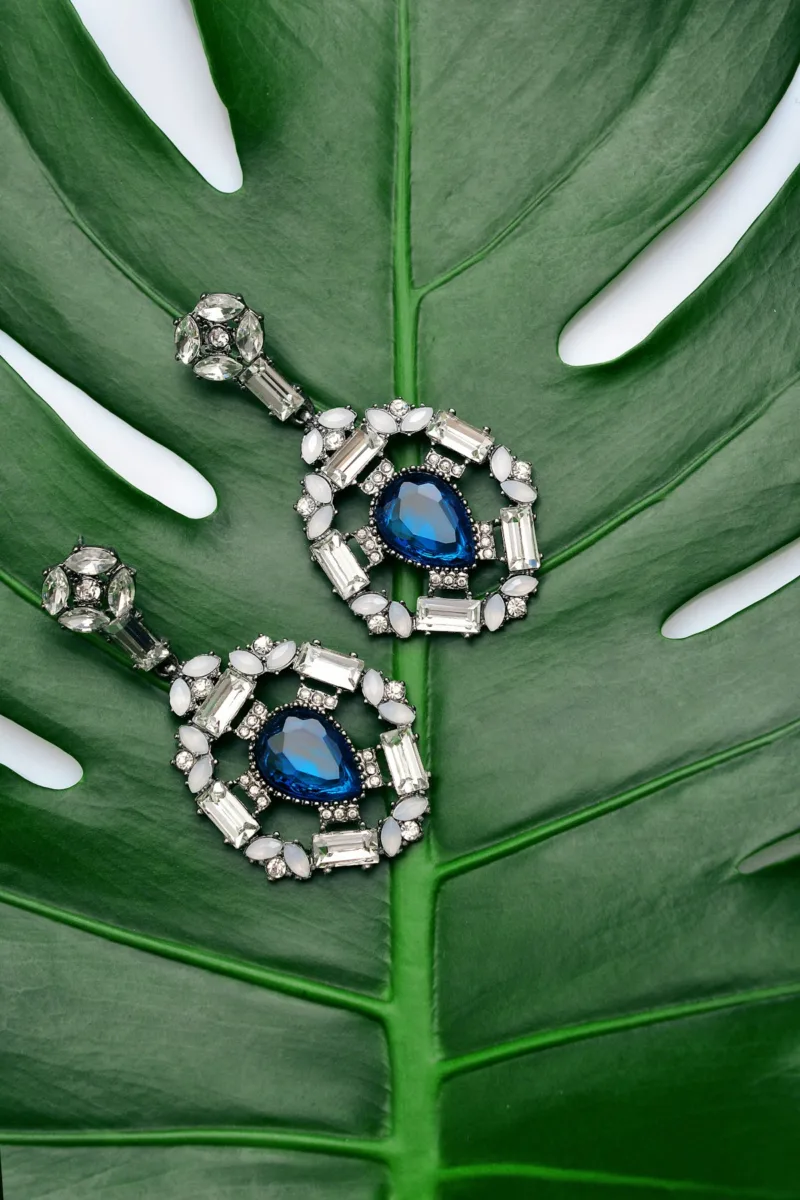
Types of Earrings at a Glance
| Earring | Size | Movement | Best for |
|---|---|---|---|
| Studs | Small | None | Everyday and work |
| Pearl studs | Small | None | Classic and formal |
| Hoops | Small to large | Slight | Everyday and going out |
| Huggies | Very small | None | Everyday, second piercings |
| Drop earrings | Medium | Slight | Work and occasions |
| Dangle earrings | Medium to long | Swinging | Evenings and events |
| Chandelier earrings | Large | Swinging | Weddings and formal events |
| Jhumkas | Medium to large | Swinging | Traditional and festive wear |
| Tassel earrings | Long | Swinging | Casual and summer |
| Ear cuffs | Small | None | No piercing needed |
| Statement earrings | Large | Varies | Parties and plain outfits |
Different Types of Earrings with Pictures
1. Stud Earrings
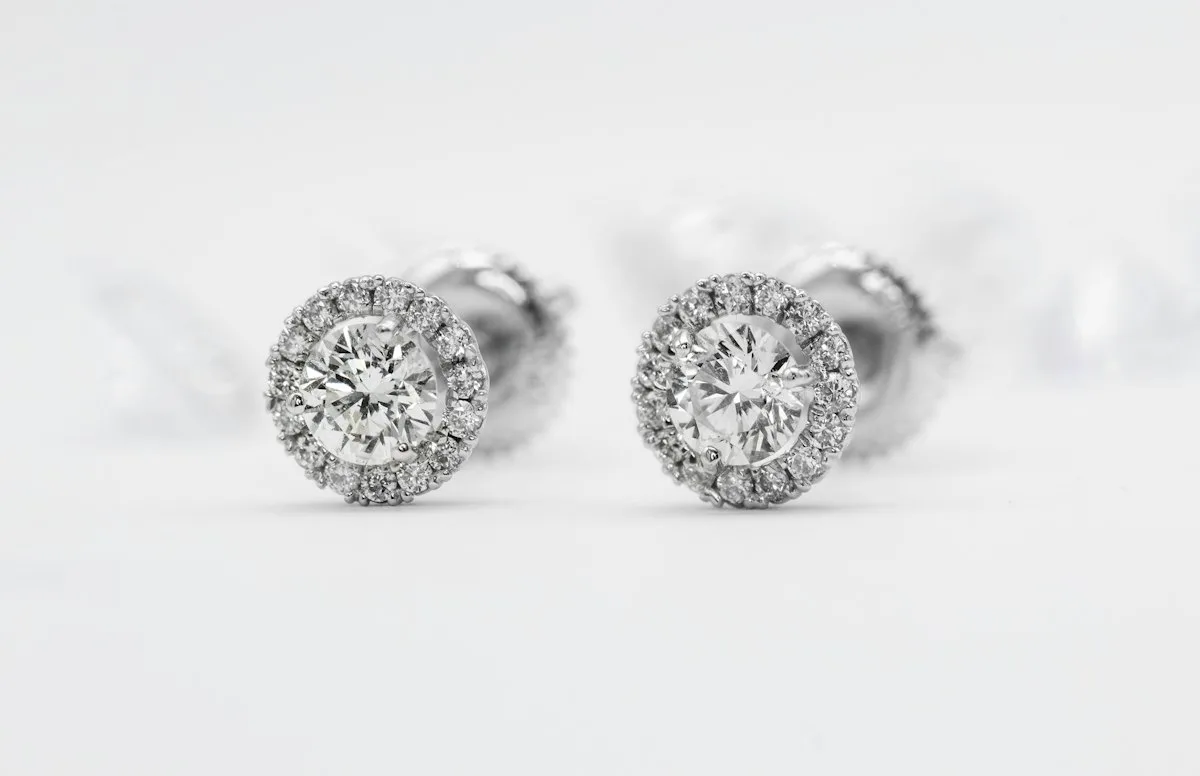
Stud earrings are the simplest earring there is: a single stone, pearl, or metal shape that sits flat against the earlobe, with nothing hanging below it. A straight post passes through the piercing and is held at the back by a small clasp. Because they are small, light, and secure, studs are the pair most people wear every day, and they are what piercers use for a first piercing. A stud can still be dressy. A pair of diamond or cubic zirconia studs is one of the most classic pieces of jewelry anyone can own.
- What defines it: It sits on the lobe with no drop, shows a single stone or shape, and fastens with a post and back.
- Best worn with: Everything, from gym clothes to a suit. Studs are the safest choice with high collars, scarves, glasses, and bold necklaces, because they never compete for attention.
- Who it suits: Everyone. Studs flatter every face shape, and small ones are the best option for second and third piercings and for workplaces with a strict dress code.
2. Pearl Studs
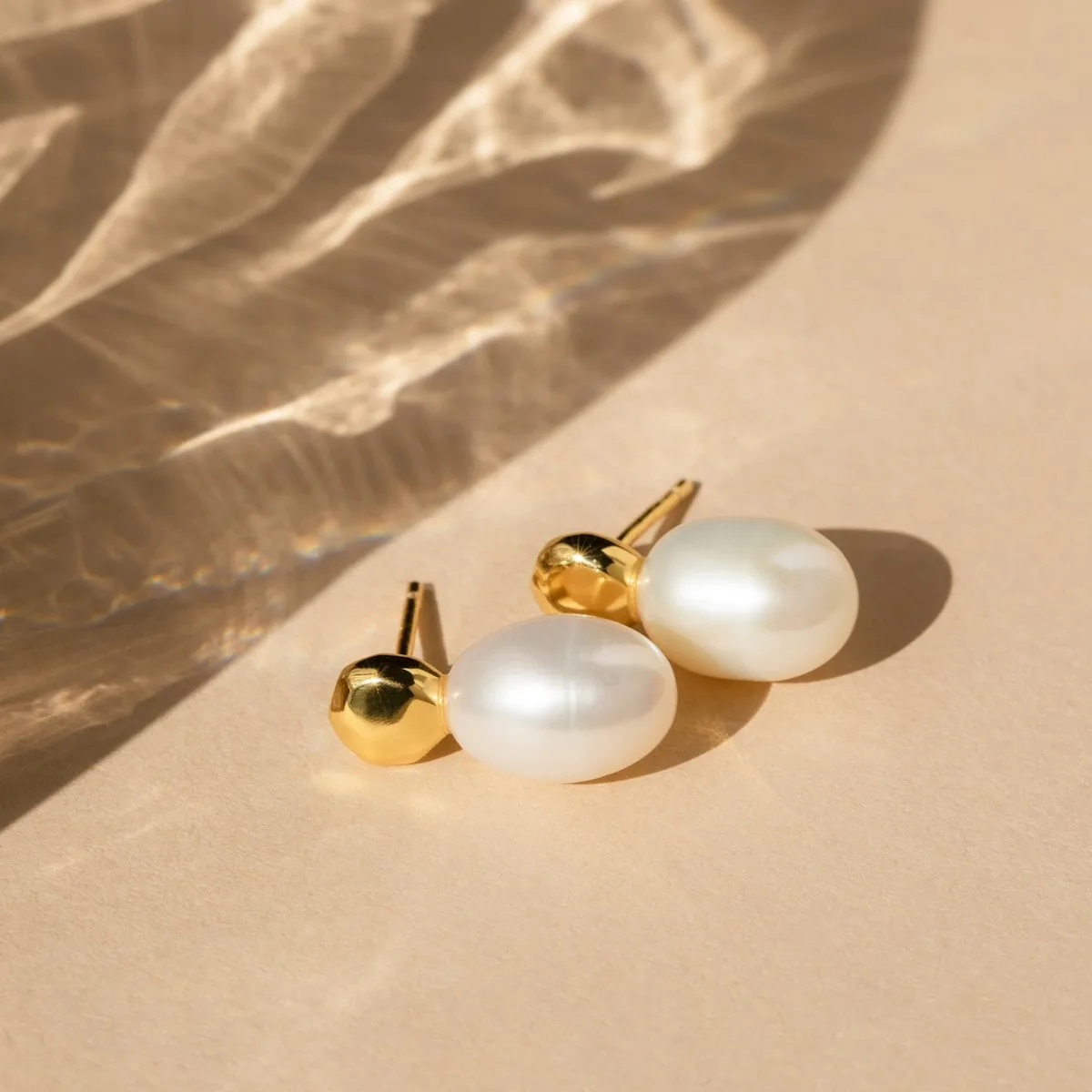
Pearl studs are a single round pearl mounted on a post. They have been a symbol of quiet elegance for generations, and they give a soft glow where a diamond gives sparkle. Freshwater pearls are the most affordable, while Akoya pearls are rounder and shinier. For everyday wear, a pearl of six to eight millimeters is the most popular size; larger pearls look more formal.
- What defines it: One round pearl on a post, with a smooth, glowing surface and no added decoration.
- Best worn with: Shirts, blazers, fine knitwear, and wedding dresses. Pearl studs make a plain outfit look finished and are a traditional choice for interviews and formal occasions.
- Who it suits: Anyone who likes a polished, understated look. White pearls with a pink tone flatter fair skin, and cream or golden pearls flatter warm and deeper skin tones.
3. Hoop Earrings

Hoop earrings are rings that pass through the piercing and circle around the earlobe. They are one of the oldest styles of jewelry in the world and have been worn across cultures for thousands of years. Hoops change character with size. Small, thin hoops are an everyday basic, medium hoops are a casual staple, and large or chunky hoops make a confident statement.
- What defines it: A circular or oval ring with an open center, from about one centimeter across to large hoops that brush the shoulders.
- Best worn with: Small hoops go with anything. Large hoops look best with hair tied up or tucked behind the ears and with a simple neckline, such as a plain tee, tank top, or slip dress.
- Who it suits: Hoops add width and soft curves, so they flatter long, narrow, and angular faces. If your face is round, try oval or slightly elongated hoops.
4. Huggie Earrings
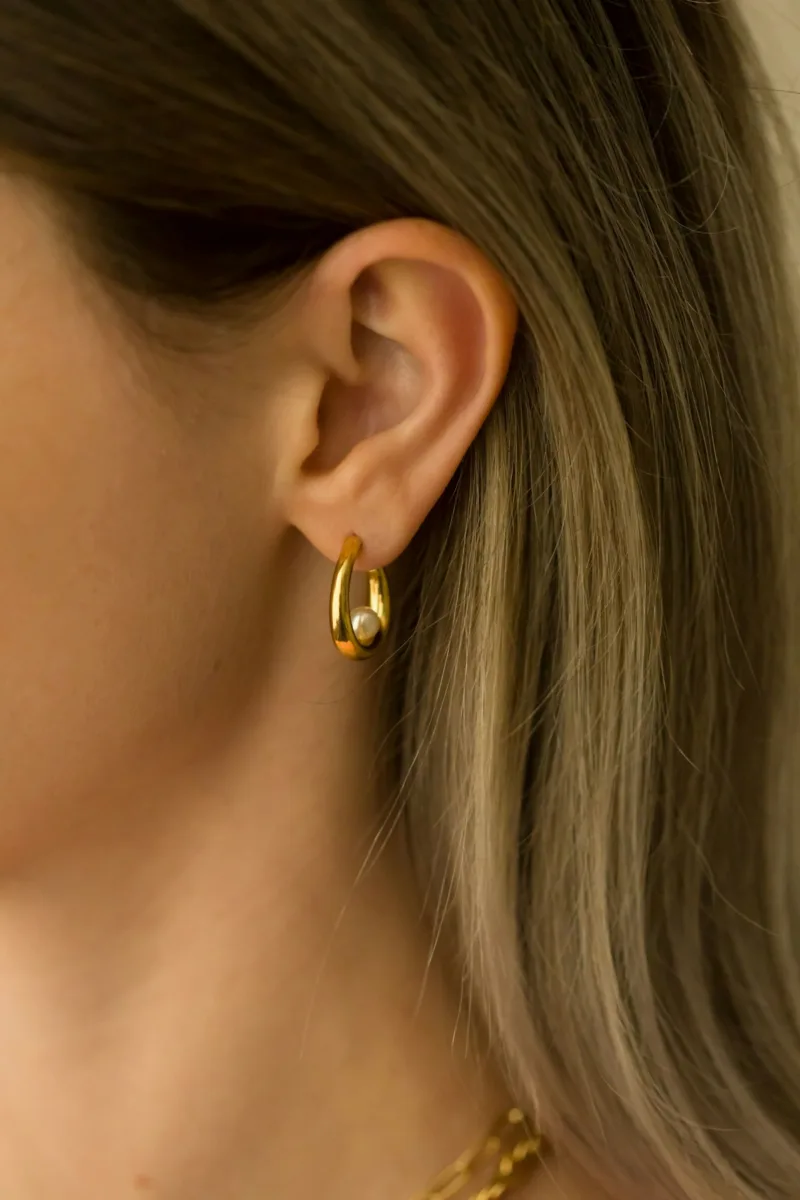
Huggies are very small, thick hoops that sit tightly against the earlobe, as if they are hugging it. They close with a hinged clicker, not a separate back, so there is nothing to poke the neck or catch on hair and clothes. That makes them comfortable enough to sleep, shower, and exercise in, and many people never take them off.
- What defines it: A tiny hoop, usually under 12 millimeters, that sits close to the lobe and snaps shut with a hinge.
- Best worn with: Other earrings. Huggies are the base of a stacked ear, worn alongside studs and cuffs. On their own they suit any everyday outfit.
- Who it suits: People with several piercings, people who find regular hoops catch or pull, and anyone who wants one pair they can leave in all the time.
5. Drop Earrings
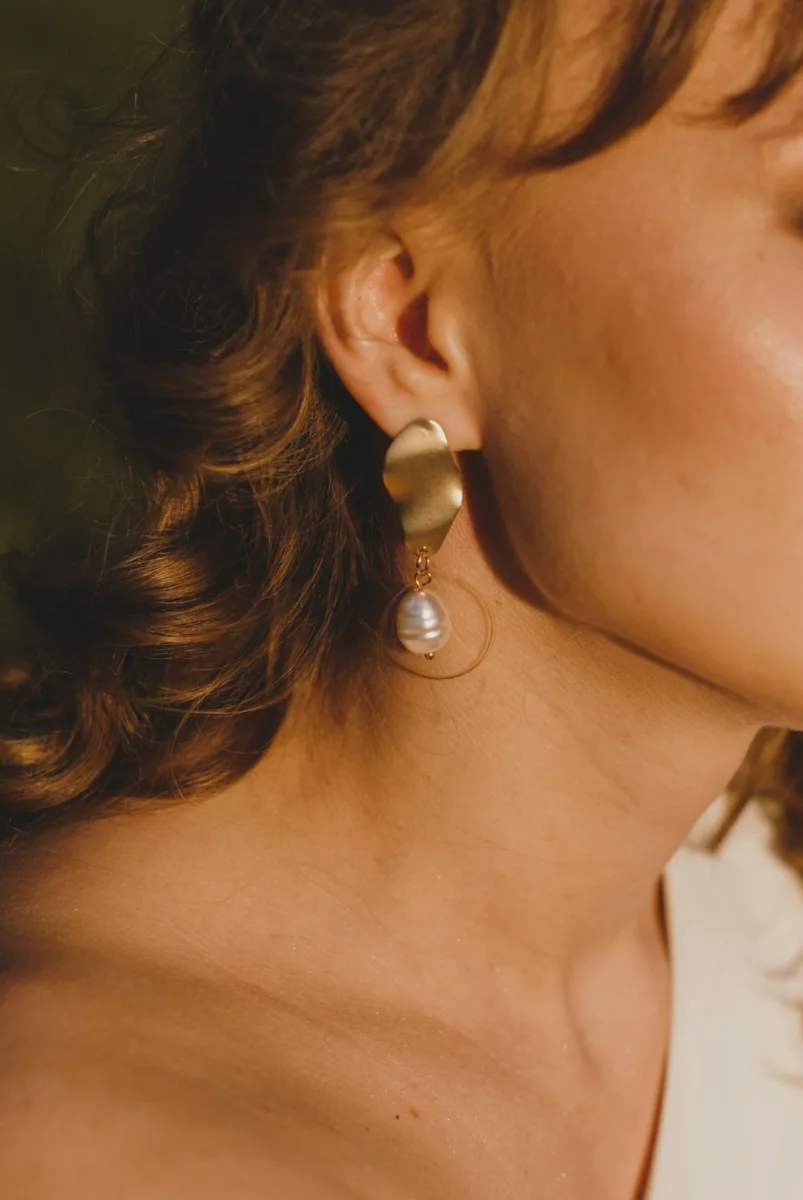
Drop earrings hang just below the earlobe. A single stone, pearl, or small charm is suspended from a post or hook, and it stays fairly still as you move. They add a touch of length and elegance without the weight or swing of longer styles, which makes them the natural step up from studs.
- What defines it: One element that hangs a short distance below the lobe, with little movement.
- Best worn with: Office outfits, dinner outfits, and open necklines such as V-necks and scoop necks. They are dressy enough for a wedding guest outfit and subtle enough for work.
- Who it suits: They add a little vertical length, which flatters round faces. They are a good choice for anyone who finds studs too plain and dangles too much.
6. Dangle Earrings
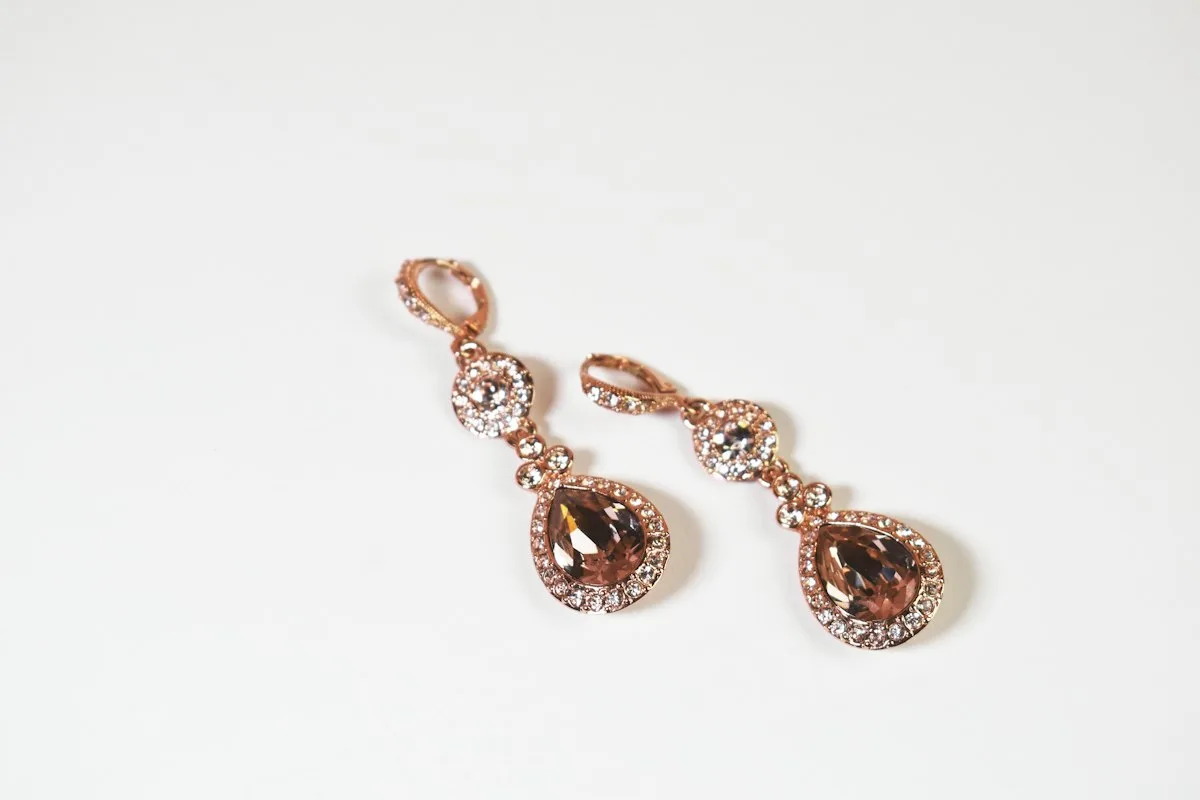
Dangle earrings hang well below the earlobe and swing freely with every movement. They can be a single fine chain, a line of stones, or several linked pieces. Because they move and catch the light, they draw the eye to the neck and jawline and bring energy to an outfit.
- What defines it: Length and movement. The earring falls below the lobe and swings as you turn your head.
- Best worn with: Hair worn up or tucked back, and simple or bare necklines such as strapless, off-shoulder, and halter tops. Skip the necklace so the earrings have room.
- Who it suits: They make the face look longer, so they flatter round and square faces. If your neck is short, choose a pair that ends above the jawline.
7. Chandelier Earrings
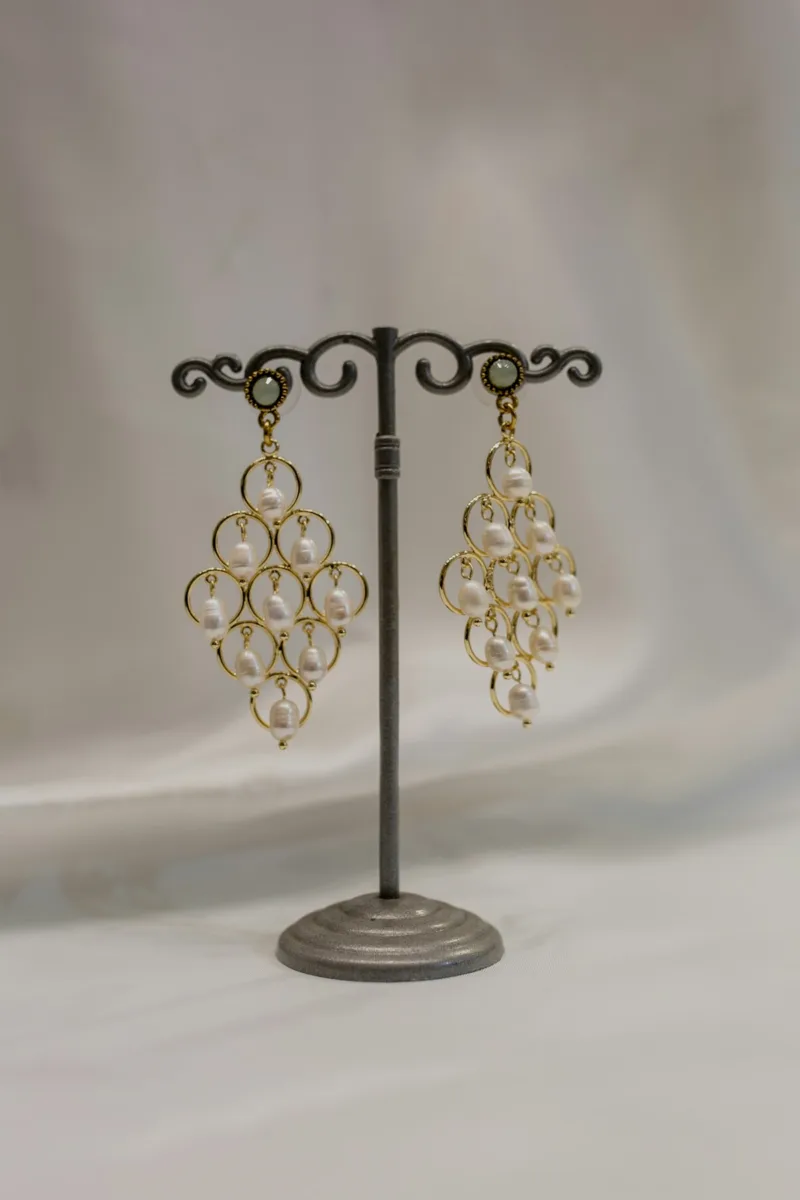
Chandelier earrings are the most dramatic of the hanging styles. They spread out into several tiers or branches of stones, beads, or metalwork and are widest at the bottom, like the light fitting they are named after. They are made for big occasions and can be heavy, so look for lightweight designs if you will wear them for hours.
- What defines it: Several tiers that widen toward the bottom, with plenty of sparkle and movement.
- Best worn with: Evening gowns, wedding outfits, saris, and lehengas, with the hair pulled back so the earrings can be seen. Leave the neck bare.
- Who it suits: The wide base adds fullness around the jaw, which flatters oval, long, and heart-shaped faces. Choose them when you want the earrings to be the main piece of jewelry.
8. Jhumkas
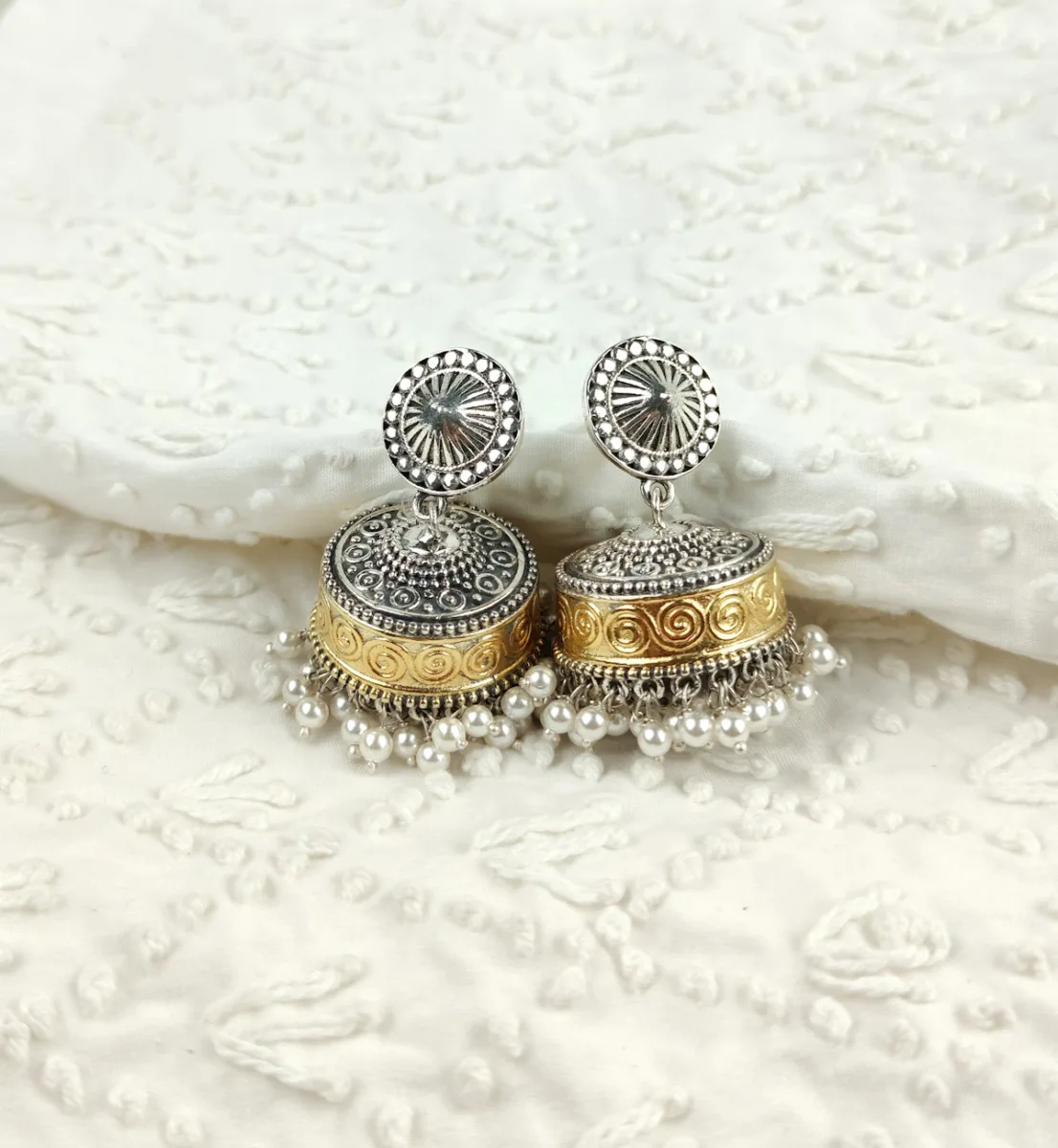
Jhumkas are traditional earrings from India with a dome or bell shape, usually hanging from a stud and finished with tiny beads or pearls that sway from the rim. They have been made for centuries in gold, and today they also come in silver, oxidized metal, and enamel work. The gentle chime and swing are part of their charm.
- What defines it: A bell-shaped dome with small hanging beads, often suspended from a decorated stud.
- Best worn with: Saris, lehengas, anarkalis, and kurtas for festivals and weddings. Small oxidized jhumkas also look good with a plain white shirt and jeans for a fusion look.
- Who it suits: Anyone dressing for a festive or traditional occasion. Small jhumkis work for daily wear, and very large pairs are more comfortable with a supporting ear chain.
9. Tassel Earrings
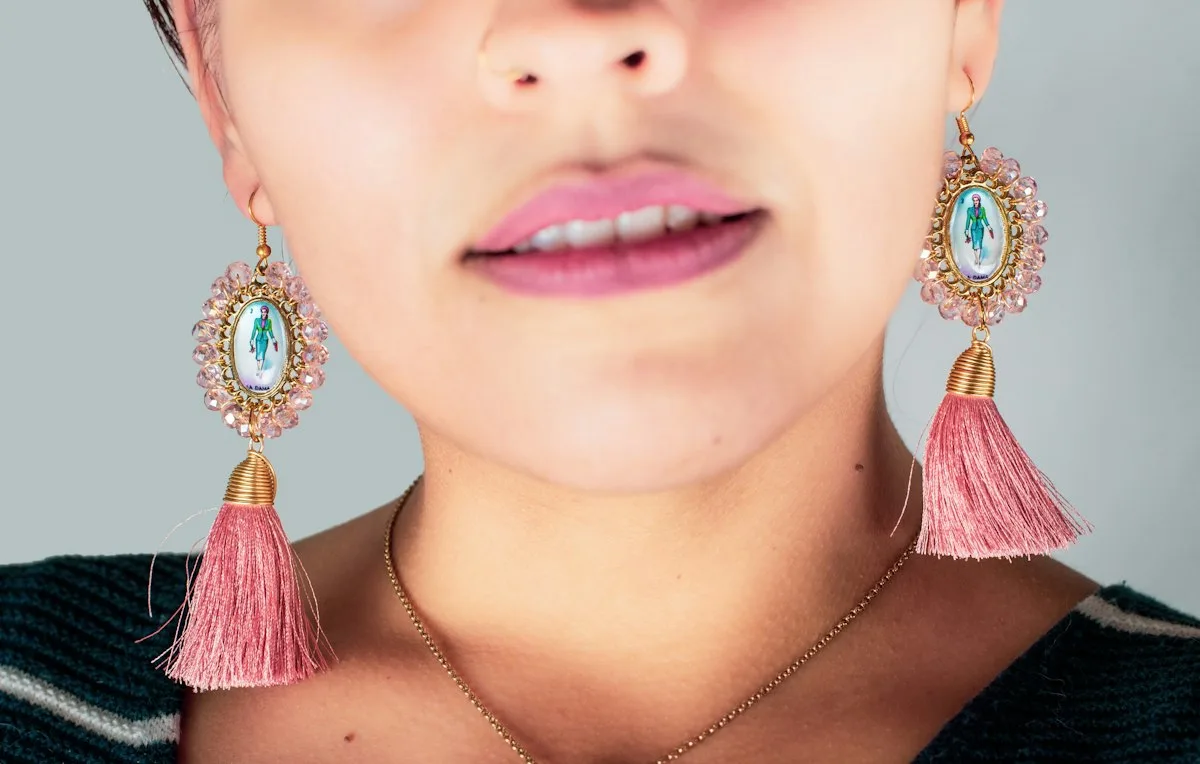
Tassel earrings are made from a bundle of threads, fine chains, or beads gathered at the top and left to hang loose. They are large and colorful but weigh very little, so they give a bold look without pulling on the ears. They became a summer favorite because they add instant color and movement to simple clothes.
- What defines it: A soft fringe of thread, chain, or beads that swings freely and is much lighter than it looks.
- Best worn with: Summer dresses, plain T-shirts, off-shoulder tops, and beach outfits. They stand out best against solid colors.
- Who it suits: People who want a big earring without the weight, including those whose earlobes get sore from heavy jewelry.
10. Ear Cuffs

An ear cuff is a small band that hugs the outer edge of the ear. Most cuffs simply slide on and are pressed gently to fit, so they need no piercing at all. They sit on the cartilage, where a helix piercing would be, and give the look of a pierced ear in seconds.
- What defines it: A band that wraps the cartilage of the ear, usually with no post and no piercing.
- Best worn with: A stack. Cuffs look best alongside studs and huggies, with the hair tucked behind the ear or tied up so the ear can be seen.
- Who it suits: Anyone without piercings, anyone who wants a cartilage look without the healing time, and anyone trying out the style before getting pierced.
11. Statement Earrings
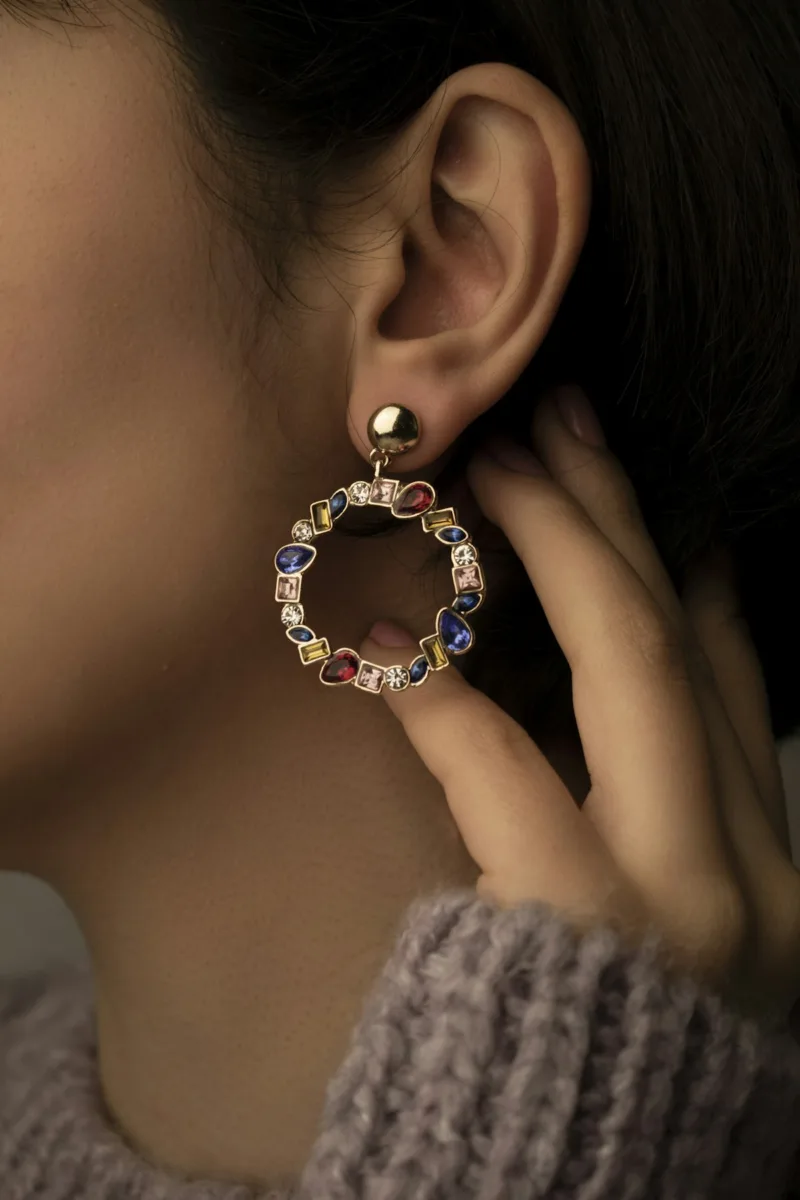
Statement earrings are defined by their size and impact, not by a single shape. Oversized hoops, large geometric pieces, sculpted metal, and heavily decorated designs all count. Their purpose is to be the first thing people notice, so the rest of the outfit is kept quiet around them.
- What defines it: Large scale, bold design, and strong visual impact. The style can borrow from any tradition as long as it is big and eye-catching.
- Best worn with: Plain outfits that give the earrings space: a white T-shirt, a simple black dress, or a solid-color kurta. Keep other jewelry to a minimum and wear the hair back.
- Who it suits: Someone who wants their jewelry to lead the look. If they feel heavy, choose resin, acrylic, or hollow metal designs, which are much lighter.
Types of Earring Backs
- Push backs (butterfly backs): the standard small metal backing that slides onto the post.
- Screw backs: a backing that twists onto a threaded post, used for valuable studs.
- Lever backs: a hinged wire that snaps shut behind the ear, common on drop earrings.
- Fish hooks: a curved wire that passes through the piercing and hangs in place.
- Hinged snaps: the closure used on most hoops and huggies.
- Clip-ons: a spring clip for ears that are not pierced.
How to Choose the Right Type of Earrings
Match the earring to the occasion and to your face. Studs, huggies, and small hoops are safe for work and daily wear. Long drops and dangles make a round face look longer, while studs and wide hoops soften a long face. For a busy neckline or a bold necklace, keep earrings small. To finish the look, see our guides to types of rings, types of handbags, and types of heels.
Frequently Asked Questions
What are the most popular types of earrings?
Studs and hoops are the two most popular types because they are comfortable and go with everything.
What is the difference between drop and dangle earrings?
Drop earrings hang just below the earlobe and stay mostly still. Dangle earrings hang lower and swing freely when you move.
What are huggie earrings?
Huggies are small, thick hoops that sit tightly around the earlobe and close with a hinge.
Which earrings are best for sensitive ears?
Earrings made of titanium, surgical steel, platinum, or solid gold of 14 karats or higher are the least likely to irritate sensitive ears. Avoid nickel.
Can you wear earrings without pierced ears?
Yes. Ear cuffs and clip-on earrings do not need a piercing.