The main types of candy are gummies, chocolate, lollipops, hard candy, jelly beans, licorice, marshmallows, candy canes, cotton candy, caramels, chocolate truffles, and sour candy. Almost all of them belong to one of two families: sugar candy, which is made mostly from cooked sugar, and chocolate candy. Each type below has a picture and explains what it is made of and what makes it different.
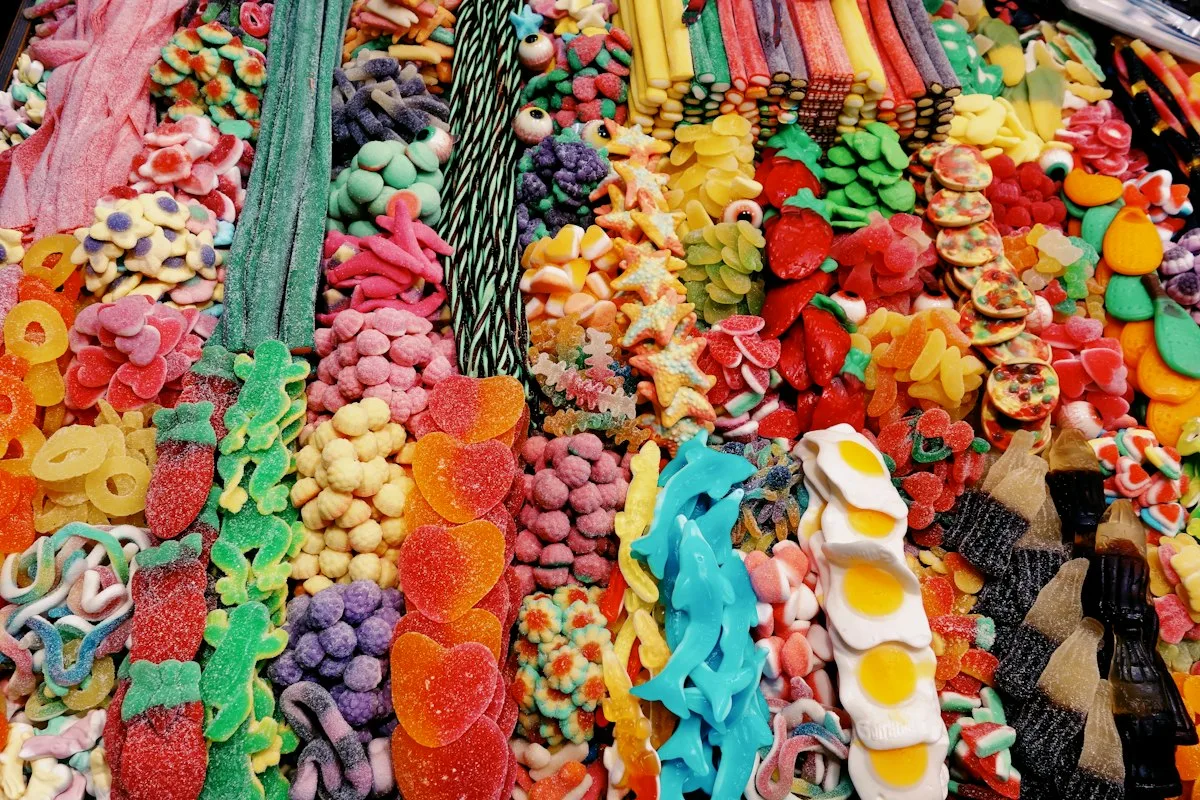
Types of Candy at a Glance
| Candy | Texture | Main ingredient |
|---|---|---|
| Gummies | Chewy | Sugar and gelatin |
| Chocolate | Smooth, melts | Cocoa |
| Lollipops | Hard | Boiled sugar |
| Hard candy | Hard | Boiled sugar |
| Jelly beans | Soft with a shell | Sugar and starch |
| Licorice | Chewy | Sugar and licorice extract or flavoring |
| Marshmallows | Soft, spongy | Sugar and gelatin |
| Candy canes | Hard | Boiled sugar and peppermint |
| Cotton candy | Fluffy | Spun sugar |
| Caramels | Soft, chewy | Sugar, butter, and cream |
| Chocolate truffles | Soft center | Chocolate and cream |
| Sour candy | Chewy | Sugar with a sour coating |
Different Types of Candy with Pictures
1. Gummies
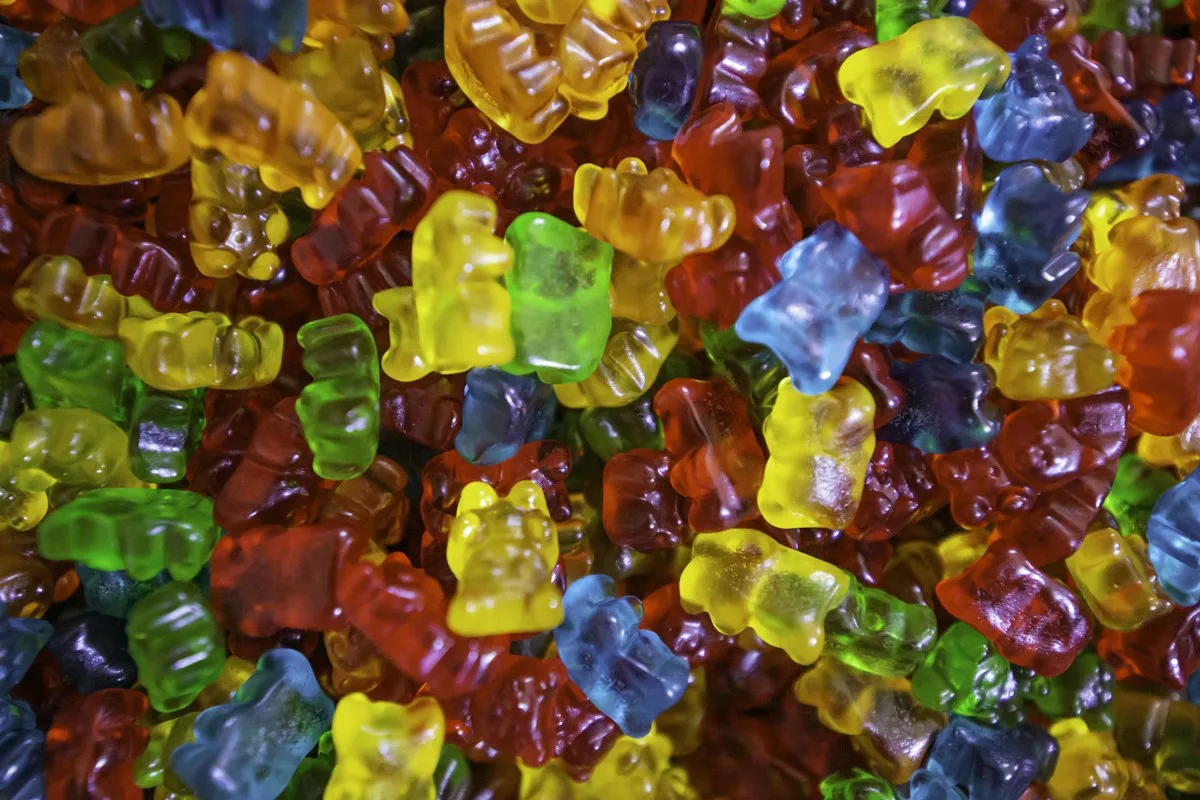
Gummies are soft, chewy candies made from sugar, glucose syrup, flavoring, and a gelling agent, which is usually gelatin. The gummy bear was created in Germany in 1922 by Hans Riegel, the founder of Haribo. Since then the idea has been shaped into worms, rings, bottles, fruit, and hundreds of other forms. The mixture is poured into molds made of cornstarch and left to set for a day or more.
Taste and texture: Fruity and sweet, with a firm, bouncy chew.
Good to know: Most gummies contain gelatin from animals. Vegetarian and vegan versions use pectin or starch instead, so check the label.
2. Chocolate
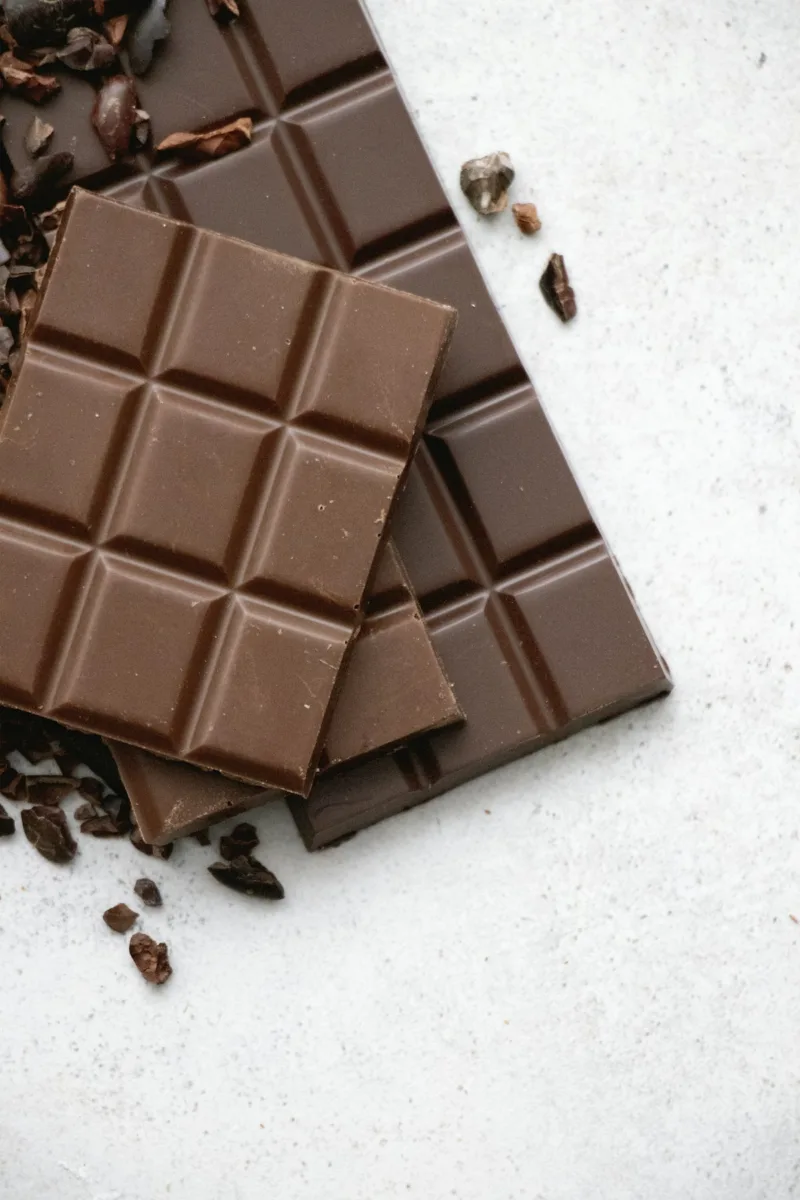
Chocolate is made from the seeds of the cacao tree, which are fermented, dried, roasted, and ground into a paste. That paste is mixed with cocoa butter and sugar to make dark chocolate, and with milk powder to make milk chocolate. White chocolate contains cocoa butter but no cocoa solids, which is why it is pale. The percentage on a wrapper tells you how much of the bar comes from the cacao bean.
Taste and texture: From bitter and intense in dark chocolate to sweet and creamy in milk and white. Good chocolate snaps cleanly and melts on the tongue.
Good to know: Chocolate melts at just below body temperature. Store it in a cool, dry place and not in the fridge, where it can pick up moisture and other smells.
3. Lollipops
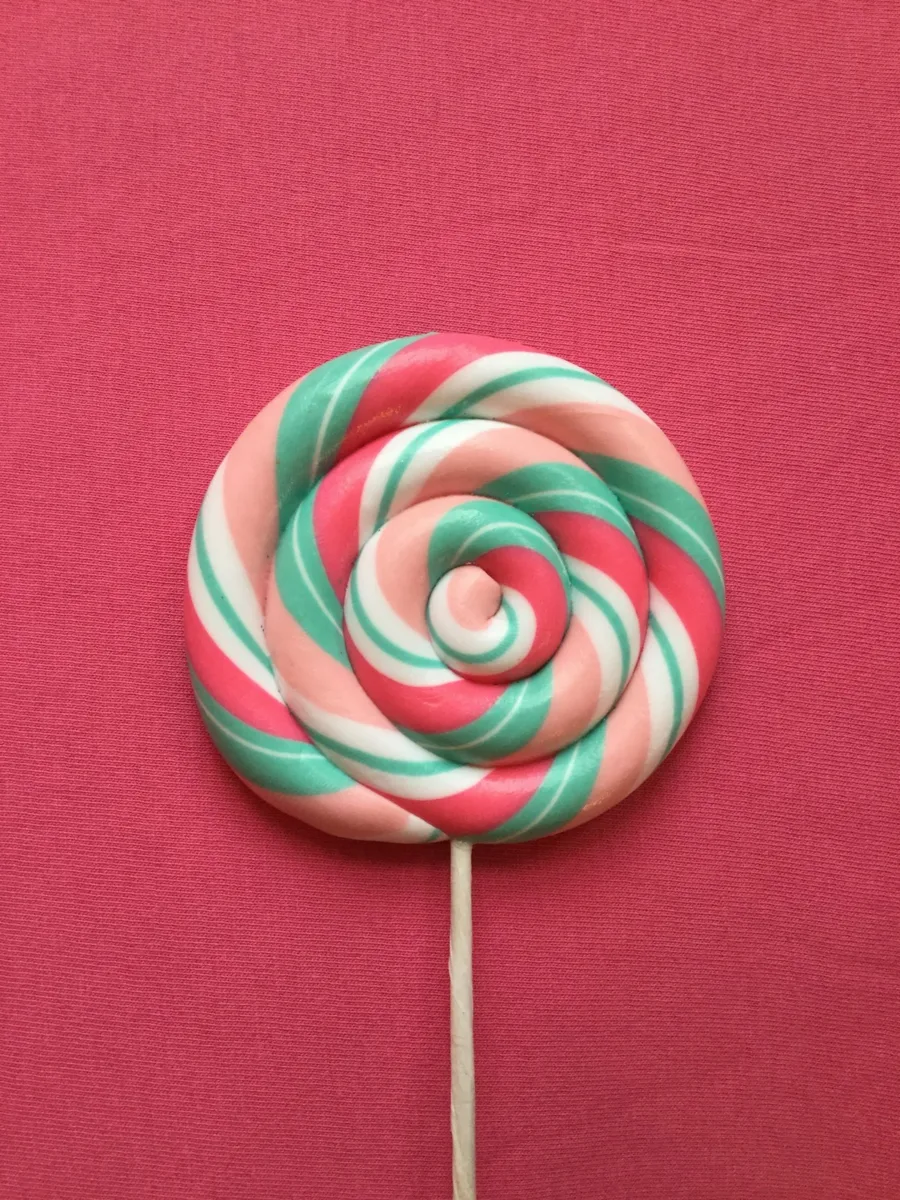
A lollipop is a piece of hard candy fixed to the end of a stick. The candy is made by boiling sugar and corn syrup to a high temperature, adding color and flavor, and molding it around the stick before it cools. Lollipops come as flat discs, round balls, and large swirled spirals. Some have a center of bubble gum or chewy candy.
Taste and texture: Sweet and fruity, smooth and hard. It dissolves slowly as you lick it.
Good to know: The stick keeps fingers clean, which makes lollipops a popular party and reward candy. They are a choking risk for very young children.
4. Hard Candy
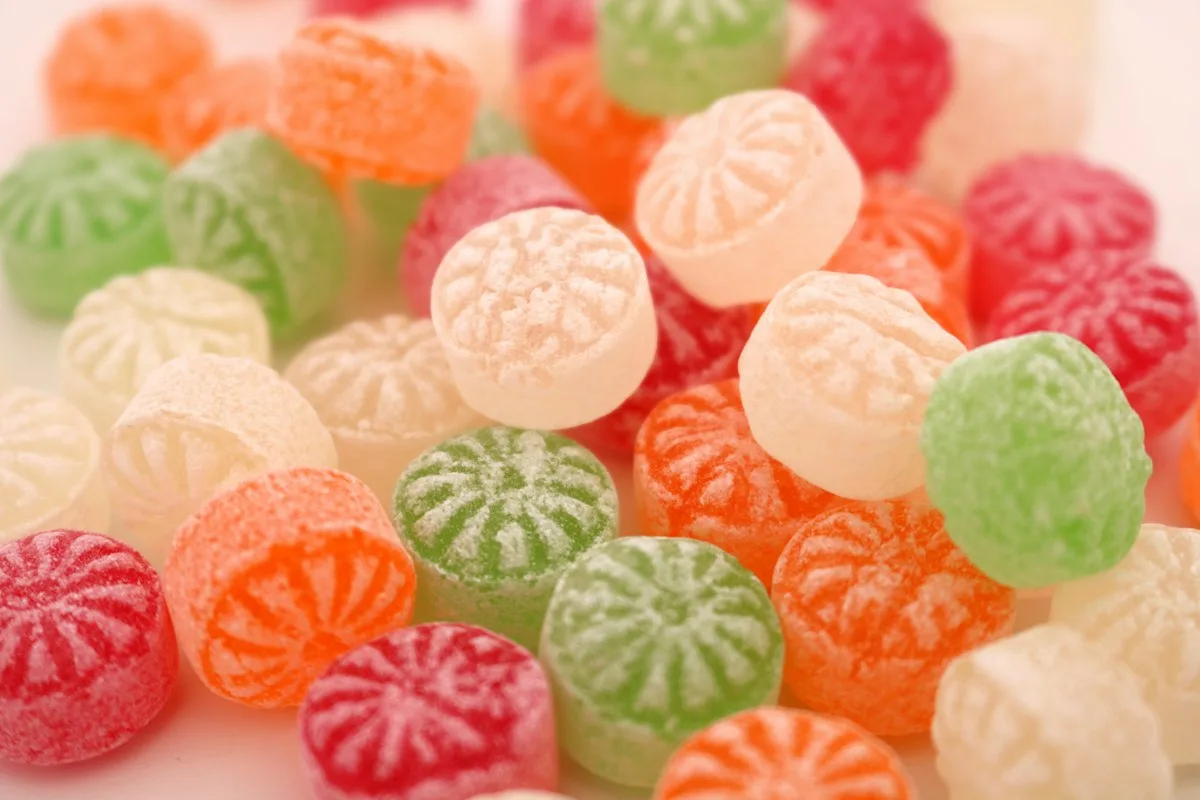
Hard candy is made by boiling sugar syrup to about 300 degrees Fahrenheit, a point that candy makers call the hard-crack stage. At that temperature almost all the water has gone, and the syrup cools into a hard, glassy solid. Peppermints, butterscotch discs, fruit drops, and cinnamon candies are all hard candies. In Britain they are known as boiled sweets.
Taste and texture: Sweet, smooth, and very hard. It is meant to be sucked slowly, not chewed.
Good to know: Hard candy lasts a long time if kept dry. In humid air it turns sticky, so store it in a sealed container.
5. Jelly Beans
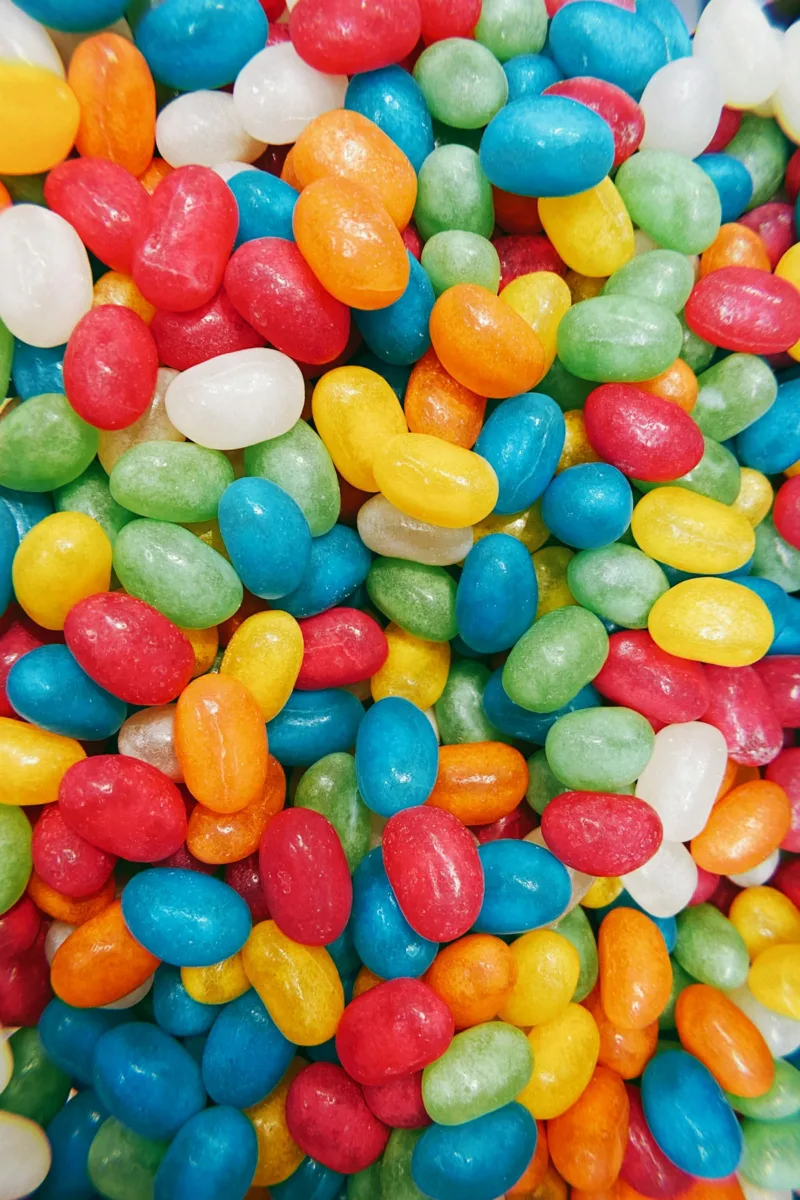
Jelly beans are small, bean-shaped candies with a soft, chewy center and a thin, crisp sugar shell. The shell is built up layer by layer in a rotating drum, a process called panning, and making one bean can take a week or more. They became linked with Easter in the 1930s because of their egg-like shape. Modern gourmet brands offer dozens of flavors, from buttered popcorn to watermelon.
Taste and texture: Sweet and fruity, with a slight crunch followed by a chewy middle.
Good to know: Traditional jelly beans carry their flavor only in the shell, while gourmet ones flavor the center as well.
6. Licorice
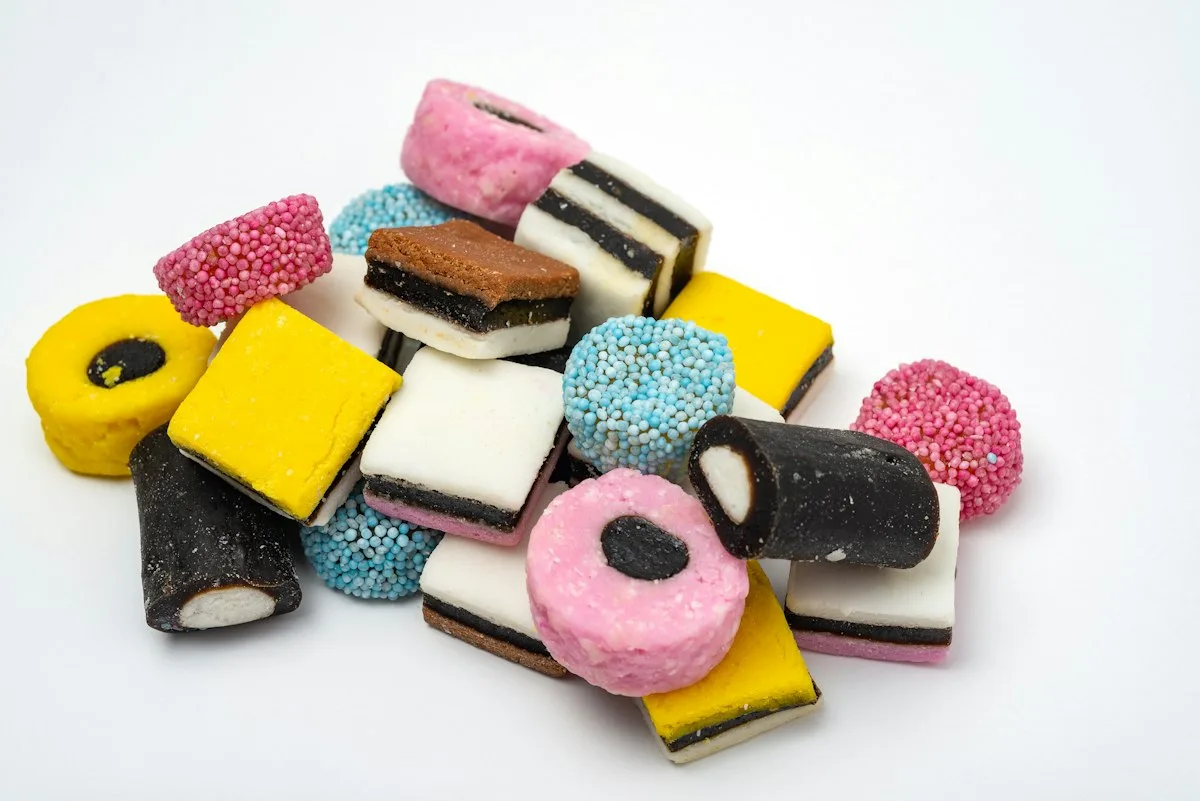
Licorice candy is flavored with an extract from the root of the licorice plant, which has a strong, sweet, slightly bitter taste similar to anise. Black licorice is the real thing. Red licorice, which is very popular in the United States, usually contains no licorice at all and is flavored with strawberry or cherry. In the Netherlands and the Nordic countries, people enjoy salty licorice, which has a sharp, savory taste.
Taste and texture: Black licorice is sweet, earthy, and a little bitter. The texture is dense and chewy.
Good to know: Real black licorice contains glycyrrhizin, which can raise blood pressure if eaten in large amounts over time. Enjoy it in moderation.
7. Marshmallows
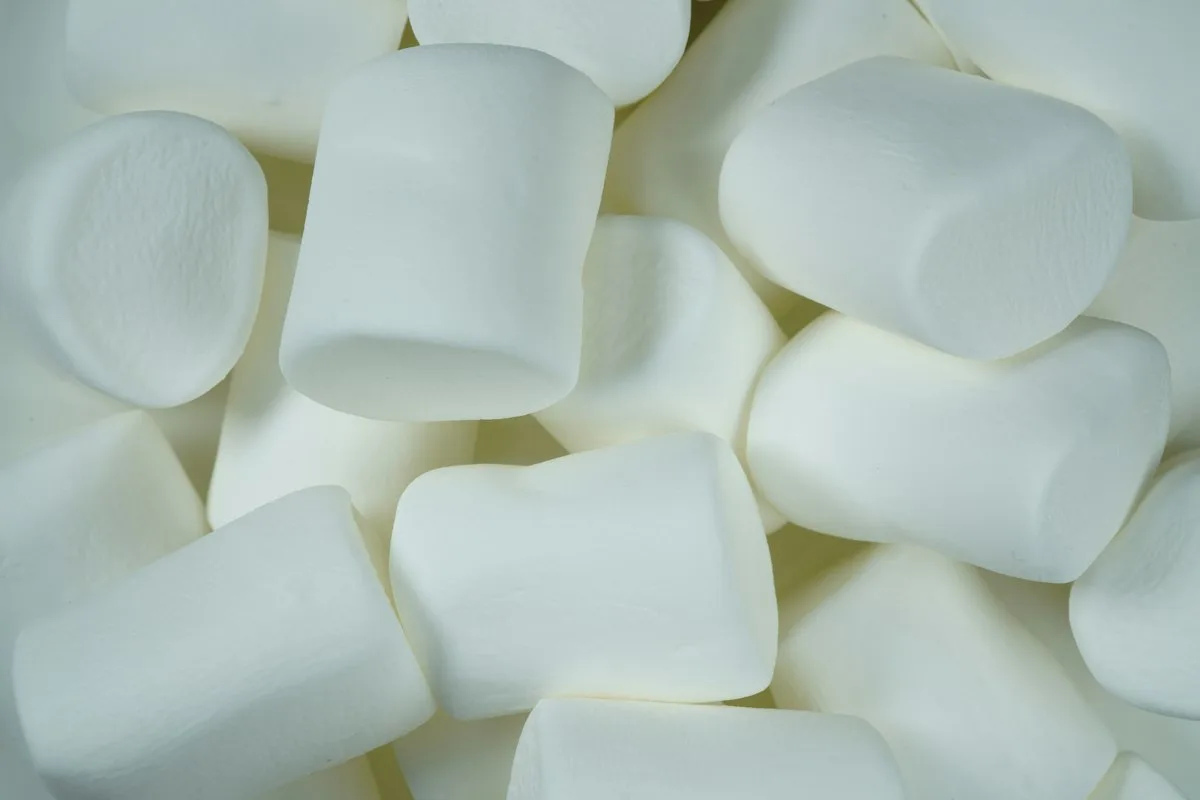
Marshmallows are soft, spongy candies made by whipping air into a mixture of sugar, corn syrup, water, and gelatin. They are named after the marsh mallow plant, whose root sap was used in the original recipe in France in the 1800s. Modern marshmallows contain no part of the plant. They are dusted with cornstarch or powdered sugar to stop them from sticking together.
Taste and texture: Sweet, with a soft, pillowy, slightly chewy texture. Toasting makes the outside golden and crisp and the inside gooey.
Good to know: They are used in s’mores, hot chocolate, and crispy rice treats. Most contain gelatin, so vegetarians should look for a vegan version.
8. Candy Canes
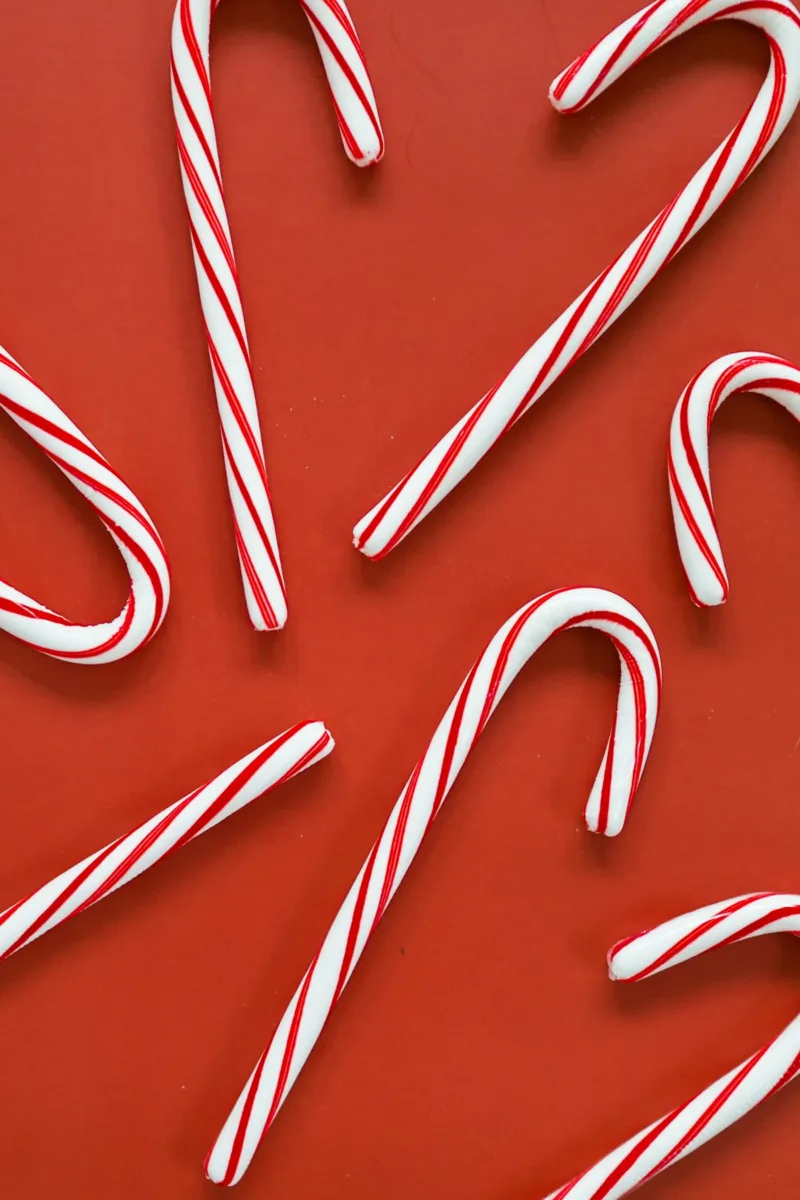
Candy canes are hard peppermint sticks with a hook at one end, traditionally white with red stripes. They are closely tied to Christmas, when they are eaten, hung on trees, and used to decorate desserts. A well-known legend says the hooked shape goes back to a choirmaster in Cologne, Germany, in 1670, though there is no firm proof. The red stripes and peppermint flavor were added around 1900.
Taste and texture: Cool, sweet peppermint. The candy is hard and brittle.
Good to know: Crushed candy canes are a popular topping for hot chocolate, brownies, and peppermint bark.
9. Cotton Candy
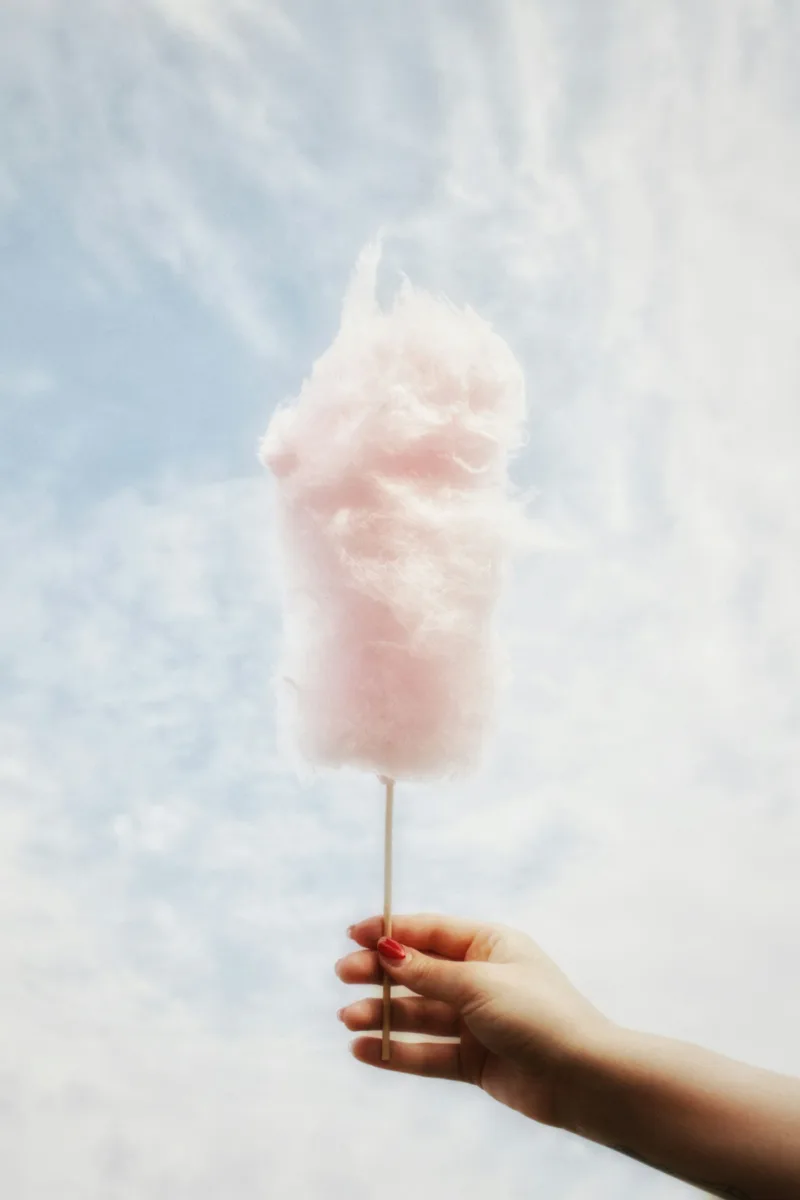
Cotton candy is made from plain sugar that is heated until it melts and then spun at high speed through tiny holes. The liquid sugar hardens into fine threads in the air, and these are gathered on a paper cone or stick. The machine that makes it was invented in 1897 by William Morrison, who was a dentist, and the confectioner John C. Wharton. It is called candy floss in Britain and fairy floss in Australia.
Taste and texture: Pure sweetness. It feels like wool and melts the moment it touches the tongue.
Good to know: It is mostly air, so a large serving holds only about an ounce of sugar. It shrinks and hardens quickly in damp air.
10. Caramels
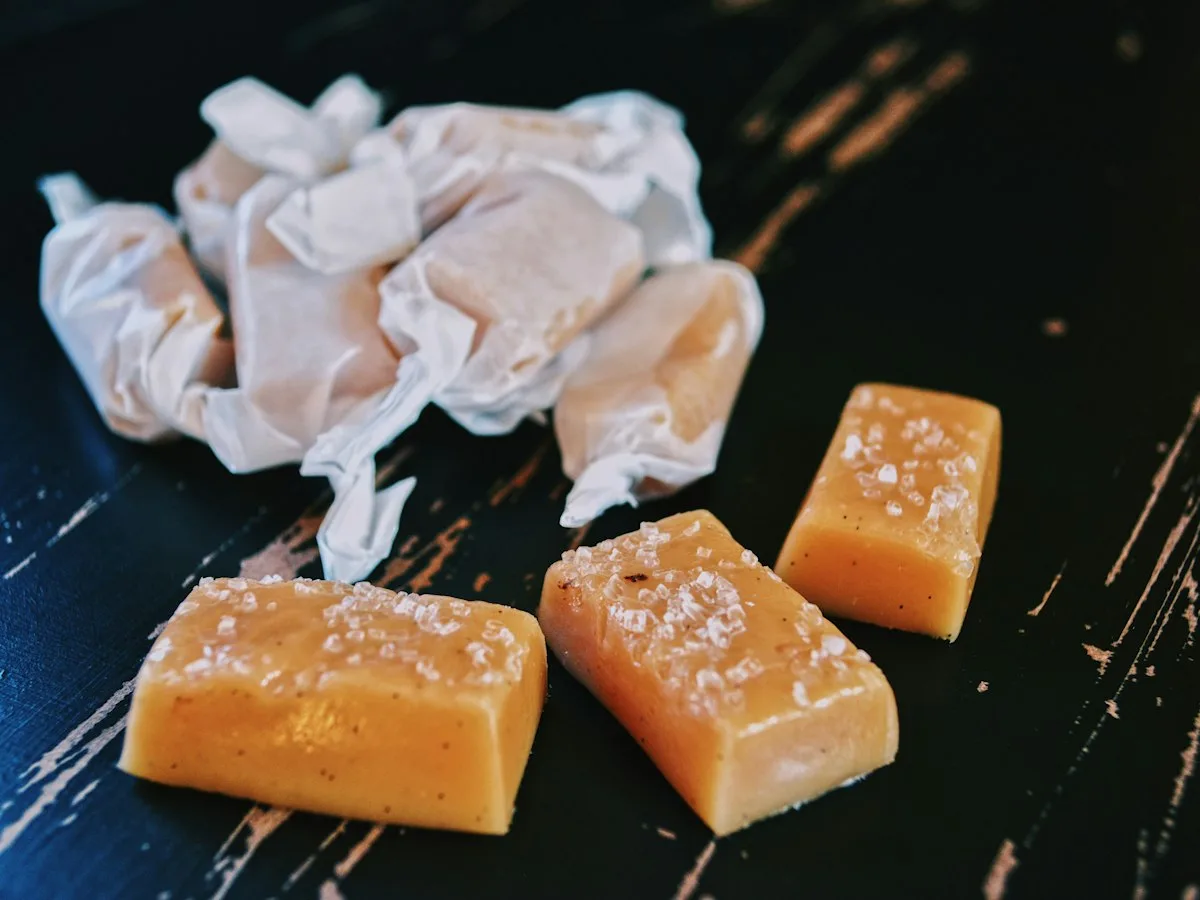
Caramels are soft, chewy candies made by slowly cooking sugar with butter and cream or milk. As the mixture heats, the sugar and milk brown, which creates the golden color and deep, toasty flavor. The temperature decides the texture: a lower temperature gives a soft caramel, and a higher one gives a firmer chew. Salted caramel adds sea salt to balance the sweetness.
Taste and texture: Rich, buttery, and sweet, with a smooth, chewy bite.
Good to know: Toffee uses similar ingredients but is cooked to a higher temperature with little or no cream, so it sets hard and brittle.
11. Chocolate Truffles
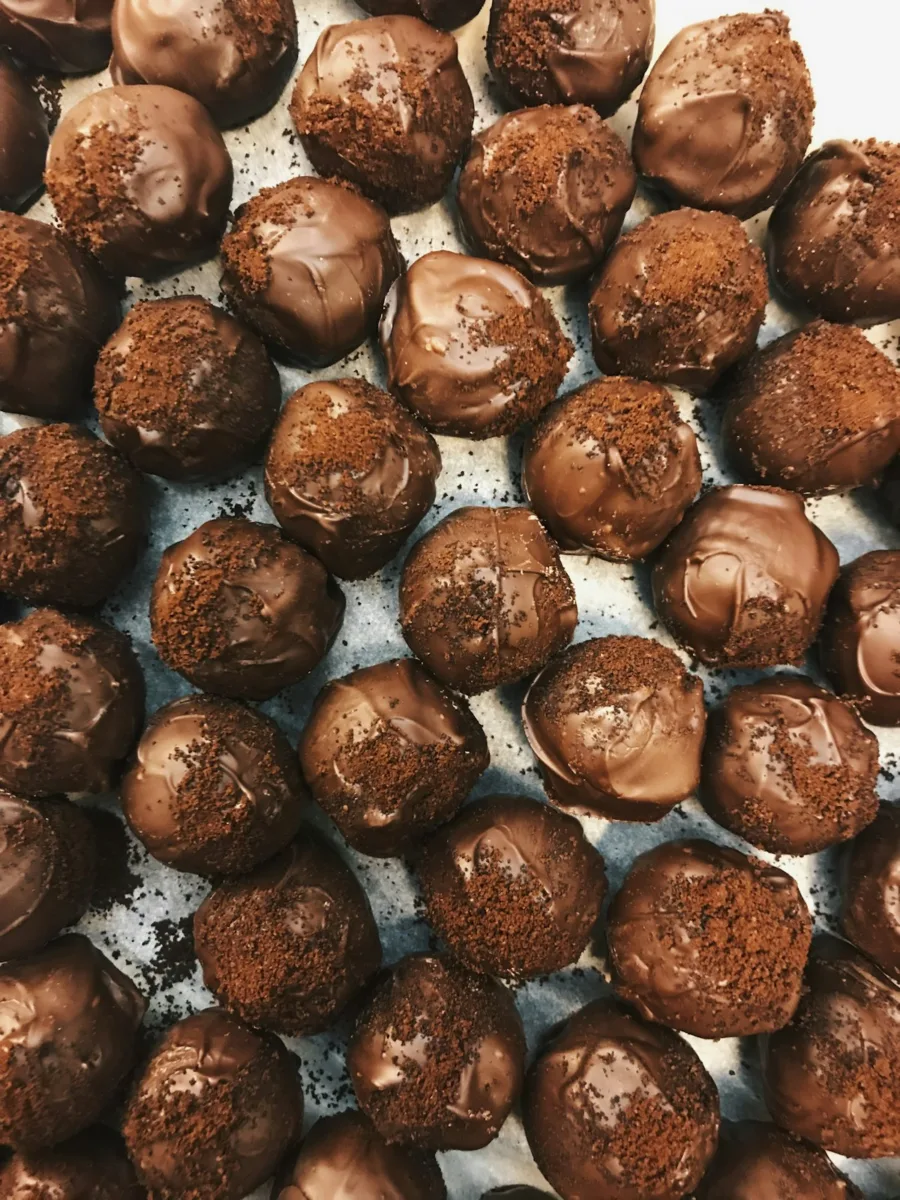
A chocolate truffle is a small ball of ganache, which is a smooth mixture of chocolate and warm cream. The ball is rolled in cocoa powder, chopped nuts, or coconut, or dipped in a thin shell of chocolate. Truffles are named after the truffle fungus, because the classic cocoa-dusted version looks like one. They were created in France and are considered a luxury candy.
Taste and texture: Deep chocolate flavor with a soft, creamy center that melts in the mouth.
Good to know: Fresh truffles contain cream, so they keep for only a week or two. They are best served at room temperature.
12. Sour Candy
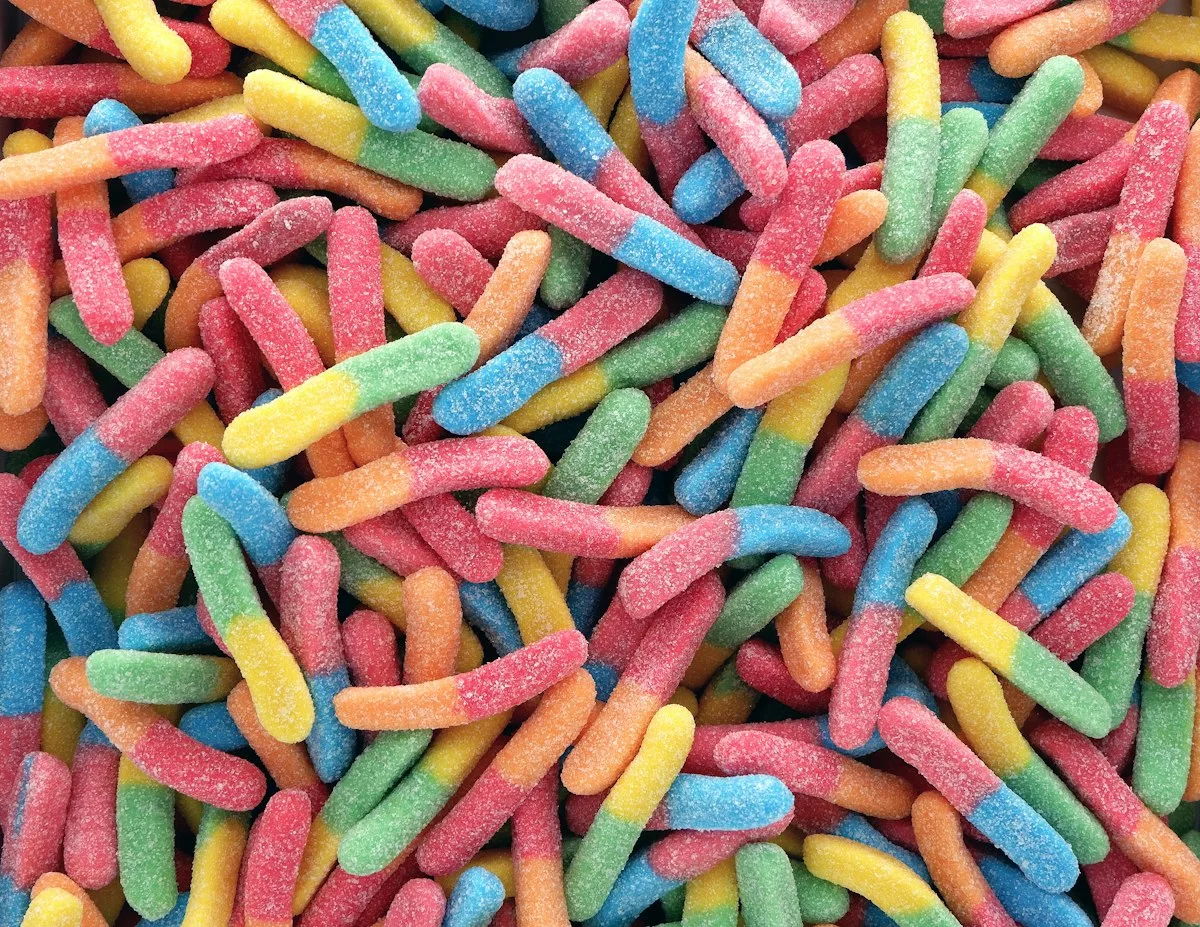
Sour candy is any candy coated in or mixed with food acids that make the mouth pucker. The most common acids are citric acid, which is found in lemons, and malic acid, which is found in green apples. Sour gummies, belts, and hard candies are often rolled in a mixture of acid and sugar that looks like fine sand. The sour hit comes first and then gives way to the sweet candy underneath.
Taste and texture: Sharp and tangy at first, then sweet. The texture depends on the candy underneath.
Good to know: The acid can irritate the tongue and wear down tooth enamel if you eat a lot. Rinse your mouth with water afterward.
More Types of Candy
- Toffee: sugar and butter cooked until hard and brittle.
- Fudge: a soft, creamy candy made from sugar, butter, and milk.
- Taffy: a stretchy, chewy candy that is pulled to make it light.
- Nougat: whipped sugar and egg white with nuts, found in many candy bars.
- Rock candy: large sugar crystals grown on a stick or string.
- Brittle: thin, hard sheets of cooked sugar filled with nuts.
- Candy corn: small tri-colored candies sold around Halloween.
For holiday treats, see our guides to types of Christmas cookies and types of cake. If you are planning for Halloween, see types of pumpkins.
Frequently Asked Questions
What are the main types of candy?
Candy falls into two main groups: sugar candy, such as hard candy, gummies, and caramels, and chocolate candy.
What is the most popular type of candy?
Chocolate is the most popular candy in the world by sales. Among non-chocolate candy, gummies are the best sellers.
What is the difference between caramel and toffee?
Both are made from sugar and butter. Caramel includes cream and is cooked to a lower temperature, so it stays soft. Toffee is cooked hotter and sets hard.
Are gummies vegetarian?
Most gummies contain gelatin, which comes from animals. Vegetarian and vegan gummies use pectin or starch instead, so check the label.
What makes sour candy sour?
Sour candy is coated or mixed with food acids, mainly citric acid and malic acid.