The main types of heels are stilettos, pumps, kitten heels, block heels, wedges, platforms, slingbacks, ankle strap heels, peep-toes, mules, and heeled ankle boots. Each one below has a picture, what makes it different, and when to wear it, so you can pick the right pair for the occasion and for your comfort.
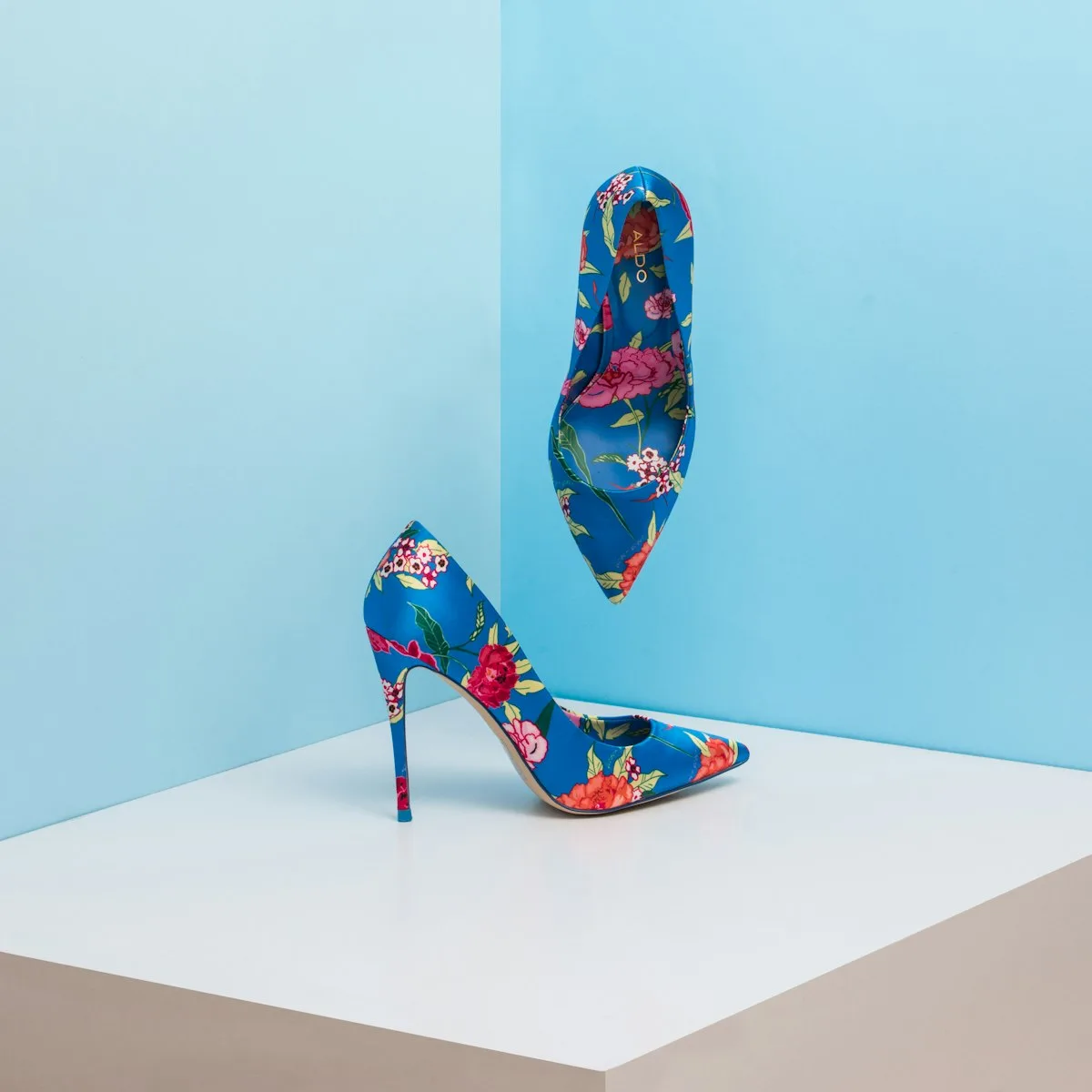
Types of Heels at a Glance
| Heel | Typical height | Comfort | Best for |
|---|---|---|---|
| Stiletto | 3 inches and up | Low | Evening and formal |
| Pumps | 2 to 4 inches | Medium | Office and formal |
| Kitten heel | 1 to 2 inches | High | All-day wear |
| Block heel | 1 to 4 inches | High | Work, weddings, everyday |
| Wedge | 2 to 5 inches | High | Summer and outdoor events |
| Platform | 4 inches and up | Medium | Parties and nights out |
| Slingback | 1 to 3 inches | Medium | Office and occasions |
| Ankle strap | 2 to 4 inches | Medium | Dancing and events |
| Peep-toe | 2 to 4 inches | Medium | Spring and summer events |
| Mules | 1 to 3 inches | Medium | Casual and smart-casual |
| Heeled ankle boots | 2 to 4 inches | High | Fall and winter |
Different Types of Heels with Pictures
1. Stiletto Heels
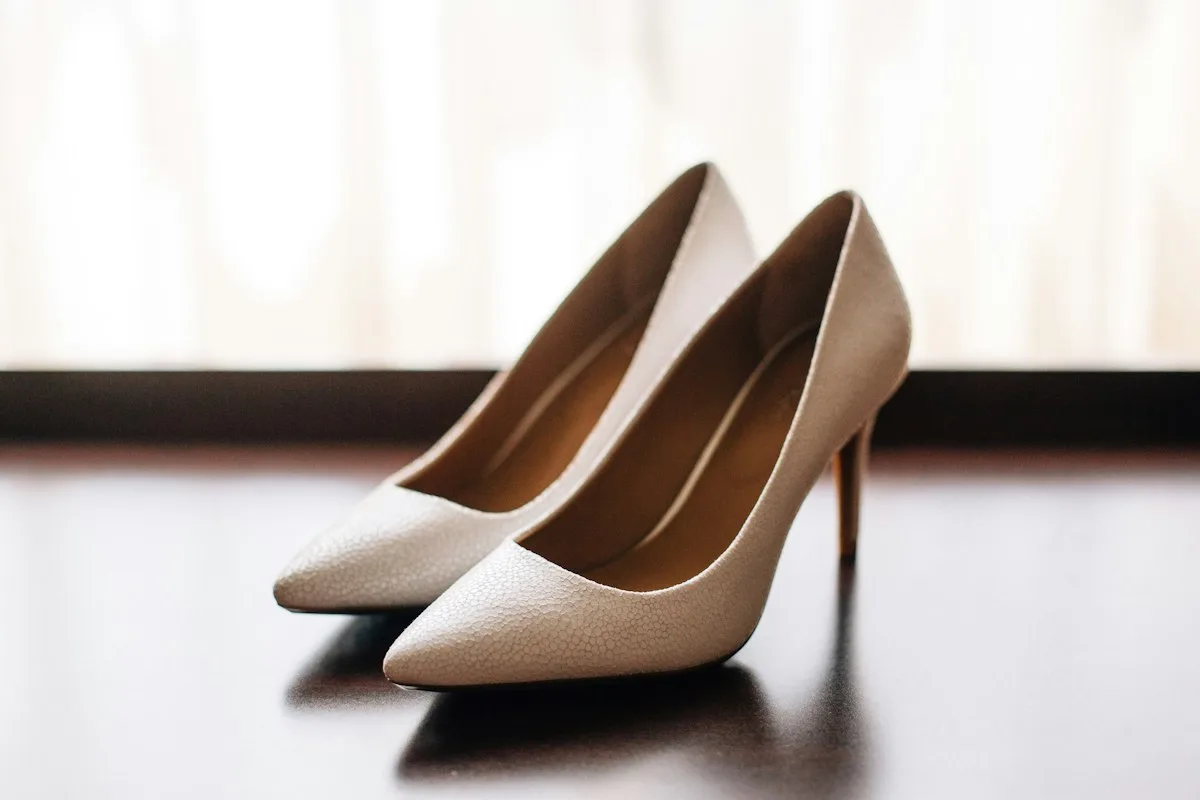
A stiletto has a tall, very thin heel, usually three inches or higher, that narrows to a small tip. It takes its name from the stiletto dagger, and it became famous in the 1950s once designers began putting a steel rod inside the heel to make it strong enough to hold weight. Stilettos lengthen the leg and push the posture upright, which is why they are the classic choice for formal and evening wear. They are also the hardest heels to walk in, because all the weight at the back of the foot rests on a tip the size of a coin.
- What defines it: A tall, needle-thin heel on any style of shoe: pump, sandal, or boot.
- Best worn with: Cocktail dresses, evening gowns, tailored trousers, and pencil skirts. Avoid grass, gravel, and cobblestones, where the heel sinks or catches.
- Who it suits: Confident heel wearers and short events. If you are new to heels, start lower and wider, then work up.
2. Pumps
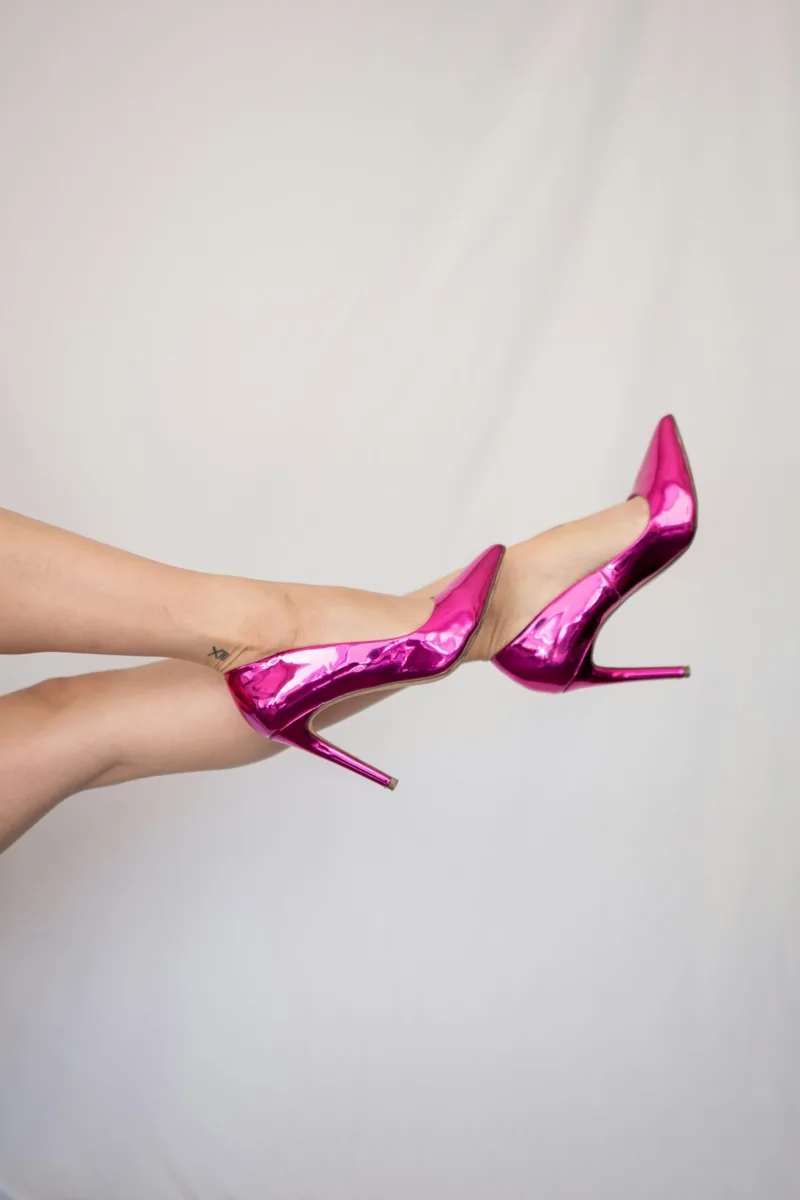
Pumps are closed-toe, slip-on shoes with a low-cut front that shows the top of the foot and no straps, laces, or buckles. In Britain they are called court shoes. The name describes the body of the shoe, not the heel, so a pump can have a kitten, block, or stiletto heel and a pointed, round, or almond toe. A plain pump in black or a shade close to your skin tone is one of the most useful shoes a woman can own.
- What defines it: A covered toe and heel, a low-cut top line, and no fastening.
- Best worn with: Suits, pencil skirts, tailored dresses, and straight or cropped trousers. They are the standard shoe for offices, interviews, and formal events.
- Who it suits: Almost everyone. A nude pump makes legs look longer, and a rounded toe is kinder to wide feet than a sharp point.
3. Kitten Heels
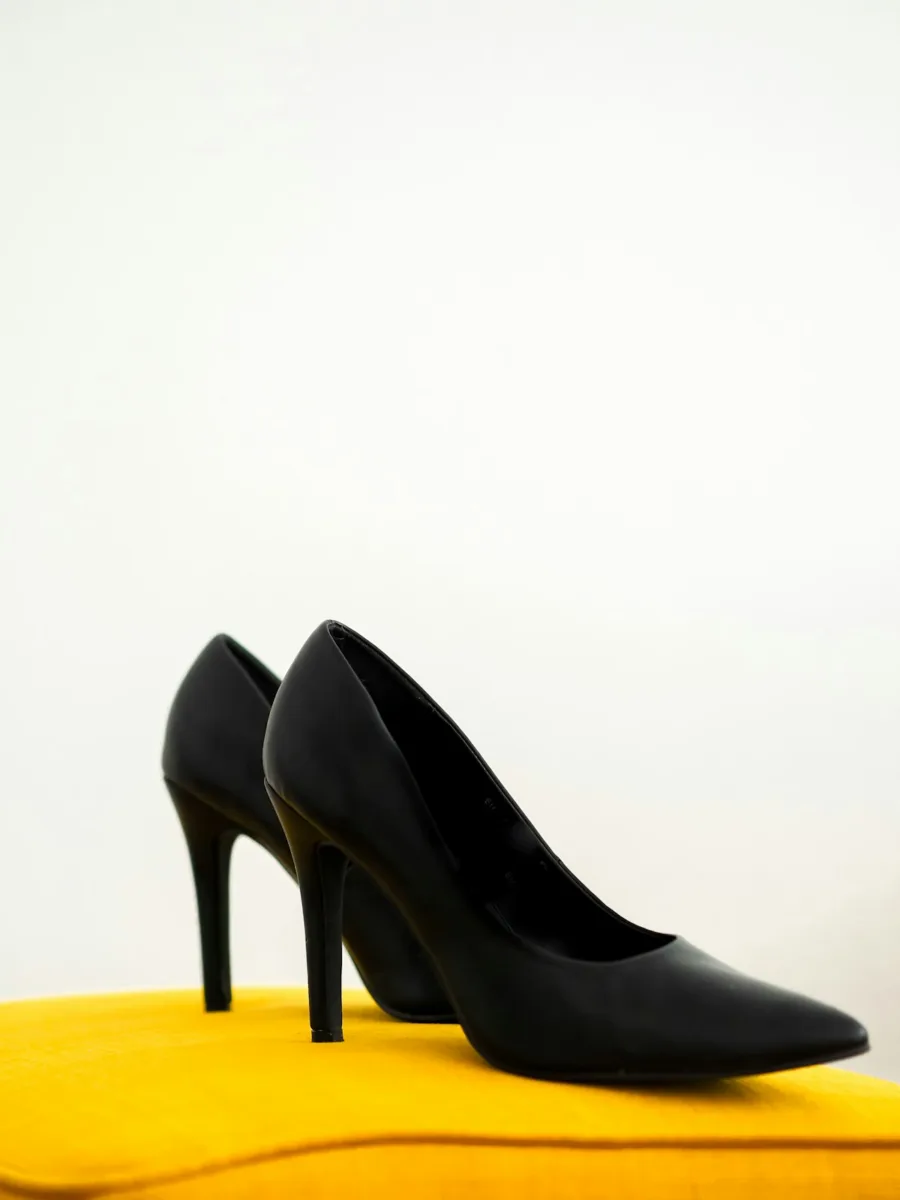
Kitten heels have a short, slim heel of about one to two inches, set slightly in from the back of the shoe. They became fashionable in the late 1950s and were made famous by Audrey Hepburn. They give the shape and polish of a high heel with far less pressure on the ball of the foot, so they can be worn for a full day of standing and walking.
- What defines it: A low, thin heel under two inches, usually on a pointed-toe pump or slingback.
- Best worn with: Cropped trousers, midi skirts, shift dresses, and jeans. They dress up casual clothes without looking overdone.
- Who it suits: Beginners, tall women who do not want extra height, and anyone who needs comfort for a long day.
4. Block Heels
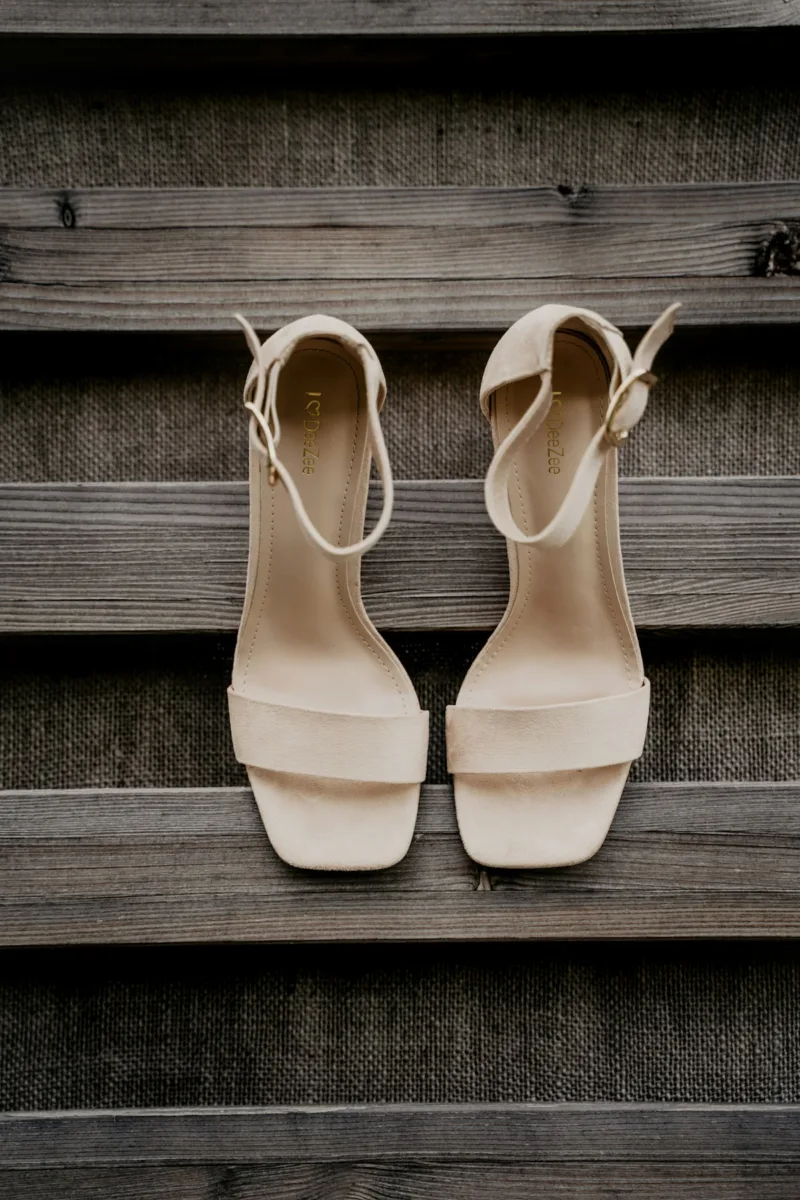
Block heels have a wide, solid heel with a square or rectangular base. Because the base is broad, body weight is spread over a much larger area than on a thin heel, and the ankle is far less likely to wobble. They appear on sandals, pumps, loafers, and boots, at every height from low to very high. They are the heel most often recommended for long events.
- What defines it: A thick, squared-off heel that is as wide at the bottom as at the top.
- Best worn with: Wide-leg trousers, jeans, midi dresses, and wedding guest outfits. They are the safe choice for grass, decking, and uneven streets.
- Who it suits: Anyone who wants height with stability, including people with weak ankles and people who stand all day.
5. Wedge Heels
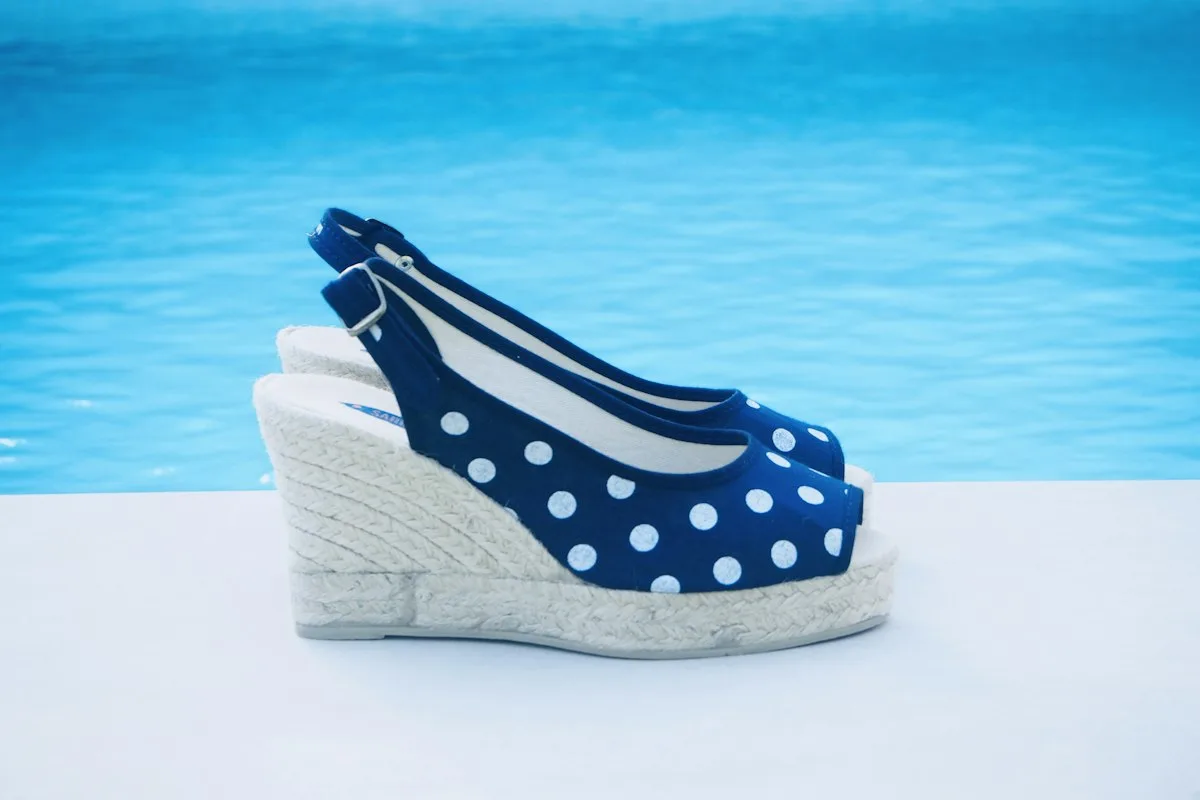
A wedge has a sole and heel made in one solid piece, so the whole underside of the shoe touches the ground. There is no gap under the arch. This gives a lot of height with a lot of support, because weight is carried along the full length of the foot. Summer wedges often have a cork sole or a braided rope sole, in which case they are called espadrille wedges.
- What defines it: A continuous sole that rises from the toe to the heel in a triangular shape.
- Best worn with: Sundresses, maxi dresses, shorts, and cropped or wide-leg trousers. They are ideal for garden parties and beach weddings because they do not sink into soft ground.
- Who it suits: People who want height but dislike thin heels. They are less suited to very formal dress codes.
6. Platform Heels
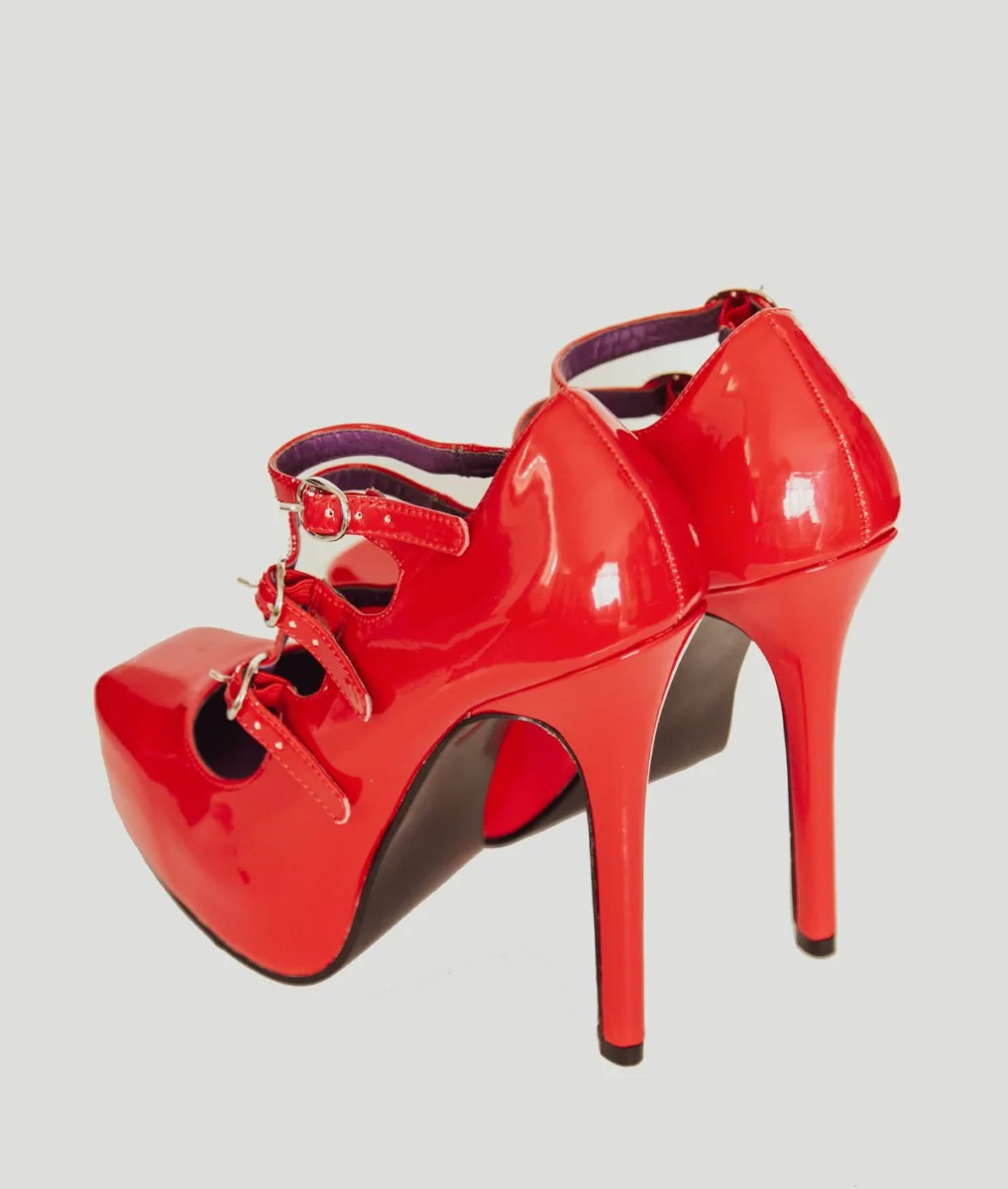
Platform heels have a thick sole under the front of the foot as well as a high heel at the back. The platform lifts the toes, which reduces the slope of the foot: a five-inch heel with a one-inch platform feels closer to a four-inch heel. That is how they add more height than any other style while staying wearable. They were a symbol of 1970s fashion and return to popularity regularly.
- What defines it: A raised sole at the front combined with a high heel.
- Best worn with: Flared trousers, wide-leg jeans, mini dresses, and party outfits.
- Who it suits: Shorter women who want the most height, and anyone who finds steep high heels painful on the ball of the foot.
7. Slingback Heels
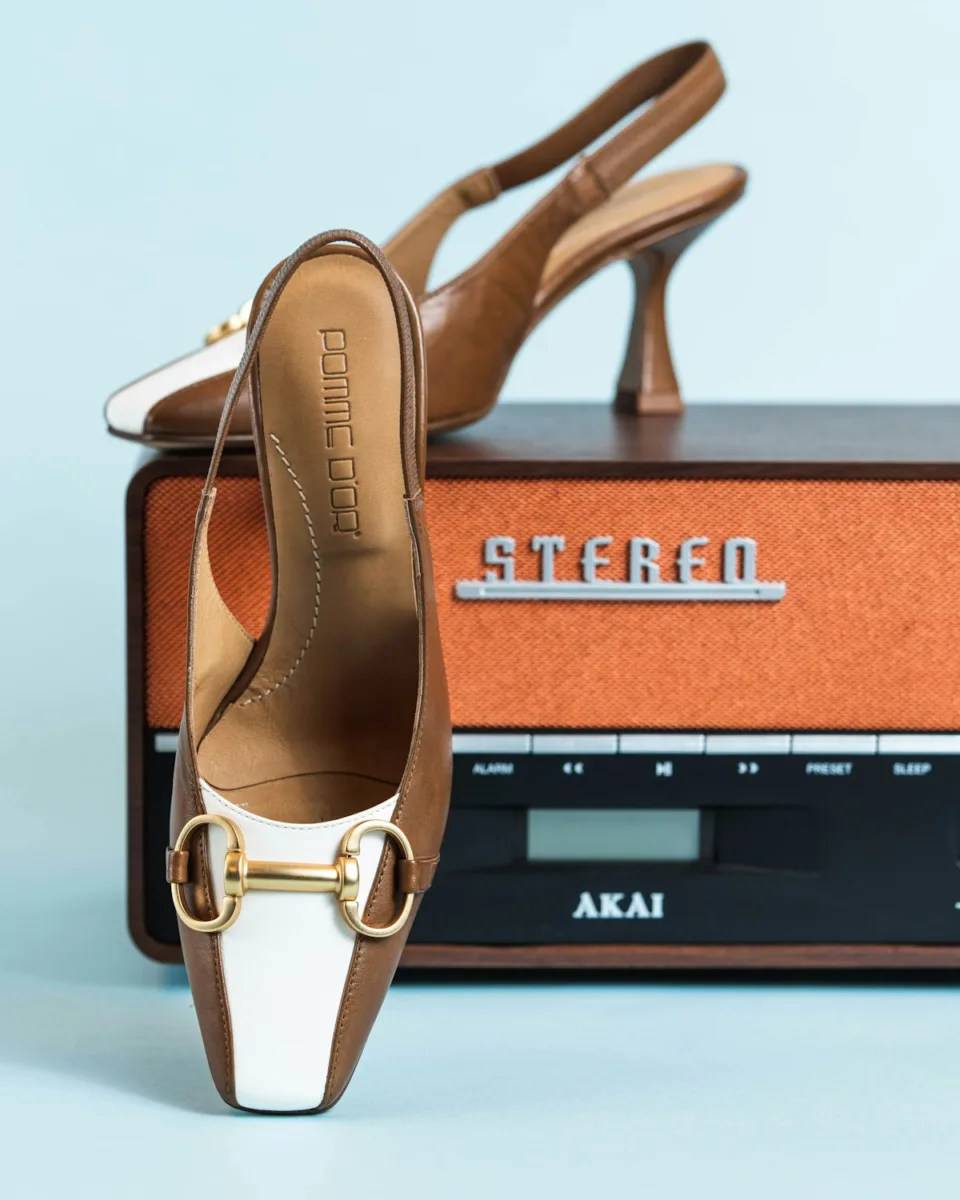
A slingback has an open back with a single strap that runs behind the heel to hold the shoe on. The toe is usually closed and pointed. It gives the neat look of a pump but is lighter and cooler, and the strap often has a small elastic section or buckle for a closer fit. Two-tone slingbacks with a contrasting toe cap are a long-standing classic.
- What defines it: An exposed heel with a strap around the back of the ankle.
- Best worn with: Tailored trousers, tweed and boucle suits, midi skirts, and straight jeans.
- Who it suits: People who want a polished shoe for warm weather. If the strap slips, a narrow-heeled foot may need a size with an adjustable buckle.
8. Ankle Strap Heels
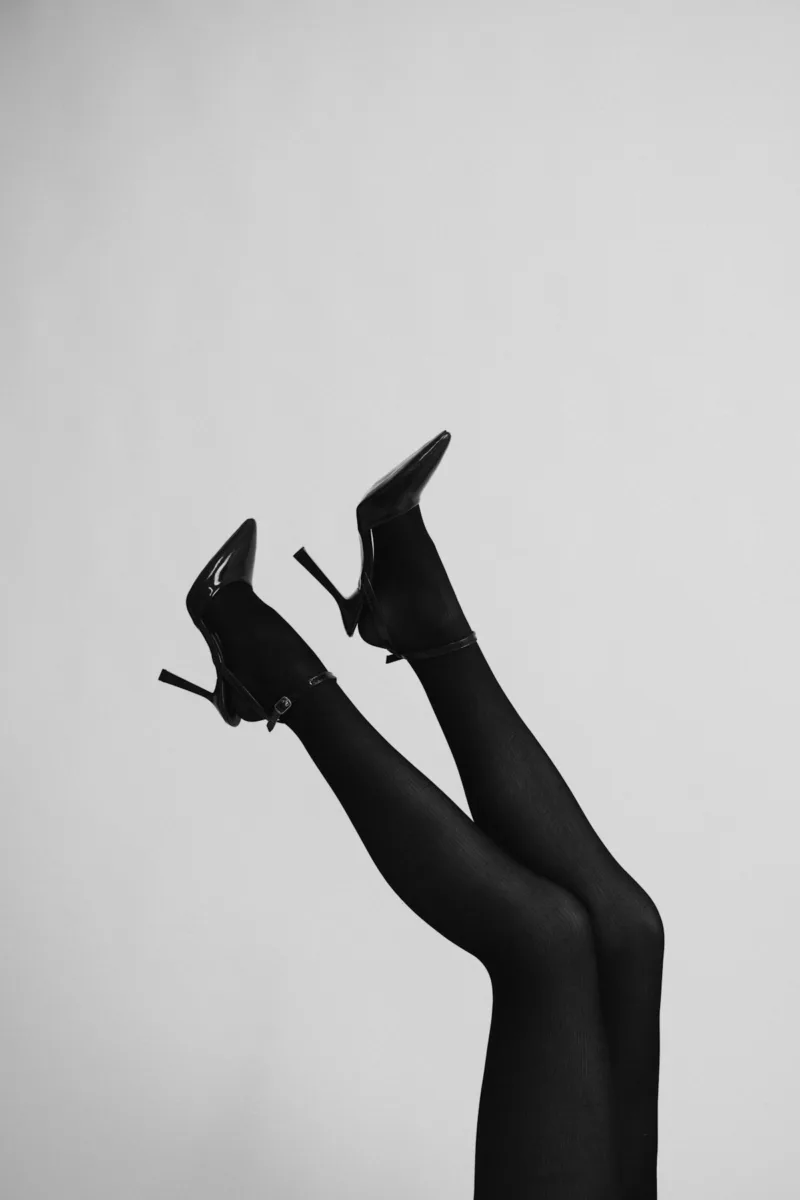
Ankle strap heels fasten with a strap that circles the ankle, usually closed with a small buckle. The strap anchors the foot in the shoe, so the heel does not slip out when you walk, climb stairs, or dance. They come as sandals and as closed-toe pumps, with every kind of heel.
- What defines it: A buckled strap around the ankle on any heel shape.
- Best worn with: Dresses and skirts that end at or above the knee, and cropped trousers that show the strap.
- Who it suits: Anyone who will be dancing or on their feet for hours. The strap cuts across the leg, so a strap in your skin tone is the best way to avoid making legs look shorter.
9. Peep-Toe Heels
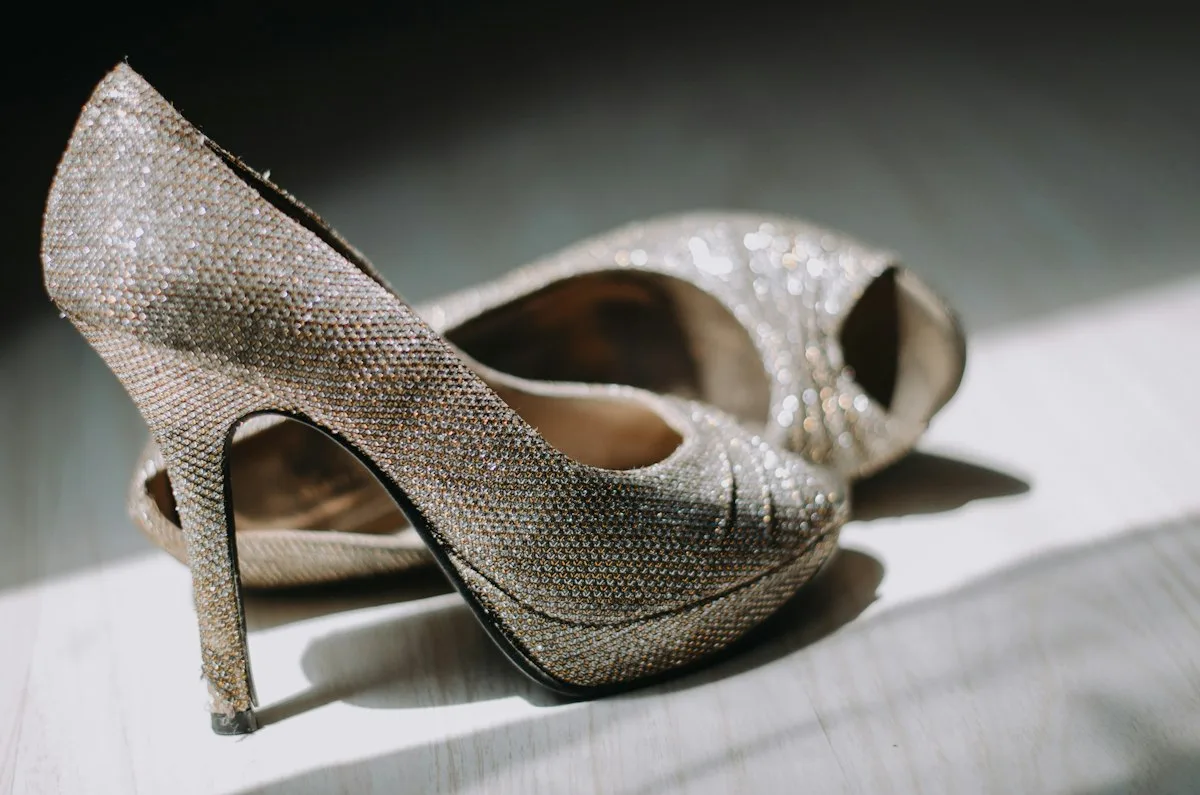
Peep-toe heels have a small opening at the front that shows only the tips of the first two or three toes. The rest of the shoe is closed. The style was popular in the 1940s and still has a slightly vintage feel. It sits between a closed pump and an open sandal, so it works in the months when it is too warm for one and too cool for the other.
- What defines it: A small cut-out at the toe on an otherwise closed shoe.
- Best worn with: Tea dresses, pencil skirts, and wedding guest outfits in spring and summer.
- Who it suits: People who want a dressy shoe with a little air. They show the toes, so they are usually worn with bare legs, not tights.
10. Mules
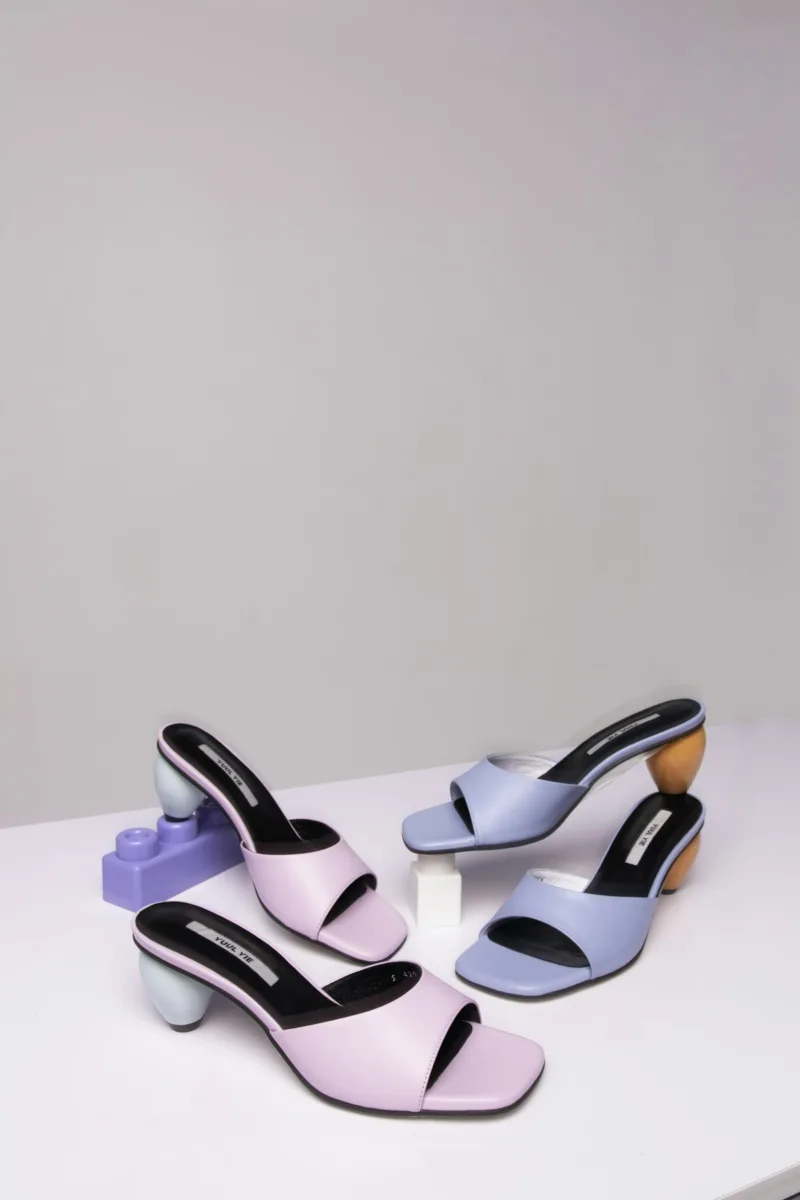
Mules are backless shoes: the foot slides in and nothing holds the heel. They can have a closed or open toe and a flat, kitten, block, or stiletto heel. They are quick to put on and look relaxed and modern. Because there is no back, the toes do a little more work to keep the shoe on, so very high mules are harder to walk in than strapped shoes.
- What defines it: No back and no heel strap.
- Best worn with: Cropped jeans, wide-leg trousers, slip dresses, and shirt dresses.
- Who it suits: People who like easy, slip-on shoes. A low or block heel is the most practical choice for walking any distance.
11. Heeled Ankle Boots
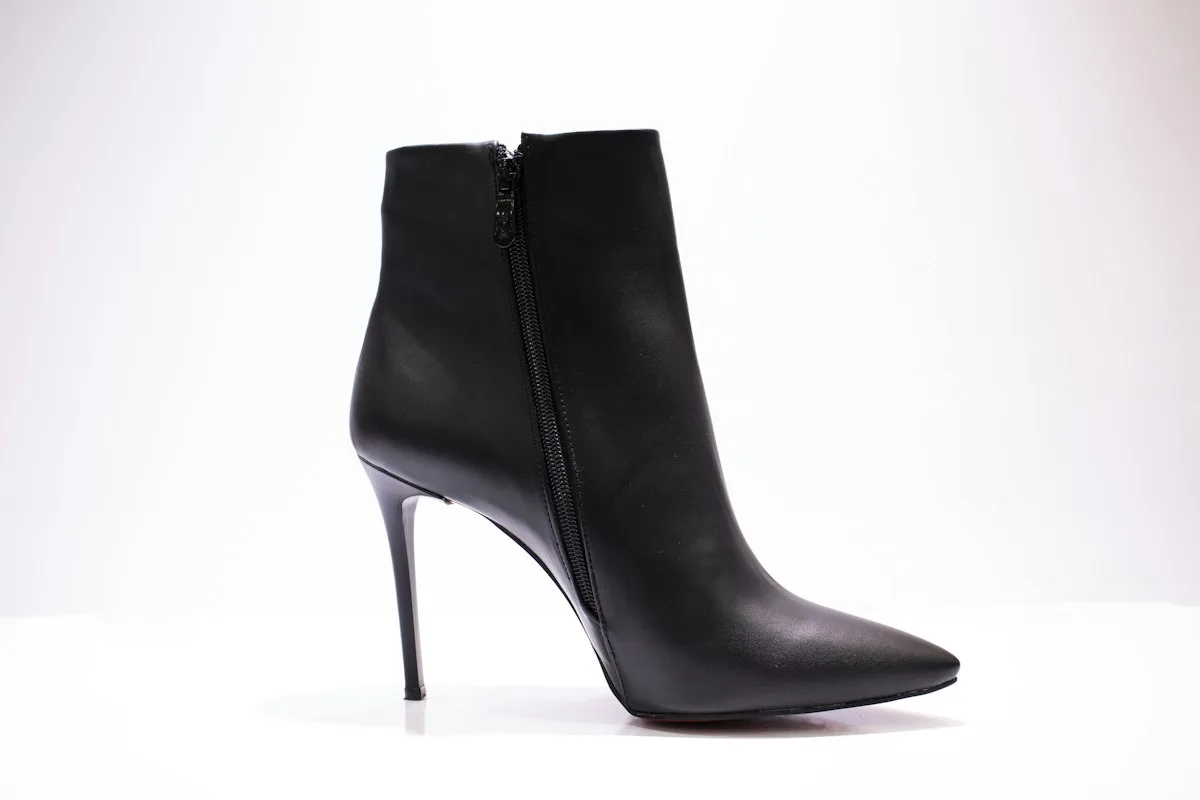
Heeled ankle boots, also called booties, cover the foot and stop at or just above the ankle. The heel can be a block, a cone, or a stiletto, and the boot closes with a side zip or elastic panels. They give the height of a heel with the warmth and grip of a boot, which makes them the main heeled shoe of fall and winter.
- What defines it: A boot shaft that ends at the ankle, with a raised heel.
- Best worn with: Skinny or straight jeans, midi skirts with tights, and sweater dresses.
- Who it suits: Everyone in cold weather. A boot that fits close to the ankle is the most flattering with skirts and dresses.
More Heel Shapes to Know
A few other heel shapes appear on the styles above. A cone heel is wide at the top and narrows to a point. A spool heel is wide at the top and bottom and narrow in the middle, like an hourglass. A flared heel gets wider toward the ground. A Cuban heel is a short, straight-sided block heel that is common on boots.
How to Choose the Right Type of Heel
Start with how long you will be on your feet. For a full day, choose block heels, wedges, or kitten heels. For a short event where looks matter most, stilettos and platforms work well. Match the shoe to the outfit too: pumps and slingbacks suit tailored clothes, while wedges and mules suit summer dresses and wide-leg pants. To plan the rest of the outfit, see our guides to types of skirts, types of jeans, and types of handbags.
Frequently Asked Questions
Which type of heel is the most comfortable?
Block heels and wedges are the most comfortable because their wide base spreads your weight and keeps you stable. Kitten heels are also easy to wear because they are low.
What is the difference between a pump and a stiletto?
A pump describes the shape of the shoe: closed toe, low-cut front, and no straps. A stiletto describes the heel: tall and very thin. A shoe can be both, which is called a stiletto pump.
What are the best heels for beginners?
Start with a low block heel or a kitten heel of about two inches. They are stable and let you get used to the feeling before moving to higher or thinner heels.
What height is considered a high heel?
Heels under two inches are low, two to three inches are mid-height, and anything over three inches is usually called a high heel.
What is the difference between a wedge and a platform?
A wedge has a solid sole that fills the space under the arch. A platform has a thick sole under the front of the foot and a separate heel at the back.