Penguins are flightless seabirds that live almost entirely in the Southern Hemisphere. Their wings have evolved into stiff flippers, and they “fly” underwater instead, reaching speeds of up to 22 miles per hour in the fastest species. Despite their link with ice, only a few species live in Antarctica itself. Others live on the coasts of South America, Africa, Australia, New Zealand, and even the Galápagos Islands near the equator.
Scientists recognize 18 species of penguins. This guide shows five of them in detail with pictures and covers all 18 in a comparison table.
All 18 Types of Penguins at a Glance
| Penguin | Height | Where it lives | Status |
|---|---|---|---|
| Emperor | 45 inches | Antarctica | Near threatened |
| King | 37 inches | Sub-Antarctic islands | Least concern |
| Gentoo | 30 inches | Antarctic Peninsula, sub-Antarctic islands | Least concern |
| Adélie | 28 inches | Antarctica | Least concern |
| Chinstrap | 28 inches | Antarctic Peninsula, South Atlantic islands | Least concern |
| Royal | 28 inches | Macquarie Island | Least concern |
| Macaroni | 28 inches | Sub-Antarctic islands, southern Chile | Vulnerable |
| Yellow-eyed | 26 inches | New Zealand | Endangered |
| Magellanic | 28 inches | Argentina, Chile, Falkland Islands | Least concern |
| Humboldt | 26 inches | Peru and Chile | Vulnerable |
| African | 24 inches | South Africa and Namibia | Critically endangered |
| Galápagos | 20 inches | Galápagos Islands | Endangered |
| Southern rockhopper | 22 inches | Falklands, southern Chile and Argentina | Vulnerable |
| Northern rockhopper | 22 inches | Tristan da Cunha, Gough Island | Endangered |
| Fiordland | 24 inches | New Zealand | Near threatened |
| Snares | 24 inches | Snares Islands, New Zealand | Vulnerable |
| Erect-crested | 27 inches | Bounty and Antipodes Islands, New Zealand | Endangered |
| Little (blue) | 13 inches | Southern Australia and New Zealand | Least concern |
Conservation status follows the IUCN Red List and can change as populations are reassessed.
5 Types of Penguins in Detail
1. Gentoo Penguin
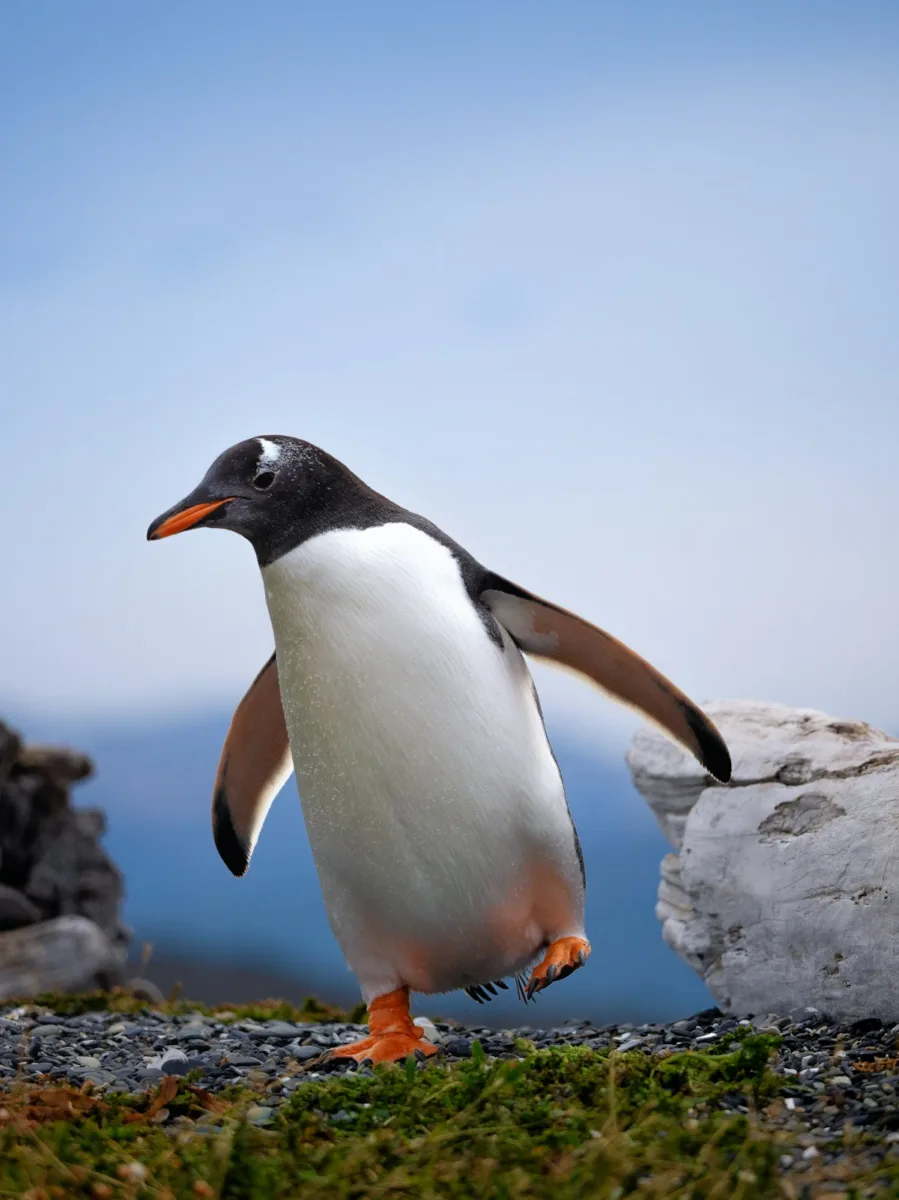
The gentoo is easy to recognize by the white patch above each eye, like a bonnet, and its bright orange-red bill and feet. It has the longest tail of any penguin, which sweeps from side to side as it waddles. Gentoos are the fastest swimming birds in the world, reaching about 22 miles per hour underwater. They build nests from piles of pebbles, and males often present stones to females, sometimes stealing them from their neighbors.
Where it lives: The Antarctic Peninsula, the Falkland Islands, South Georgia, and other sub-Antarctic islands.
Size: About 30 inches tall and 12 to 19 pounds, the third-largest penguin.
2. African Penguin
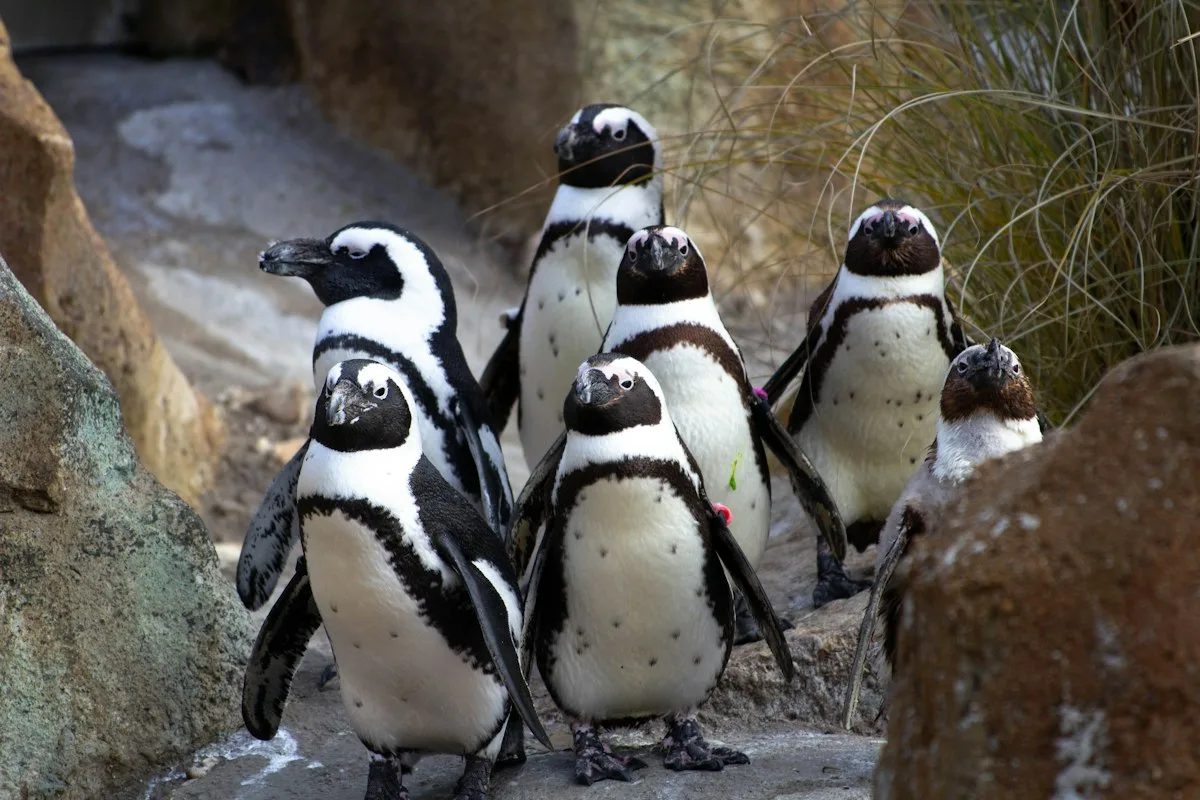
The African penguin is the only penguin that breeds in Africa. It has a black stripe across its chest, black spots on its white belly that are unique to each bird like a fingerprint, and pink skin above the eyes that helps it lose heat in the warm climate. It brays loudly like a donkey, which once earned it the name jackass penguin. The colony at Boulders Beach near Cape Town is one of the best places in the world to see penguins up close. Its population has fallen by more than 95 percent since the early 1900s, mostly because of overfishing of its food, and in 2024 it was classified as critically endangered.
Where it lives: The coasts and islands of South Africa and Namibia.
Size: About 24 inches tall and 5 to 8 pounds.
3. Adélie Penguin
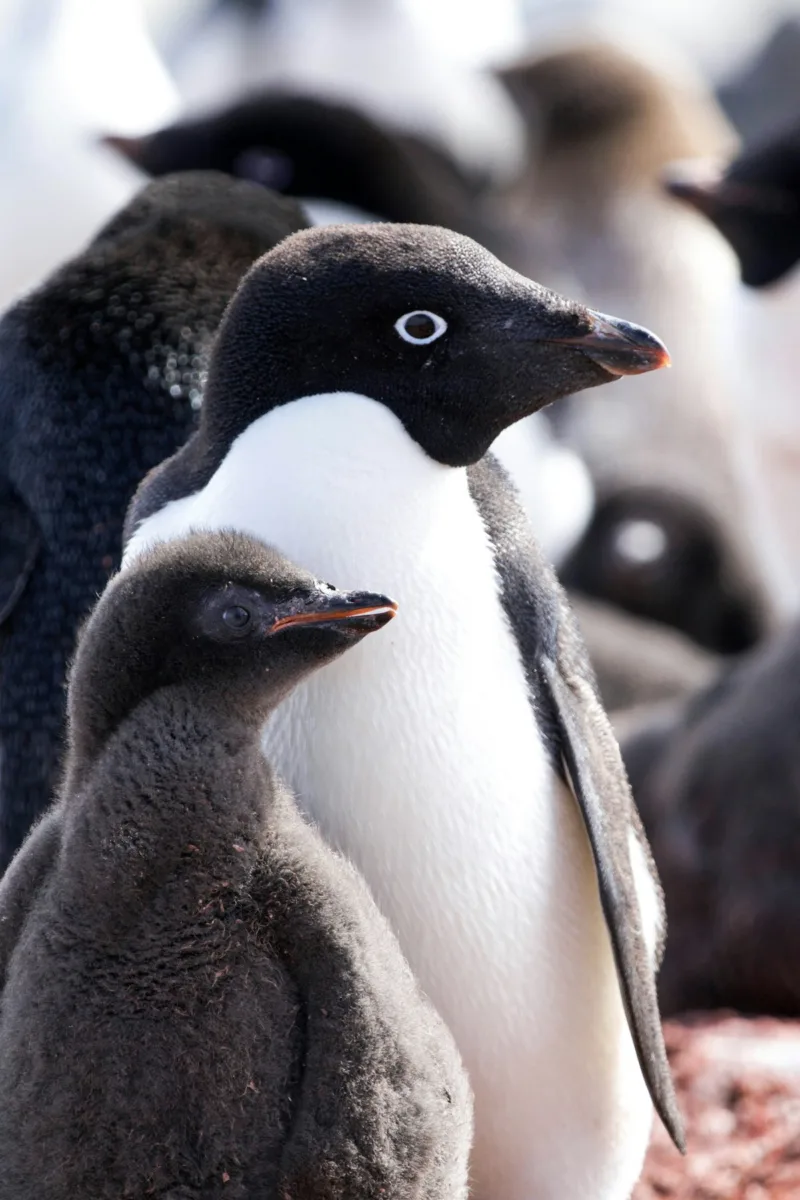
The Adélie is the classic “tuxedo” penguin: black back and head, white belly, and a distinctive white ring around each eye. It was named by the French explorer Jules Dumont d’Urville after his wife, Adèle. Along with the emperor, it is one of only two penguins that live on the Antarctic continent itself. Adélies migrate hundreds of miles each year between their winter feeding grounds at the edge of the sea ice and their summer nesting colonies on rocky shores.
Where it lives: All around the coast of Antarctica.
Size: About 28 inches tall and 8 to 13 pounds.
4. Little Blue Penguin
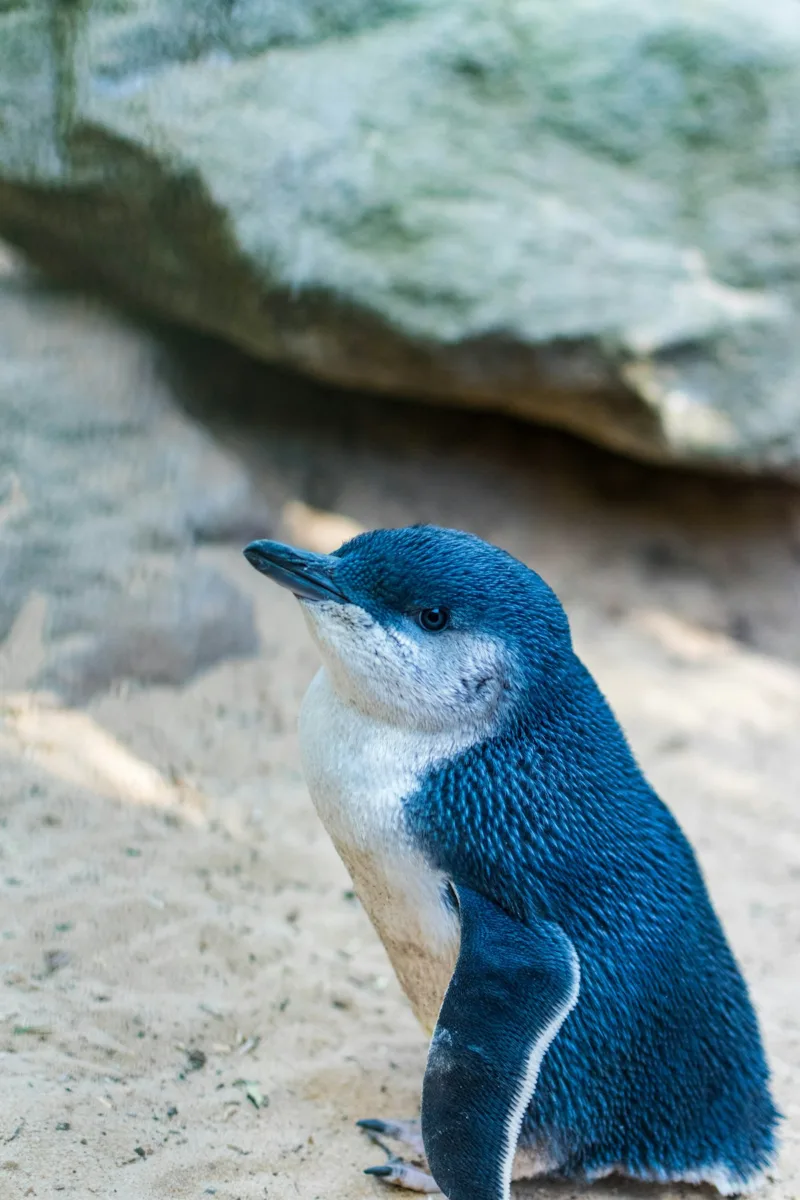
The little penguin, also called the little blue or fairy penguin, is the smallest penguin in the world. Its back and flippers are slate blue instead of black. It spends the day at sea and comes ashore after dark to its burrow, and at Phillip Island near Melbourne in Australia, crowds gather every evening to watch the “penguin parade” as hundreds of them waddle up the beach.
Where it lives: Southern Australia and New Zealand.
Size: About 13 inches tall and around 2 to 3 pounds.
5. Macaroni Penguin
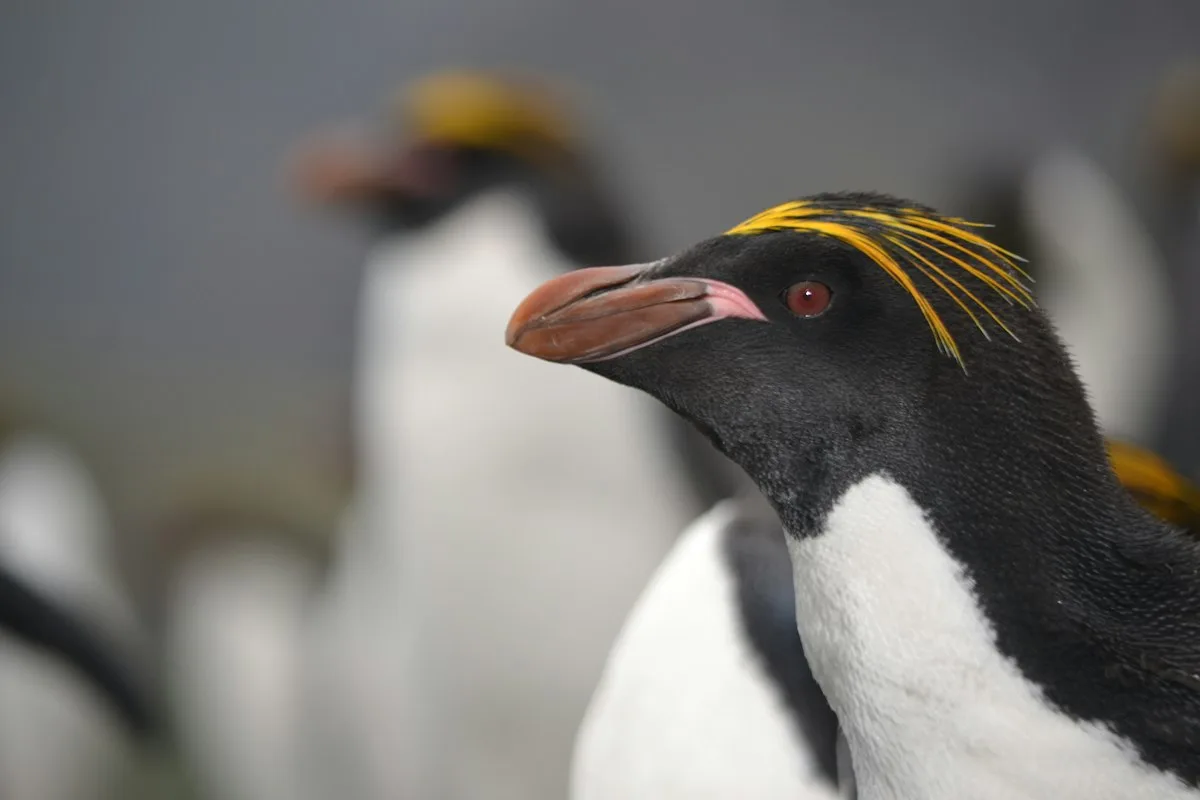
The macaroni penguin has a striking crest of long orange-yellow feathers that sprout from the middle of its forehead and sweep back over the eyes. It was named by British sailors after the “macaroni” dandies of 1700s England, who wore flamboyant feathered hats. It is one of the most numerous penguins in the world, with several million breeding pairs, but its numbers have fallen sharply, and it is listed as vulnerable.
Where it lives: Sub-Antarctic islands of the South Atlantic and southern Indian Ocean, and southern Chile.
Size: About 28 inches tall and 8 to 14 pounds.
The Main Groups of Penguins
- Great penguins: the emperor and king penguins, the two largest species, with orange or yellow patches on the neck.
- Brush-tailed penguins: the gentoo, Adélie, and chinstrap penguins of the Antarctic region.
- Banded penguins: the African, Humboldt, Magellanic, and Galápagos penguins, which have black bands across the chest and live in warmer climates.
- Crested penguins: the macaroni, royal, rockhopper, Fiordland, Snares, and erect-crested penguins, all with yellow or orange head plumes.
- Little penguins: the smallest species, from Australia and New Zealand.
- Yellow-eyed penguin: a rare species from New Zealand that is in a group of its own.
More About the Emperor and King Penguins
The emperor penguin is the largest penguin, standing about 45 inches tall and weighing up to 88 pounds. It breeds during the Antarctic winter, when temperatures fall below minus 40 degrees. The male balances the single egg on his feet under a fold of skin for about two months without eating, while thousands of males huddle together for warmth. The king penguin is slightly smaller, with brighter orange patches, and it takes more than a year to raise one chick.
Frequently Asked Questions
How many types of penguins are there?
Most scientists recognize 18 species of penguins, though a few experts split some species further, giving numbers up to 20.
What is the biggest type of penguin?
The emperor penguin is the largest, standing about 45 inches tall and weighing up to 88 pounds.
What is the smallest type of penguin?
The little penguin, also called the little blue or fairy penguin, is the smallest at about 13 inches tall.
Do penguins live at the North Pole?
No. Penguins live almost entirely in the Southern Hemisphere. The only species that reaches north of the equator is the Galápagos penguin, and only just.
Which penguins are endangered?
The African penguin is critically endangered. The yellow-eyed, Galápagos, northern rockhopper, and erect-crested penguins are endangered, and several others are vulnerable.