A bracelet is any piece of jewelry worn around the wrist. Bracelets are among the oldest ornaments people have made, with examples of shell, bone, and stone going back tens of thousands of years. Today they range from a knotted thread that costs almost nothing to a line of diamonds worth more than a car.
This guide explains eight main types of bracelets with pictures, how to wear each one, and how to measure your wrist for the right size.
Types of Bracelets at a Glance
| Bracelet | Structure | Clasp | Style |
|---|---|---|---|
| Bangle | Rigid closed ring | None, or a hinge | Classic, stackable |
| Charm bracelet | Chain with hanging charms | Yes | Personal, sentimental |
| Beaded bracelet | Beads on elastic or cord | Usually none | Casual, bohemian |
| Cuff | Rigid band with a gap | None | Bold, modern |
| Tennis bracelet | Flexible line of stones | Yes, with a safety catch | Formal, elegant |
| Friendship bracelet | Knotted thread | Tied on | Casual, handmade |
| Leather bracelet | Leather strap or braid | Buckle, snap, or magnet | Casual, rugged |
| Chain bracelet | Linked metal | Yes | Everyday, versatile |
8 Different Types of Bracelets with Pictures
1. Bangle
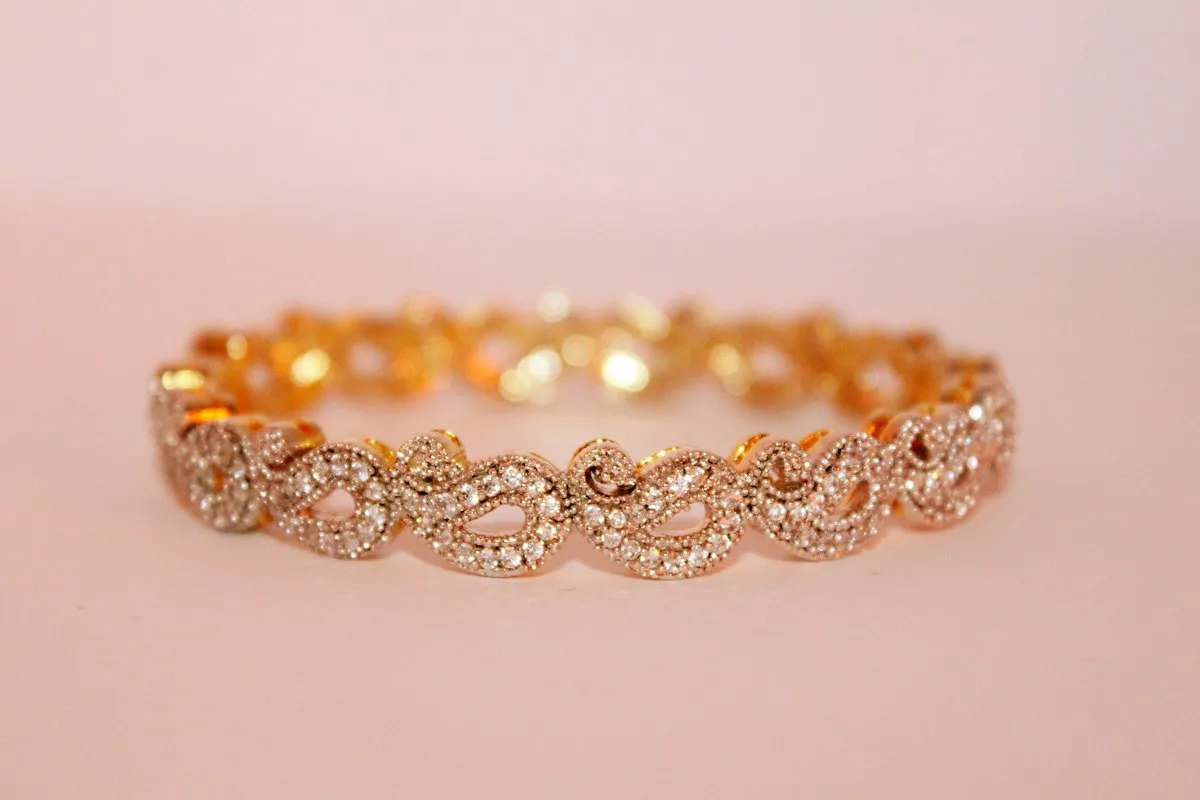
A bangle is a rigid, circular bracelet with no opening. It is slipped over the hand, so it has to be wide enough to pass the knuckles, or it has a hinge and a clasp. Bangles are made of gold, silver, glass, wood, or plastic. They have a special place in South Asia, where brides traditionally wear stacks of glass or gold bangles, and their gentle clinking is considered a sign of good fortune.
- How to wear it: Wear one as a simple accent, or stack several of different widths on the same arm.
- Good to know: Size matters more than with other bracelets. Measure around the widest part of your hand with your thumb tucked in, not around your wrist.
2. Charm Bracelet
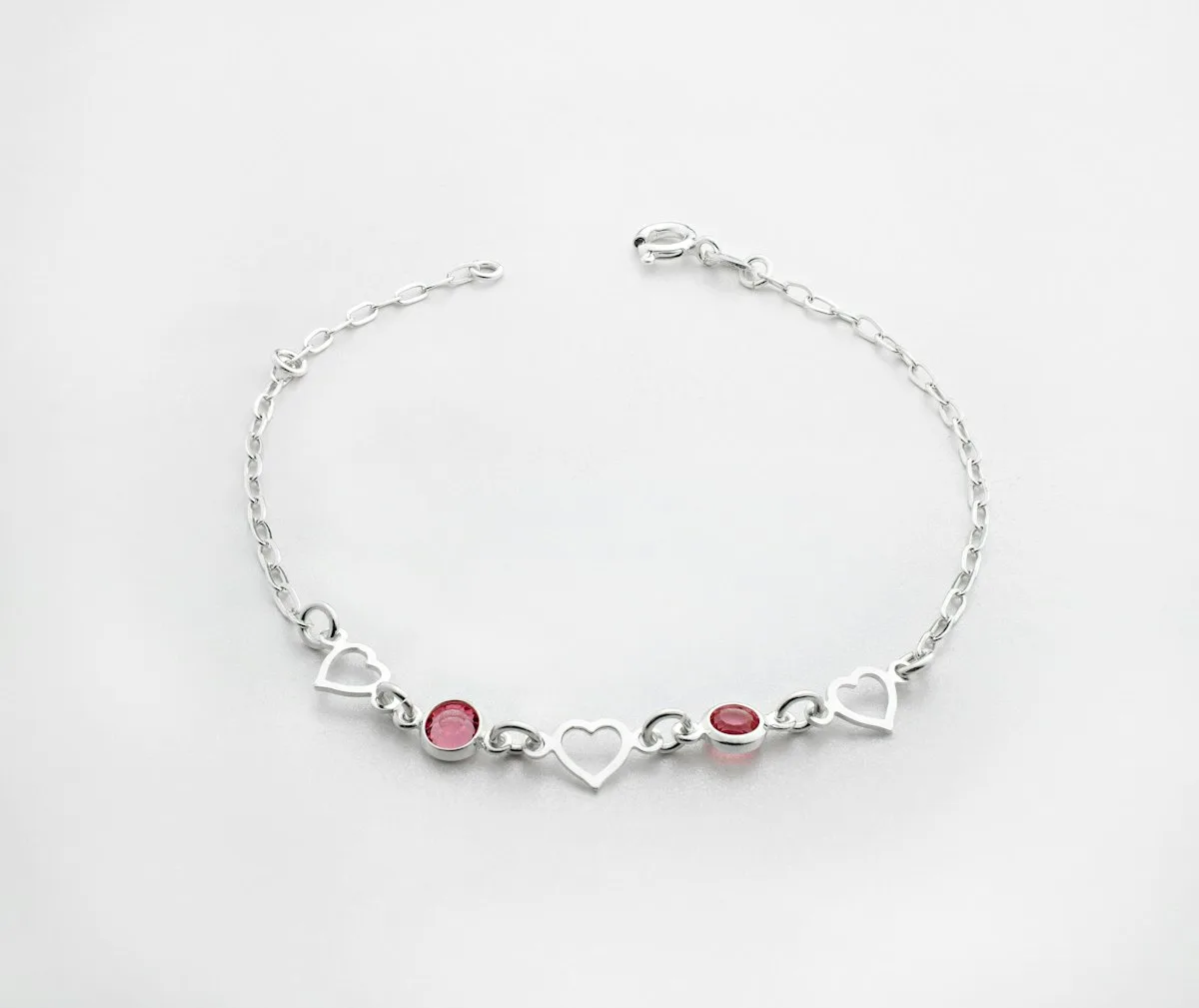
A charm bracelet is a chain or band that carries small decorative pendants called charms. Each charm usually marks something personal, such as a birthday, a trip, a hobby, or a child. People have worn charms for protection and luck since ancient times, and Queen Victoria made charm bracelets fashionable in the 1800s. Modern versions include bracelets with beads that slide onto the band.
- How to wear it: Wear it alone on one wrist so the charms can be seen and can move freely.
- Good to know: It is a popular gift because new charms can be added for years. Charms can catch on knitwear, so take care with loose sweaters.
3. Beaded Bracelet
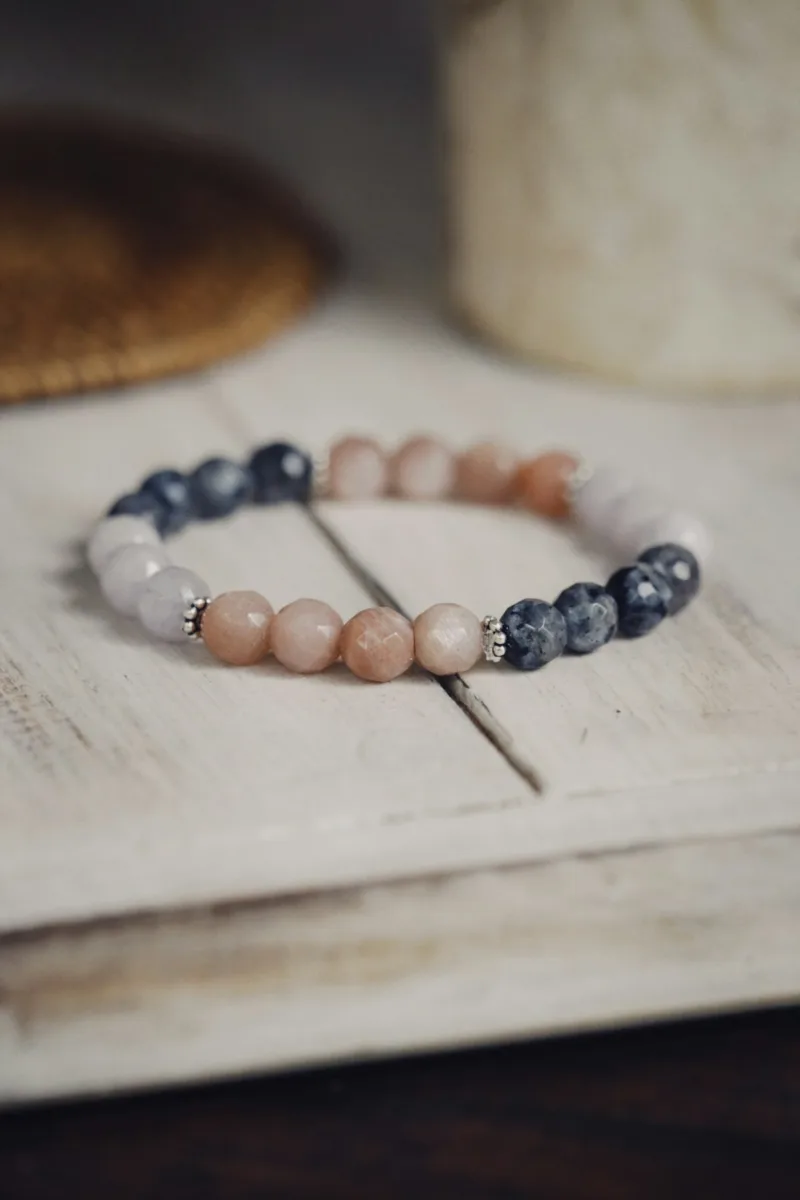
A beaded bracelet is a row of beads threaded on elastic, cord, or wire. The beads may be gemstone, glass, wood, pearl, seed beads, or metal. Stretch versions simply roll over the hand, which makes them easy to put on and take off. Strings of beads have also been used for prayer and meditation in many cultures, such as Buddhist mala beads.
- How to wear it: Stack two or three together, or mix them with a watch or a metal bracelet.
- Good to know: Elastic cord weakens over time and with water, so take stretch bracelets off before swimming or showering and restring them when they loosen.
4. Cuff Bracelet
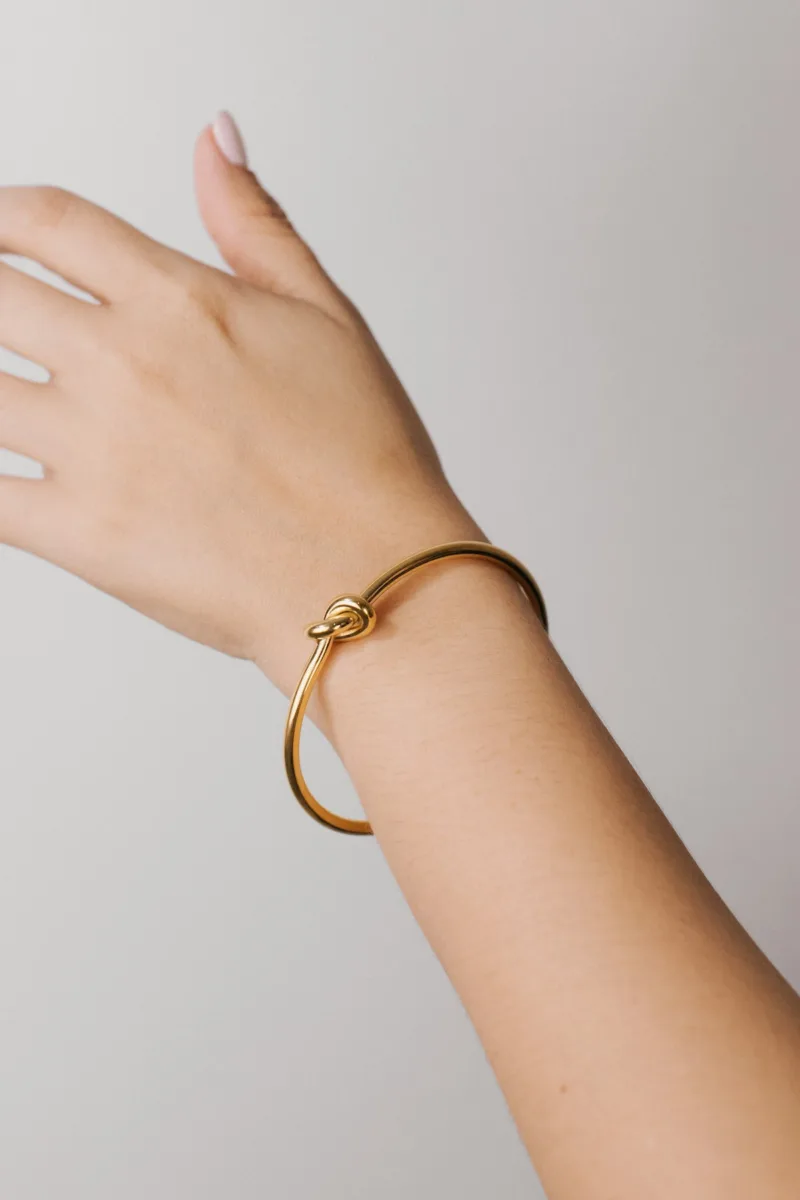
A cuff is a rigid bracelet with an opening on one side. It slides onto the wrist sideways, through the gap, and can usually be squeezed or opened slightly to adjust the fit. Cuffs range from thin wires to wide bands that cover several inches of the forearm. Wide metal cuffs were worn in ancient Egypt, Greece, and Rome, and they are a signature of Native American silverwork from the Southwest.
- How to wear it: Wear a wide cuff alone as a statement piece, with a bare arm or over a fitted sleeve. Thin cuffs can be stacked.
- Good to know: Do not bend a metal cuff back and forth every time you put it on, because repeated bending weakens the metal. Slide it on at the narrowest part of the wrist.
5. Tennis Bracelet
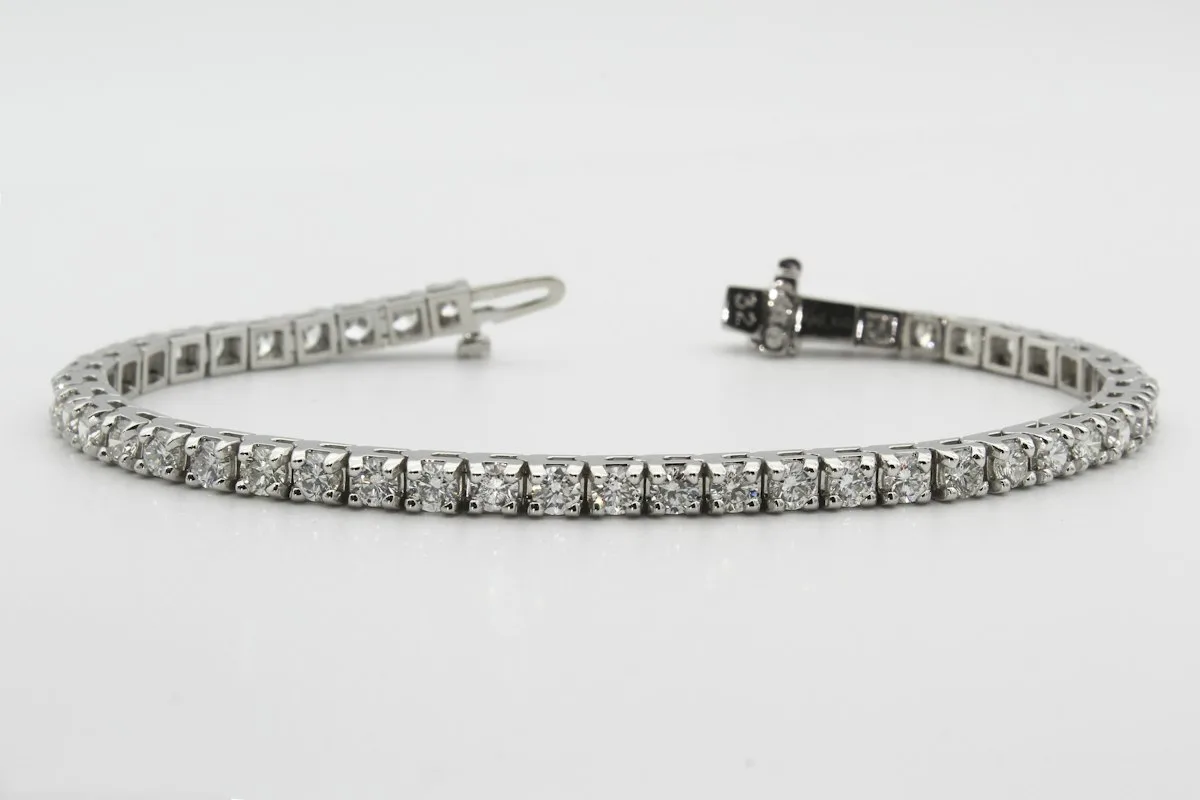
A tennis bracelet is a flexible line of small diamonds or other gemstones, all the same size, set in a thin band of precious metal. It was once called an eternity bracelet or line bracelet. The modern name comes from the 1978 US Open, when the champion Chris Evert asked for play to be paused after her diamond bracelet flew off her wrist during a match.
- How to wear it: Wear it on its own for formal events, or next to a watch for a polished everyday look.
- Good to know: Check that the clasp has a safety catch. Lab-grown diamonds, moissanite, and cubic zirconia give a similar sparkle for much less money.
6. Friendship Bracelet
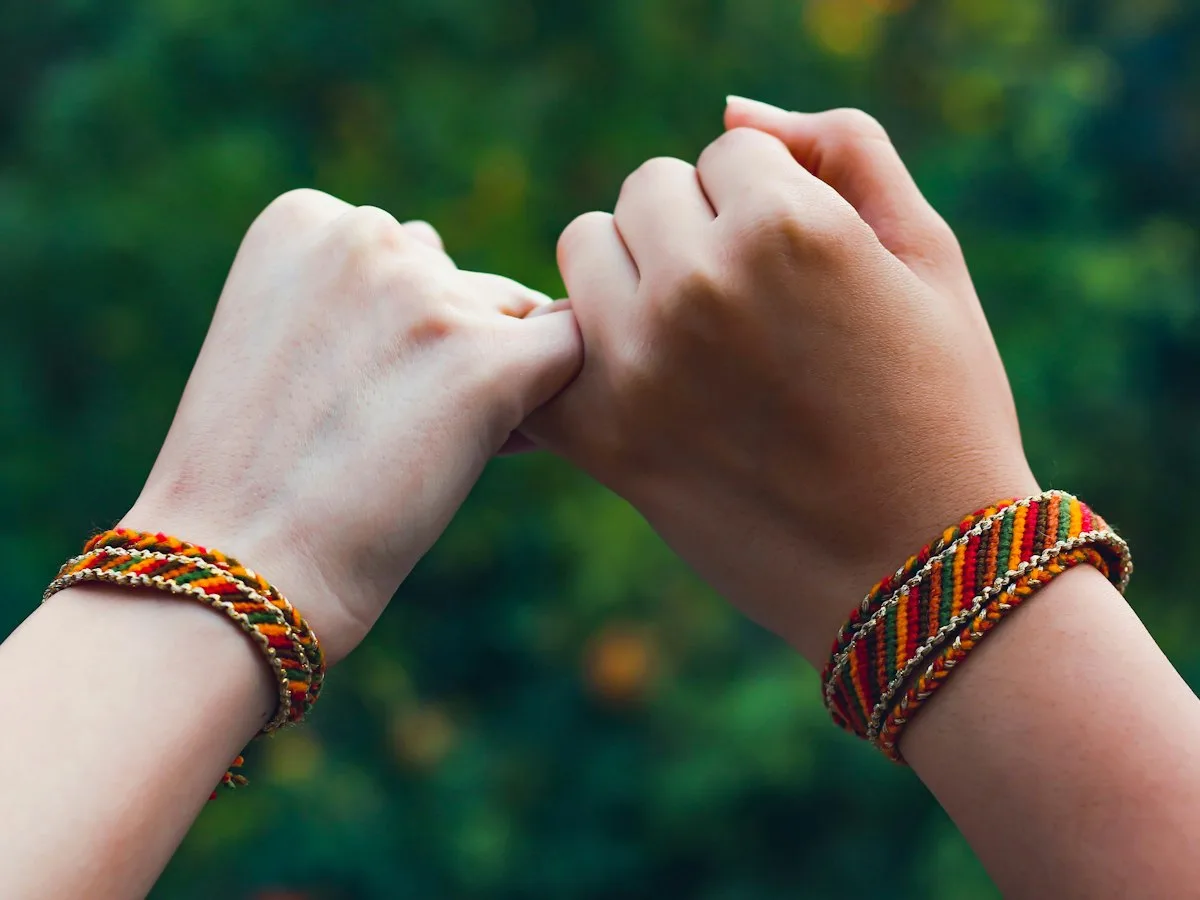
A friendship bracelet is made by hand from knotted embroidery thread in colorful patterns such as stripes, chevrons, and diamonds. The knotting technique is a form of macramé and has roots in the textile traditions of Central and South America. By custom, one friend ties it onto the wrist of another, who makes a wish and wears it until it falls off by itself.
- How to wear it: Wear several together on one wrist. They suit casual, summer, and festival outfits.
- Good to know: They are an easy craft for children. Beaded versions with letters and words have recently become popular for swapping at concerts.
7. Leather Bracelet
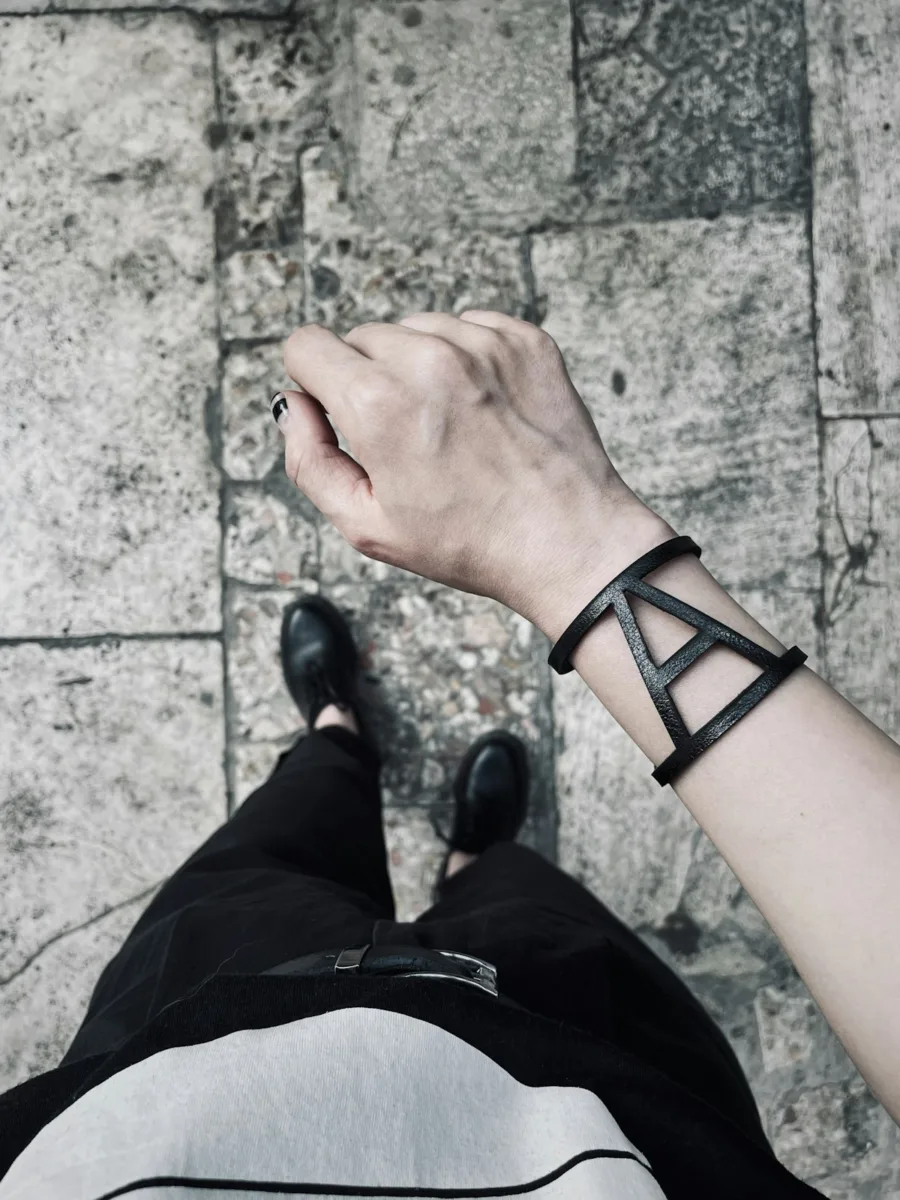
A leather bracelet is made of a strap, a braid, or several cords of leather, fastened with a buckle, snap, knot, or magnetic clasp. Wrap bracelets go around the wrist two or more times. Leather has a relaxed, rugged look, and it is one of the most popular bracelet materials for men.
- How to wear it: Wear it with a watch, or stack it with beads and metal for a layered look. It suits jeans, T-shirts, and casual shirts.
- Good to know: Leather darkens and softens with wear. Keep it dry, because repeated soaking makes it stiff and can cause cracking.
8. Chain Bracelet
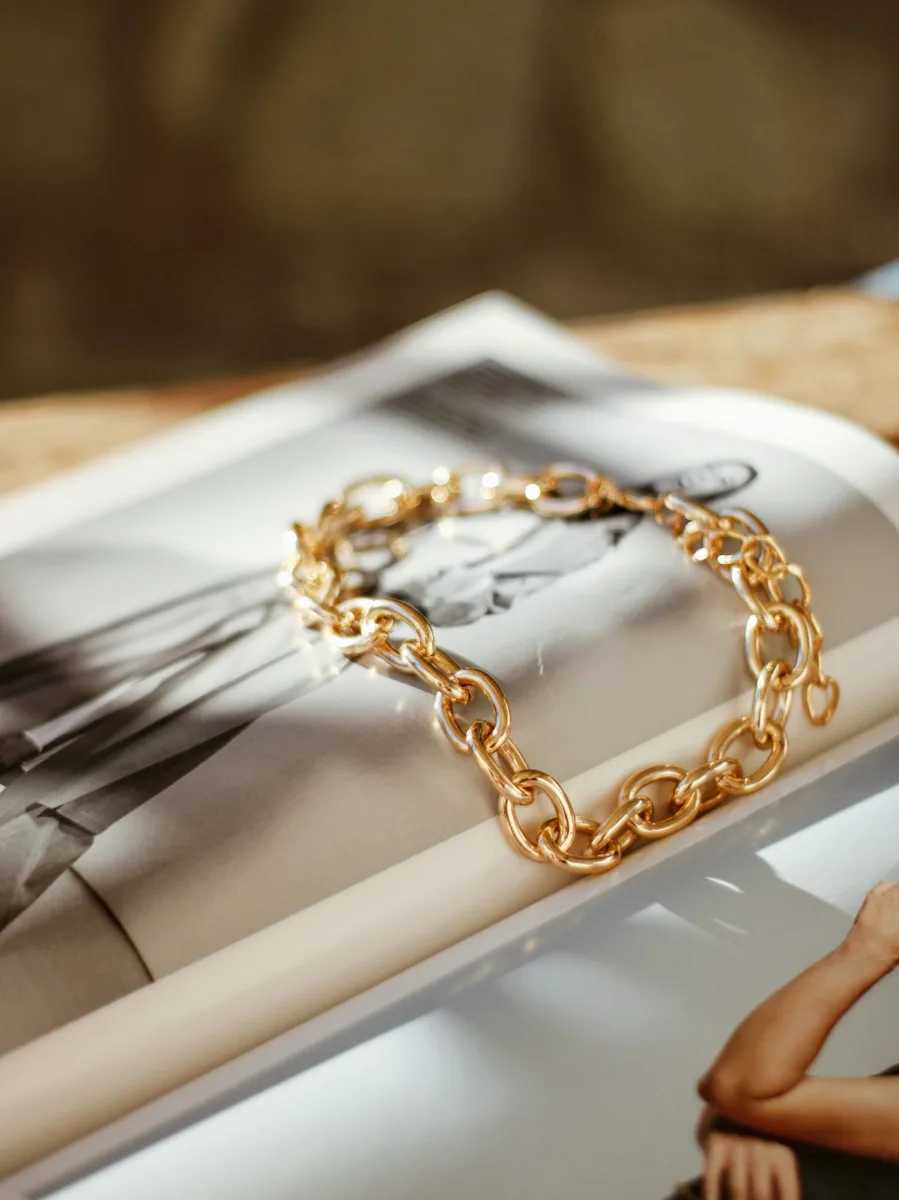
A chain bracelet is made of metal links joined together. The style of the link gives each chain its name. A cable chain has plain oval links, a curb chain has flat, twisted links that lie smooth against the skin, a rope chain looks like a twisted cord, and a paperclip chain has long, rectangular links. Thin chains are delicate and subtle, and thick chains make a stronger statement.
- How to wear it: Wear a fine chain every day on its own, or layer chains of different thicknesses. An ID bracelet is a chain with an engraved plate.
- Good to know: Solid gold and sterling silver last for decades. Gold-plated chains cost less, but the plating wears off with time.
How to Find Your Bracelet Size
- Wrap a soft tape measure, or a strip of paper, around your wrist just above the wrist bone, where a bracelet would sit.
- Note the measurement. This is your wrist size.
- Add about a quarter to half an inch for a snug fit, three quarters of an inch for a comfortable fit, and one inch for a loose fit.
A standard women’s bracelet is about 7 inches long and a standard men’s bracelet about 8 inches. Bangles are sized differently, by the width of the hand.
More Types of Bracelets
- Anklet: a chain or cord worn around the ankle.
- Slider or bolo bracelet: a chain with a sliding bead that tightens to fit any wrist.
- Link bracelet: wide, watch-style metal links.
- Medical ID bracelet: a bracelet engraved with health information for emergencies.
- Pearl bracelet: a single or double strand of pearls with a clasp.
Frequently Asked Questions
What are the main types of bracelets?
The main types are bangles, cuffs, chain bracelets, charm bracelets, beaded bracelets, tennis bracelets, leather bracelets, and friendship bracelets.
What is the difference between a bangle and a cuff?
A bangle is a closed circle that slips over the hand. A cuff has a gap on one side and slides onto the wrist sideways.
Why is it called a tennis bracelet?
The name comes from a 1978 US Open match in which Chris Evert stopped play to look for her diamond line bracelet after it fell off.
Which wrist should a bracelet be worn on?
There is no rule. Many people wear bracelets on the hand they do not write with, so they get in the way less, and a watch on the other.
How tight should a bracelet be?
You should be able to slide one finger between the bracelet and your wrist. It should move a little but not slip over your hand.