Pastry is dough made from flour, fat, and water, and the word is also used for the baked goods made from it. A small change in how the fat is worked into the flour gives completely different results, from the crumbly base of a tart to the hundreds of paper-thin layers in a croissant.
This guide covers nine well-known types of pastry with pictures, followed by the five basic doughs that almost every pastry in the world is built on.
Types of Pastry at a Glance
| Pastry | Dough | Filling | Origin |
|---|---|---|---|
| Croissant | Laminated yeast dough | None, or chocolate or almond | Austria and France |
| Danish pastry | Laminated yeast dough | Fruit, custard, or cream cheese | Denmark, by way of Austria |
| Éclair | Choux pastry | Pastry cream | France |
| Baklava | Filo pastry | Chopped nuts and syrup | Ottoman Empire |
| Cinnamon roll | Enriched yeast dough | Cinnamon, sugar, butter | Sweden |
| Profiterole | Choux pastry | Cream or ice cream | France |
| Strudel | Stretched dough | Apples, raisins, cinnamon | Austria |
| Empanada | Shortcrust-style dough | Meat, cheese, or vegetables | Spain and Latin America |
| Cannoli | Fried pastry dough | Sweetened ricotta | Sicily, Italy |
9 Different Types of Pastry with Pictures
1. Croissant
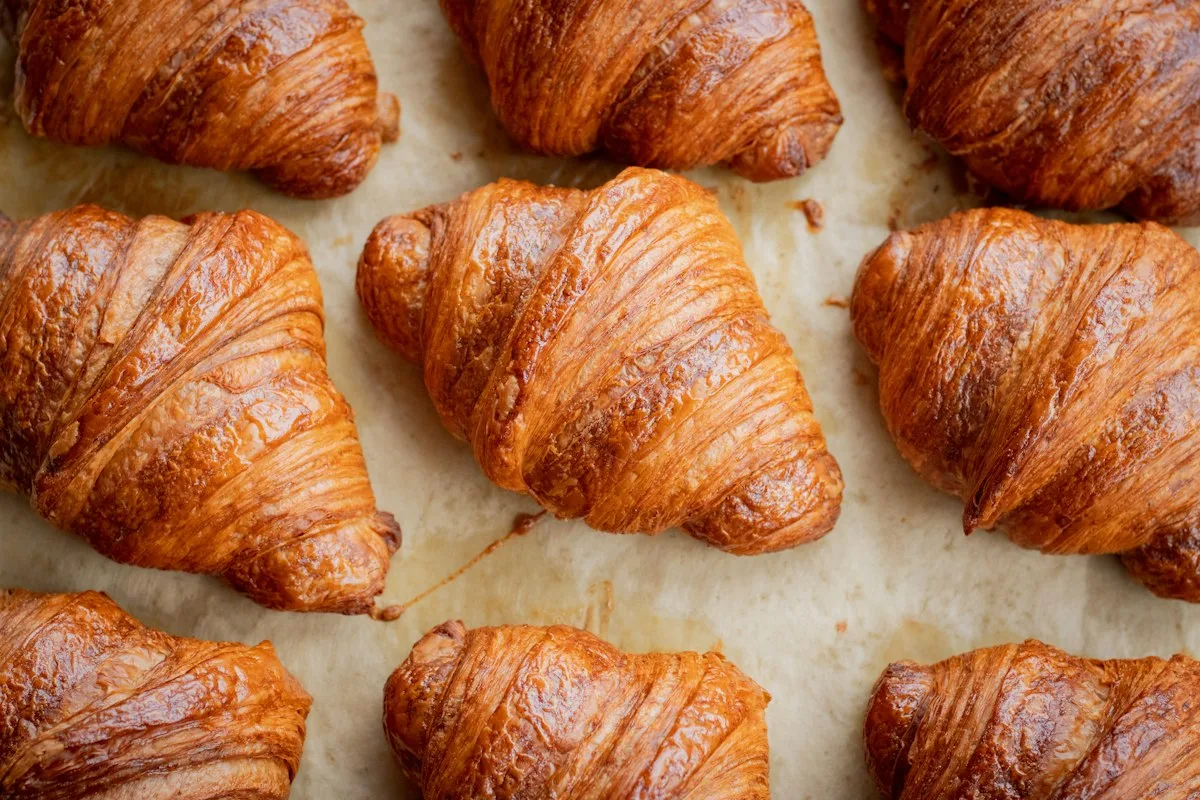
The croissant is a crescent-shaped pastry with a crisp, golden outside and a soft, honeycomb-like inside. It is made by lamination: a slab of cold butter is wrapped in yeast dough, and the two are rolled out and folded again and again until there are dozens of alternating layers. In the oven, the water in the butter turns to steam and pushes the layers apart.
The croissant descends from the kipferl, a crescent roll from Austria. Viennese bakers brought it to Paris in the 1830s, and French bakers later remade it with laminated dough. Pain au chocolat and almond croissants are made from the same dough.
Dough: Laminated yeast dough, also called viennoiserie dough.
2. Danish Pastry
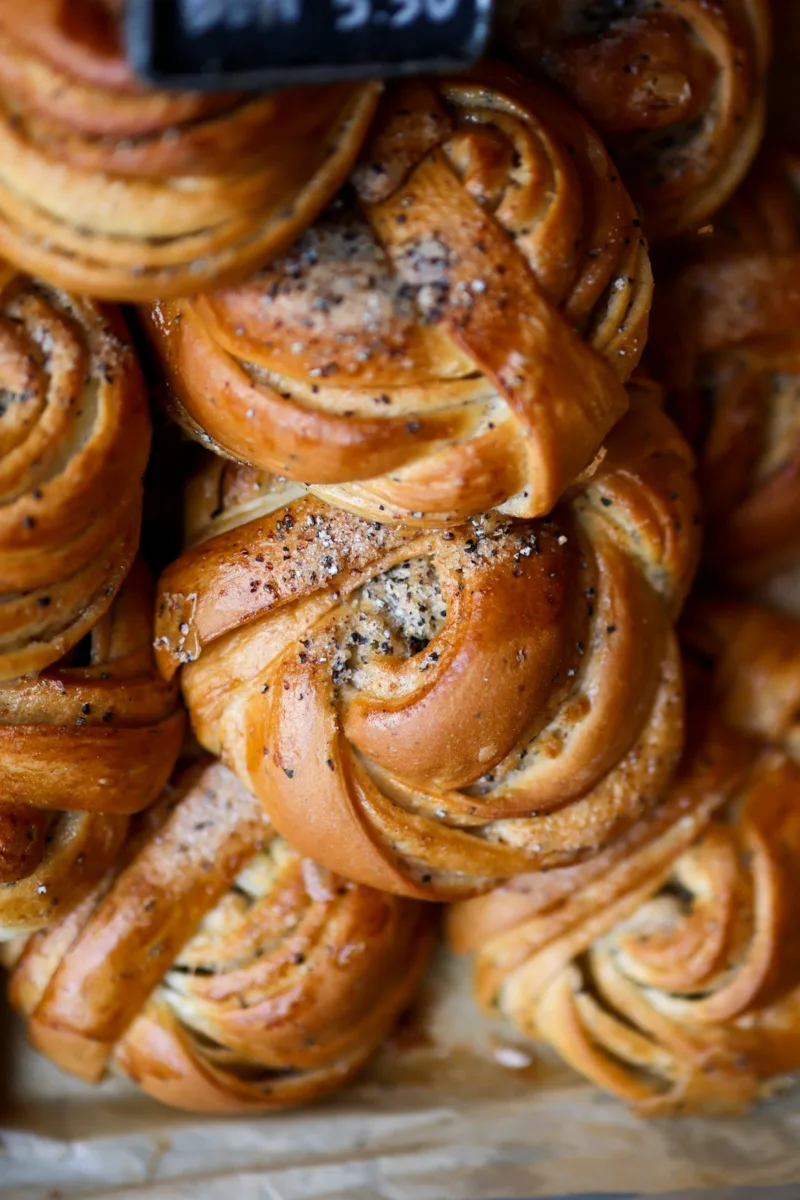
A Danish pastry is made from a laminated yeast dough much like croissant dough, but it is richer, with egg and more sugar, and it is shaped around a sweet filling. Common fillings are fruit jam, custard, cream cheese, and almond paste, and the top is often drizzled with icing. Shapes include spirals, pinwheels, braids, and open pockets.
In Denmark these pastries are called wienerbrød, meaning “Vienna bread”. The technique arrived in the 1850s, when Danish bakery workers went on strike and their employers hired bakers from Austria.
Dough: Laminated yeast dough enriched with egg and sugar.
3. Éclair
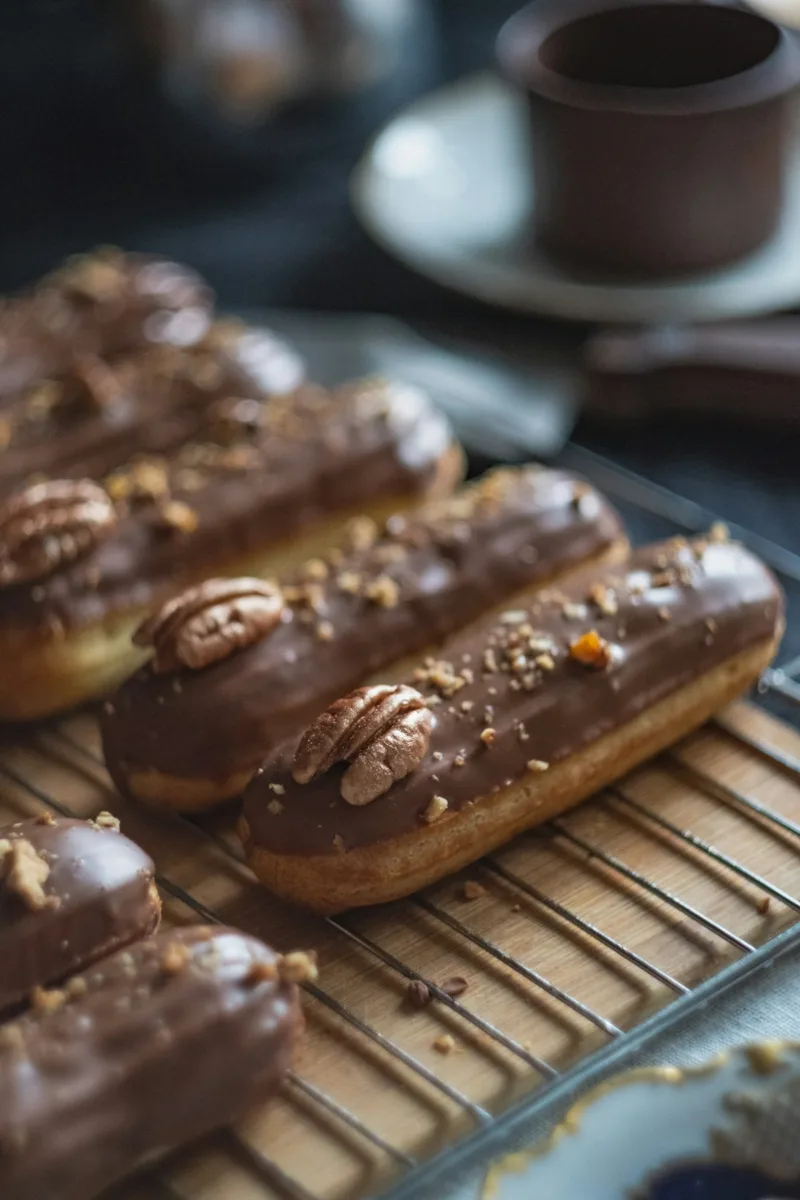
An éclair is a finger-shaped pastry made from choux dough. The dough is piped into a log and baked until it puffs up and becomes hollow. It is then filled with pastry cream, usually vanilla, chocolate, or coffee, and the top is dipped in a glossy icing. The name is French for “flash of lightning”, possibly because it is eaten so quickly.
Éclairs were developed in France in the 1800s and are often credited to the famous chef Marie-Antoine Carême.
Dough: Choux pastry.
4. Baklava
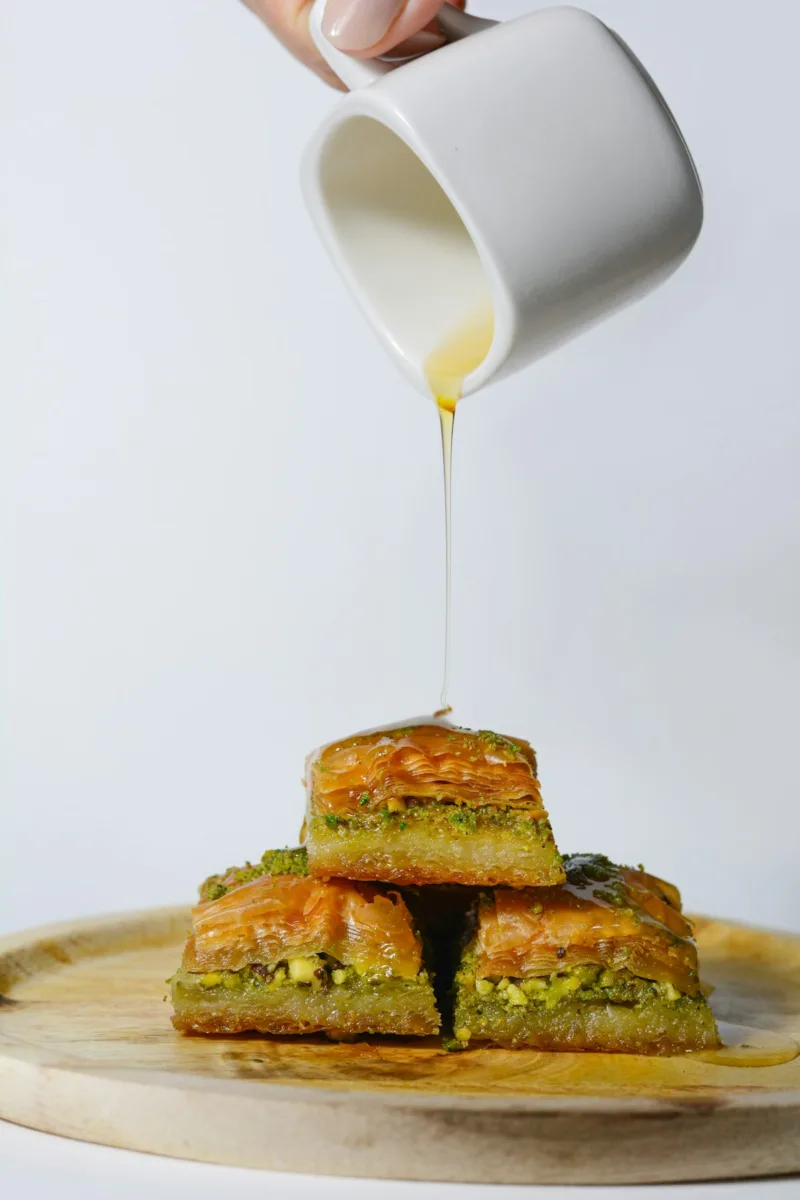
Baklava is built from many sheets of paper-thin filo pastry, each one brushed with melted butter, with layers of finely chopped nuts in between. It is cut into diamonds or squares, baked until crisp, and then soaked in sugar syrup or honey. Pistachios are used in Turkey, walnuts in Greece and the Balkans, and the syrup is sometimes scented with rose water or orange blossom.
The dessert took its present form in the kitchens of the Ottoman Empire, and several countries now claim it as their own. The Turkish city of Gaziantep is especially famous for it.
Dough: Filo (phyllo) pastry.
5. Cinnamon Roll
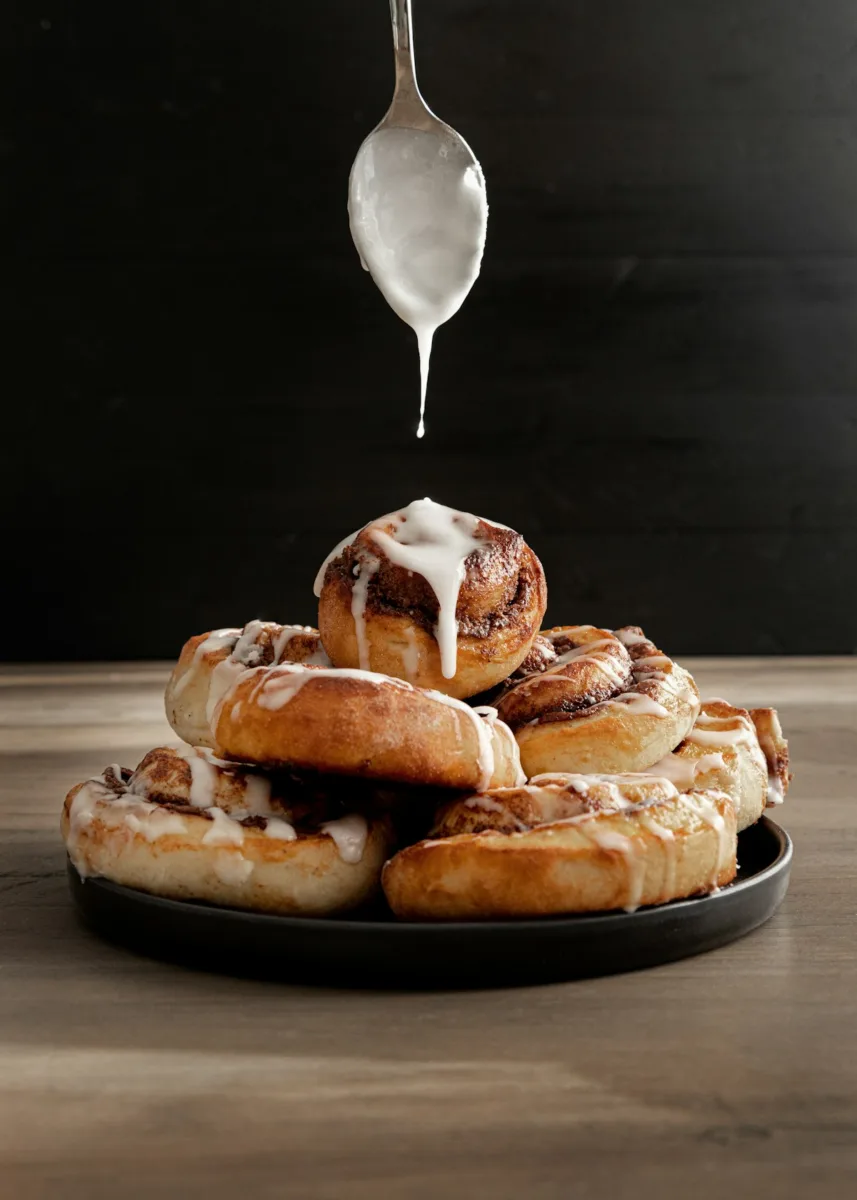
A cinnamon roll is made from a soft, enriched yeast dough that is rolled out flat, spread with butter, sugar, and cinnamon, rolled into a log, and sliced into spirals. In North America the rolls are baked close together so they stay soft, and they are covered in cream cheese frosting or icing.
The cinnamon roll comes from Sweden, where it is called kanelbulle and is flavored with cardamom and topped with pearl sugar instead of icing. Sweden celebrates Cinnamon Roll Day every year on October 4.
Dough: Enriched yeast dough. It is a sweet bread dough, not a laminated pastry.
6. Profiterole
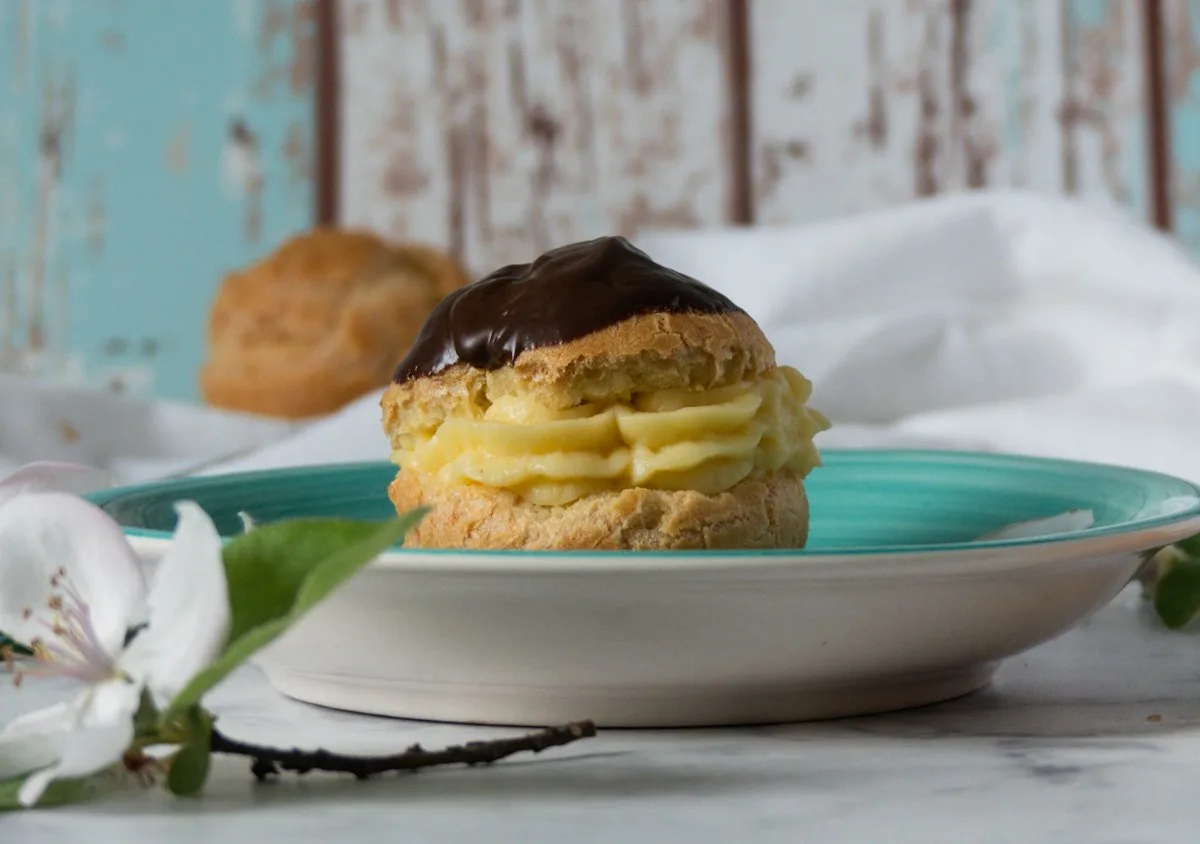
A profiterole, known in the United States as a cream puff, is a small, round ball of choux pastry that is baked until hollow and filled with whipped cream, pastry cream, or ice cream. It is usually topped with warm chocolate sauce or a dusting of sugar.
Profiteroles are the building blocks of two famous French showpieces: the croquembouche, a tall cone of cream puffs held together with caramel and served at weddings, and the Saint-Honoré cake.
Dough: Choux pastry.
7. Strudel
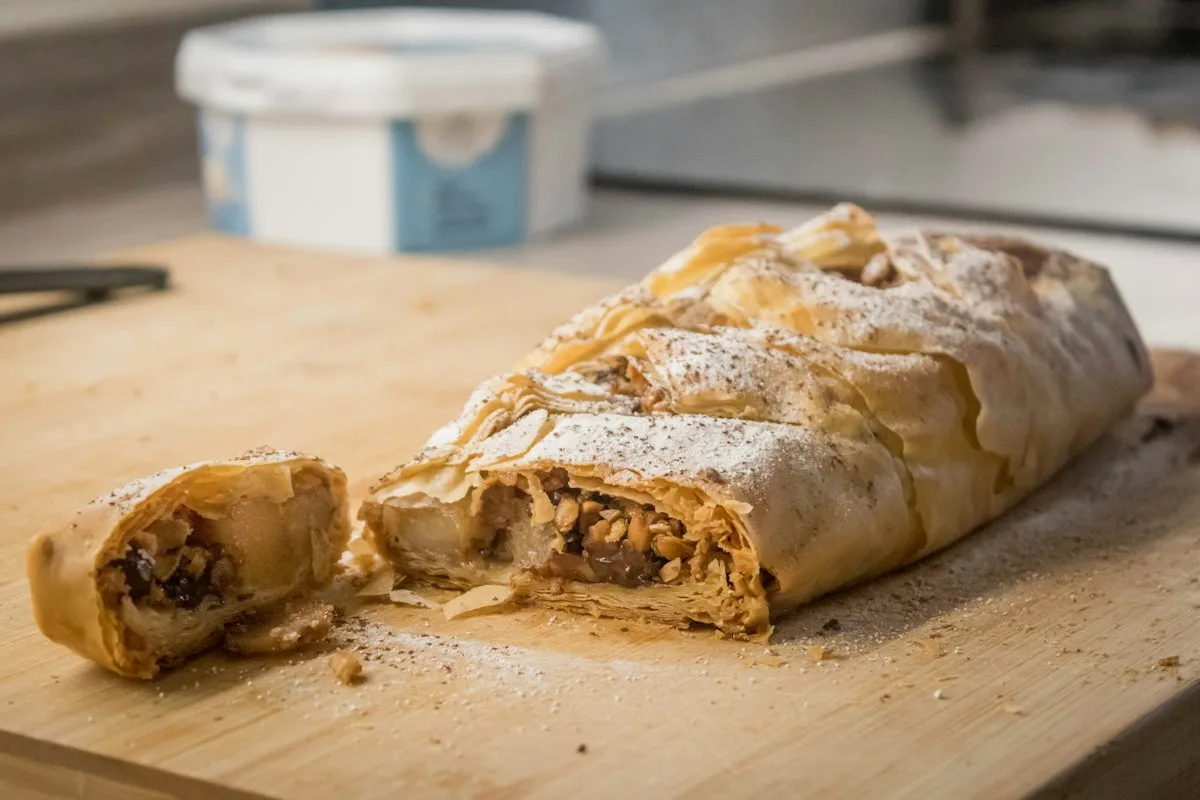
Strudel is a rolled pastry with a thin, crisp shell wrapped around a filling. The traditional dough is stretched by hand over a cloth until it is so thin that, according to bakers, you could read a newspaper through it. Apple strudel, or Apfelstrudel, filled with apples, raisins, cinnamon, and breadcrumbs, is the best-known version. Cherry, cheese, and poppy seed strudels are also traditional.
Strudel is the national pastry of Austria, and the oldest known recipe, kept in a Vienna library, dates from 1696. The word means “whirlpool” in German, after the rolled layers. Many home bakers now use ready-made filo or puff pastry.
Dough: Stretched strudel dough, similar to filo.
8. Empanada
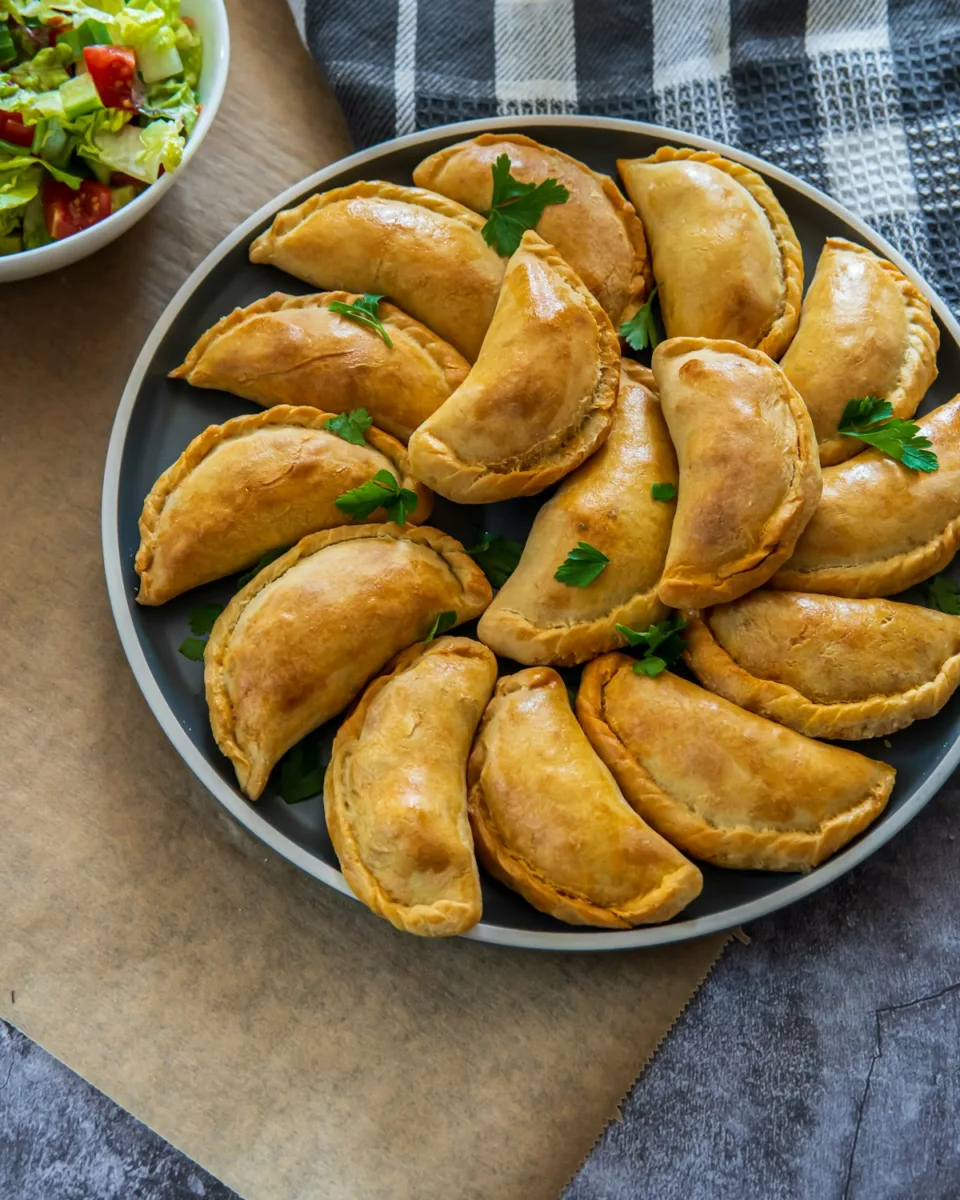
An empanada is a half-moon pastry made by folding a round of dough over a filling and sealing the edge, often with a decorative crimp. It is baked or fried. Most empanadas are savory, filled with beef, chicken, cheese, corn, or seafood, but sweet versions with fruit or dulce de leche are made too.
The empanada came from Spain and Portugal and spread throughout Latin America and the Philippines, and every country has its own style. In Argentina, the pattern of the crimp traditionally shows which filling is inside. The name comes from the Spanish verb empanar, to wrap in bread.
Dough: A shortcrust-style dough made with flour, fat, and water. Some regions use corn dough.
9. Cannoli
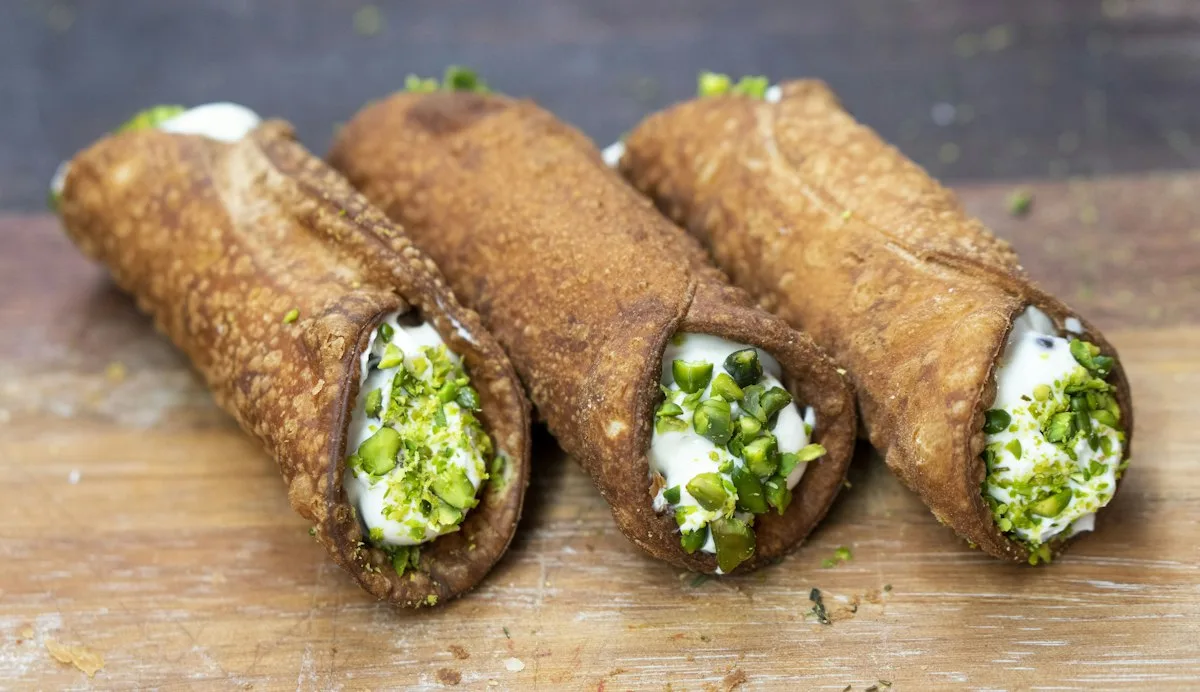
Cannoli are tubes of pastry dough that are wrapped around a metal form, fried until crisp and blistered, and filled with sweetened ricotta cheese. The ends are dipped in chopped pistachios, chocolate chips, or candied fruit. The word cannoli is plural, and a single one is a cannolo.
They come from Sicily, where they were originally made for Carnival. The shells should be filled just before serving, because the moist ricotta softens them quickly.
Dough: A fried dough made with flour, sugar, fat, and Marsala wine.
The Five Basic Pastry Doughs
Professional bakers learn five main doughs. Nearly every pastry is made from one of them.
- Shortcrust pastry: fat is rubbed into flour to give a crumbly, tender crust. It is used for pies, tarts, and quiches.
- Puff pastry: butter is folded into dough many times to create hundreds of thin layers that rise dramatically. It is used for vol-au-vents, palmiers, and mille-feuille.
- Flaky pastry: a quicker, simpler layered dough, also called rough puff, used for sausage rolls and turnovers.
- Choux pastry: a soft, cooked paste of butter, water, flour, and eggs that puffs up and becomes hollow in the oven. It is used for éclairs, profiteroles, and churros.
- Filo pastry: paper-thin sheets with almost no fat, which are brushed with butter and layered. It is used for baklava, spanakopita, and strudel.
Croissants and Danish pastries use a sixth kind, laminated yeast dough, which combines the layering of puff pastry with the rise of bread.
Frequently Asked Questions
What are the five main types of pastry?
The five basic pastry doughs are shortcrust, puff, flaky, choux, and filo.
What is the difference between puff pastry and croissant dough?
Both are laminated with butter, but croissant dough also contains yeast, so it rises like bread and has a softer, more open inside.
What is choux pastry used for?
Choux pastry is used for éclairs, profiteroles, cream puffs, gougères, and churros.
What is the difference between a profiterole and an éclair?
They are made from the same choux dough. A profiterole is small and round, and an éclair is long and thin and topped with icing.
What is the difference between filo and puff pastry?
Filo is made of separate, paper-thin sheets with almost no fat, which the baker brushes with butter and stacks. Puff pastry has the butter folded into the dough, so it rises into thick, flaky layers.