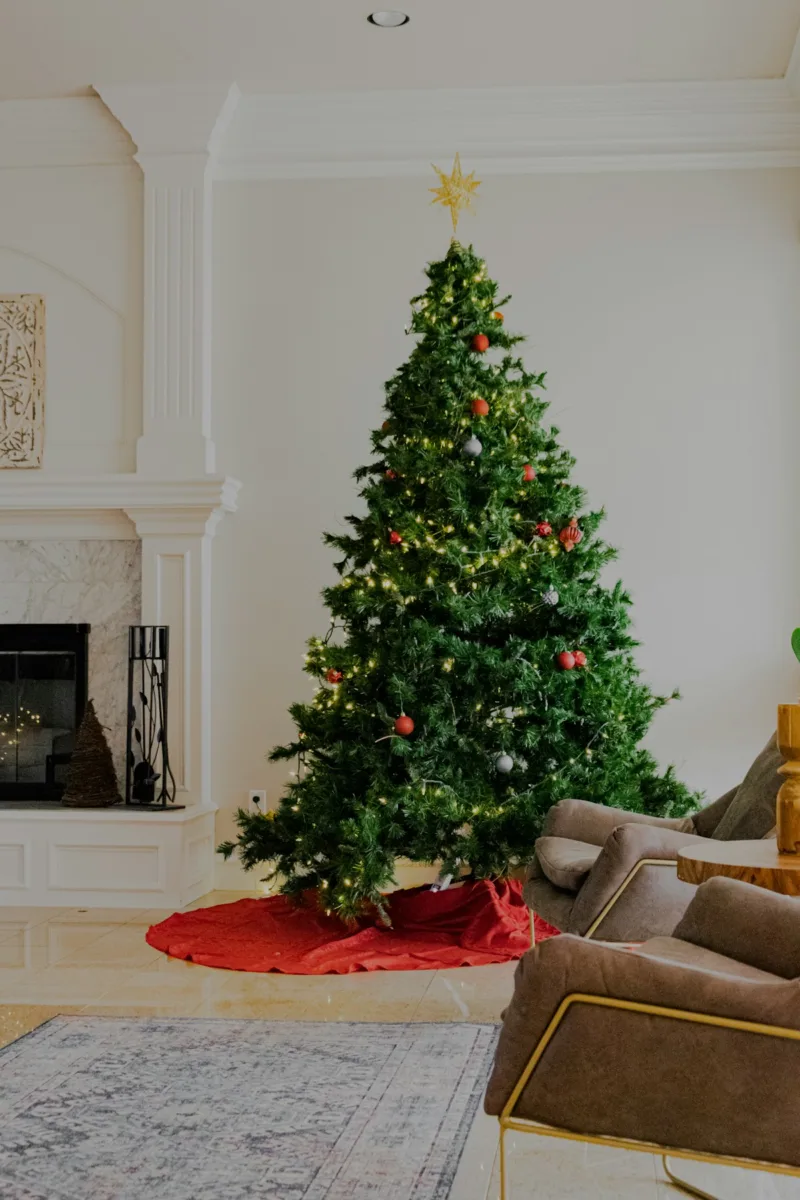
The main types of real Christmas trees are firs, spruces, and pines. Firs, such as the Fraser and Balsam fir, are the most popular because they hold their needles well and smell good. Spruces have strong branches and sharp needles, and pines have long, soft needles. This guide covers 12 real Christmas trees plus artificial, flocked, and tabletop trees, so you can pick the right one for your home.
Types of Christmas Trees at a Glance
| Tree | Needle retention | Fragrance | Branches |
|---|---|---|---|
| Fraser fir | Excellent | Medium | Strong |
| Balsam fir | Good | Strong | Medium |
| Douglas fir | Good | Sweet | Soft |
| Noble fir | Excellent | Medium | Very strong |
| Nordmann fir | Excellent | Light | Strong |
| Concolor fir | Good | Citrus | Medium |
| Colorado blue spruce | Good | Light | Very strong |
| Norway spruce | Poor | Strong | Strong |
| White spruce | Fair | Light | Strong |
| Scotch pine | Excellent | Medium | Strong |
| Eastern white pine | Good | Light | Flexible |
| Virginia pine | Good | Medium | Strong |
Fir Christmas Trees
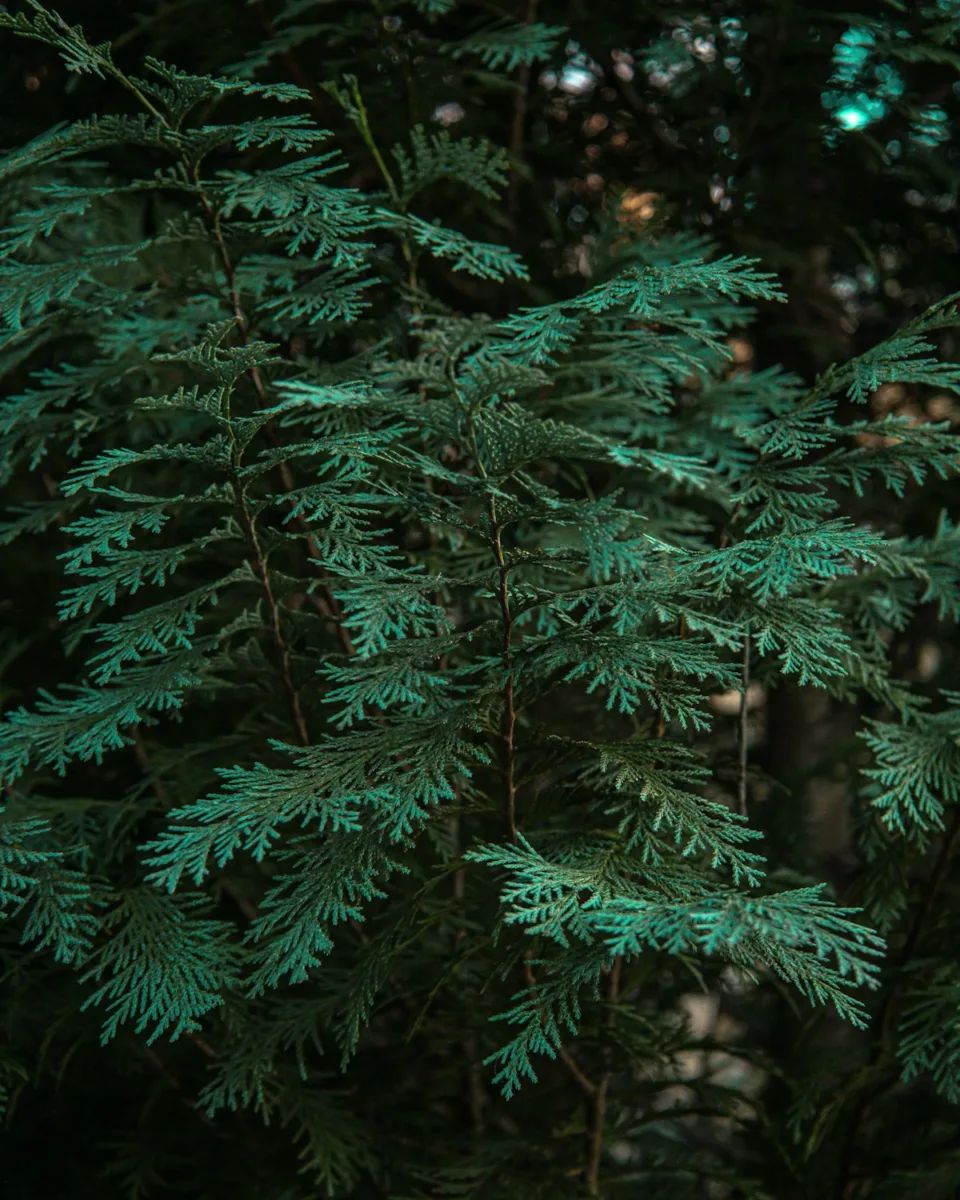
Firs have flat, soft needles that are attached to the branch one at a time. They are the easiest trees to decorate and the least likely to drop needles on the floor.
1. Fraser Fir
The Fraser fir is one of the best-selling Christmas trees in the United States and has been chosen many times as the White House Christmas tree. It grows naturally only at high altitude in the southern Appalachian Mountains, and most cut trees come from farms in North Carolina. It has a neat, narrow pyramid shape, which suits smaller rooms, and firm branches that angle slightly upward, leaving space for ornaments to hang.
Needles: Short, soft, dark green on top and silvery underneath. Needle retention is excellent.
Scent: A pleasant, medium-strength evergreen scent.
Best for: Almost any home. It holds heavy ornaments, drops very few needles, and stays fresh for five weeks or more with water.
2. Balsam Fir
The Balsam fir is the traditional Christmas tree of the northeastern United States and eastern Canada, and it is the tree most people have in mind when they think of the smell of Christmas. It has a slender, symmetrical shape with a pointed top. Its branches are more flexible than those of a Fraser fir, so it is better with light and medium ornaments.
Needles: Short, flat, and dark green, with rounded tips that are soft to the touch. Needle retention is good.
Scent: The strongest and most classic Christmas tree fragrance of any species.
Best for: People who want the house to smell like Christmas. It is also the favorite for wreaths and garlands.
3. Douglas Fir
The Douglas fir is not a true fir, but it has been sold as a Christmas tree for well over a century and is one of the most widely grown. It is common and affordable, especially in the Pacific Northwest, where it grows naturally. It has a full, bushy pyramid shape with needles that radiate in all directions around the branch.
Needles: Soft, thin, and blue-green to dark green, about an inch long. Retention is good if the tree is kept watered.
Scent: Sweet and citrusy when the needles are crushed.
Best for: Families on a budget who want a full, dense tree. The branches are soft, so use lighter ornaments.
4. Noble Fir
The Noble fir is a tall, stately tree from the mountains of Oregon and Washington. Its branches are stiff and grow in evenly spaced layers with open gaps between them, which shows off ornaments beautifully and lets large decorations hang freely. It is one of the longest-lasting cut trees, and its sturdy boughs are widely used for wreaths, swags, and garlands.
Needles: Blue-green, about an inch long, and curved upward so the underside of the branch shows. Retention is excellent.
Scent: A fresh, medium evergreen scent.
Best for: Large and heavy ornaments, and anyone who puts the tree up early in December.
5. Nordmann Fir
The Nordmann fir comes from the mountains around the Black Sea and is the most popular real Christmas tree in the United Kingdom and much of Europe. It is prized for one thing above all: it barely drops its needles, even in a warm room. It has a full, symmetrical shape with wide lower branches and glossy foliage.
Needles: Soft, wide, glossy dark green needles with blunt tips that do not prick. Retention is excellent.
Scent: Very light. It has little fragrance compared with other firs.
Best for: Homes with children and pets, people who dislike vacuuming needles, and people who are sensitive to strong scents.
6. Concolor Fir (White Fir)
The Concolor fir, also called the white fir, comes from the mountains of the western United States. It stands out for its long, soft needles and for its scent, which is closer to oranges or lemons than to pine. It has a natural, slightly open shape and good needle retention.
Needles: Long, at one and a half to three inches, and blue-green to silvery, curving upward along the branch.
Scent: A distinctive citrus fragrance.
Best for: People who want something different from the usual pine smell, and a soft tree that is easy on the hands.
Spruce Christmas Trees
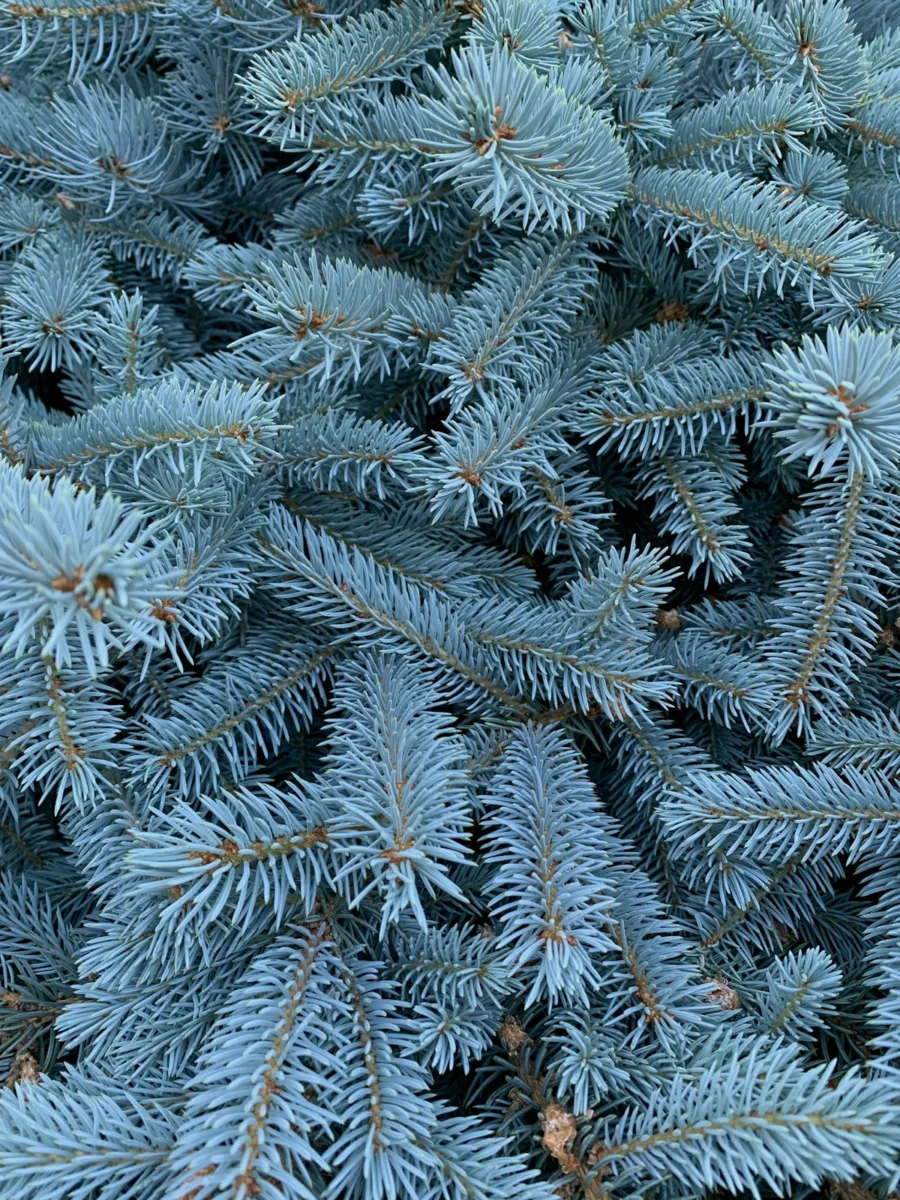
Spruces have short, stiff, four-sided needles with sharp tips. Their strong branches hold heavy ornaments, but most spruces drop their needles faster than firs once they are indoors.
7. Colorado Blue Spruce
The Colorado blue spruce is the state tree of Colorado and Utah and is known for its striking silvery-blue color, which comes from a waxy coating on the needles. It has a very regular, symmetrical pyramid shape and the strongest branches of the common Christmas trees. It is also sold as a living tree in a pot, because it can be planted outside afterwards.
Needles: Stiff, four-sided, and very sharp, about an inch long. Retention is good for a spruce.
Scent: Light, and some people find the crushed needles unpleasant.
Best for: Heavy ornaments and anyone who wants a blue-toned tree. Wear gloves when decorating, and note that the sharp needles help keep pets away.
8. Norway Spruce
The Norway spruce is the original European Christmas tree, used since the custom began in Germany. The famous tree given each year by Norway to London for Trafalgar Square is a Norway spruce, and the species is often used for the Rockefeller Center tree in New York. It has a classic triangular shape with dense, drooping branchlets and a rich forest scent.
Needles: Short, dark green, and sharp. Needle retention is poor, and it sheds quickly indoors.
Scent: Strong and traditional.
Best for: Outdoor displays and people who buy their tree in the last week or two before Christmas. Keep it very well watered and away from heat.
9. White Spruce
The White spruce grows across Canada and the northern United States and is a common tree on farms in those regions. It has a good natural cone shape and short, stiff branches that carry ornaments well. Its one drawback is the smell of the needles when they are crushed, which has earned it the nickname skunk spruce.
Needles: Short, stiff, and blue-green to green, with blunt tips. Retention is fair, and better than Norway spruce.
Scent: Mild when left alone, unpleasant when crushed.
Best for: Decorating with many ornaments in cooler rooms. Handle the branches gently.
Pine Christmas Trees
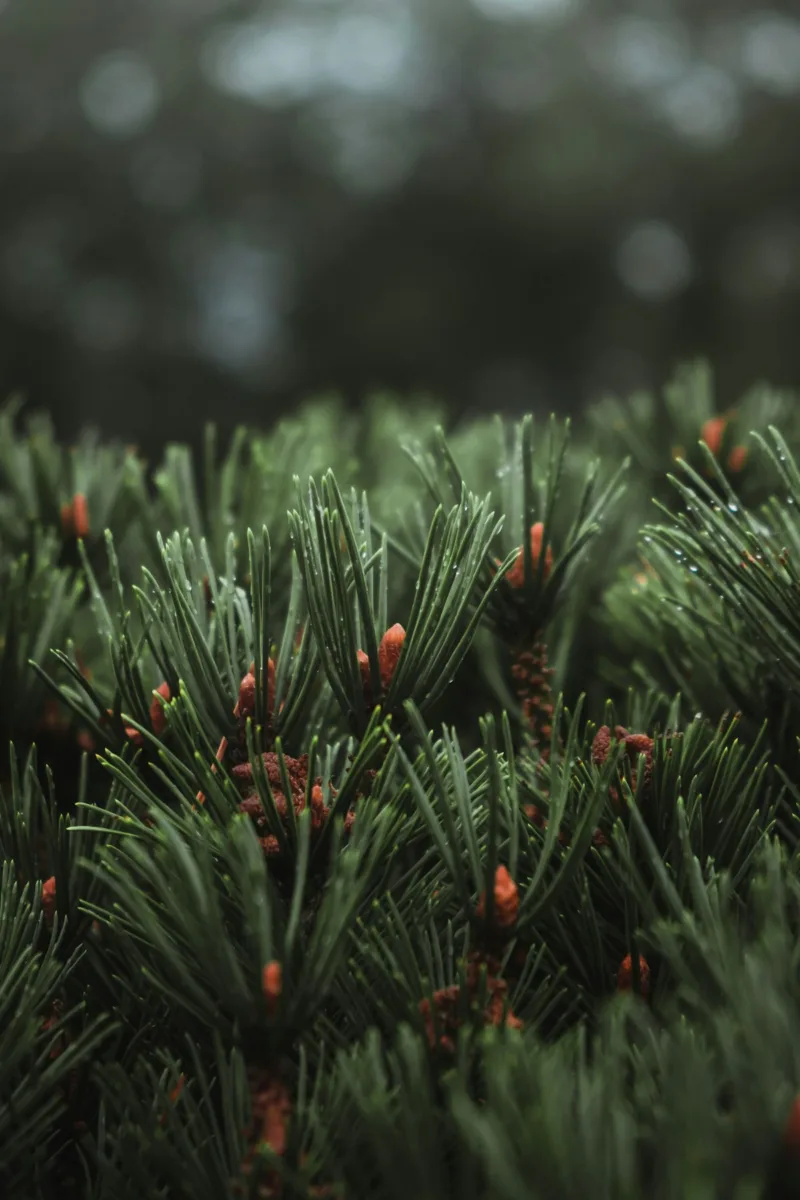
Pines have long needles that grow in bundles of two to five. They look fuller and softer than firs and spruces.
10. Scotch Pine
The Scotch pine, also called the Scots pine, was for many years the most widely sold Christmas tree in the United States. Its great strength is that the needles stay on the tree even if it dries out, so it survives missed waterings and long journeys. It has stiff branches, a dense shape, and a long-lasting scent.
Needles: Stiff, slightly twisted, and bright to blue-green, one to three inches long, in bundles of two. Retention is excellent.
Scent: A lasting, medium pine fragrance.
Best for: Busy households, heavy ornaments, and anyone who wants a tree that keeps its needles to the end.
11. Eastern White Pine
The Eastern white pine is the largest pine of eastern North America. As a Christmas tree it has a soft, feathery, graceful look that is quite different from the stiff outline of a fir or spruce. Its branches are thin and bend easily, so it cannot carry much weight.
Needles: Long, soft, and flexible, two and a half to five inches, in bundles of five. Retention is good.
Scent: Very little fragrance.
Best for: People with allergies or a dislike of strong scents, and for a tree decorated mainly with lights, ribbon, and light ornaments.
12. Virginia Pine
The Virginia pine is the most common Christmas tree grown in the southern United States, because it tolerates heat that firs and spruces cannot. Farmers shear it into a dense, full pyramid. It has strong, woody branches and a pleasant pine smell.
Needles: Short, twisted, and dark green to grey-green, one and a half to three inches, in bundles of two. Retention is good.
Scent: A clear, medium pine scent.
Best for: Buyers in warm climates who want a fresh, locally grown tree, and for medium to heavy ornaments.
Artificial, Flocked, and Tabletop Trees
Artificial Christmas Trees
Artificial trees are made from PVC or molded PE plastic and can be reused for many years. Many come pre-lit. They do not need water and do not drop needles, but they have no natural scent.
Flocked Christmas Trees
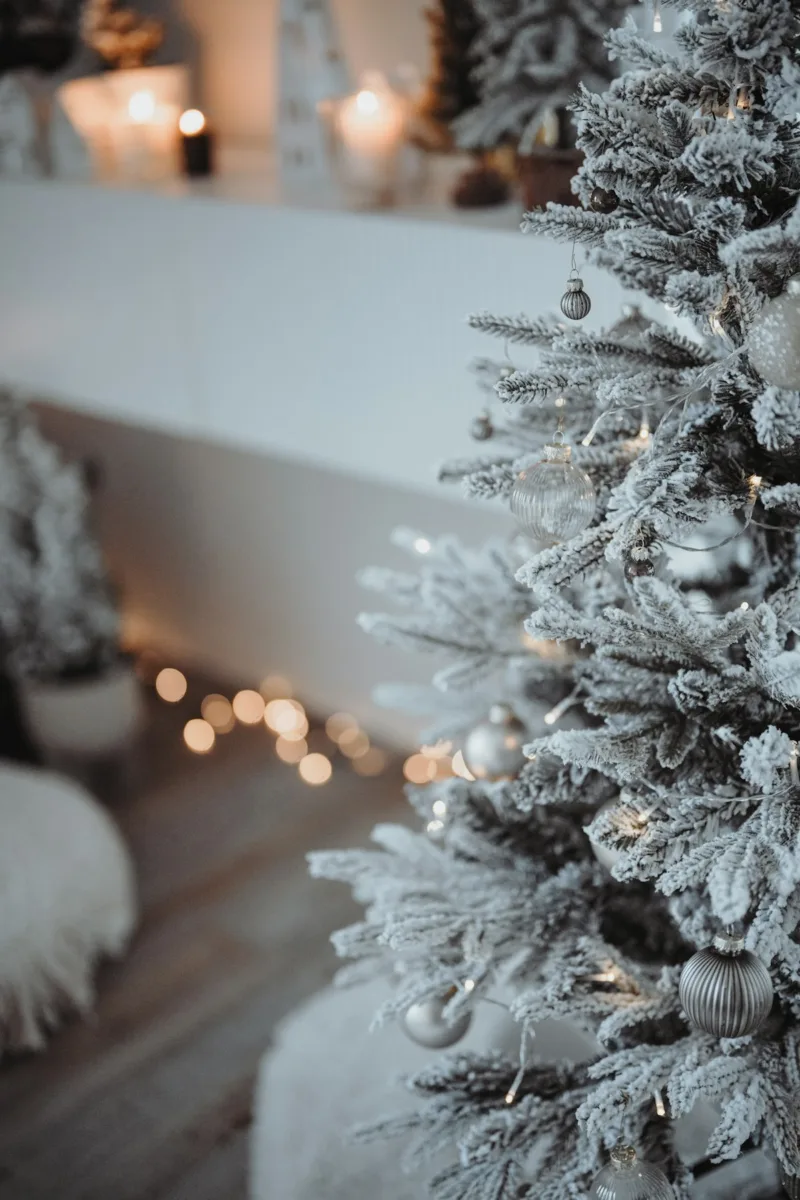
A flocked tree is a real or artificial tree sprayed with a white coating that looks like fresh snow. It gives a winter look without any decorations, but the coating can shed.
Tabletop and Potted Trees
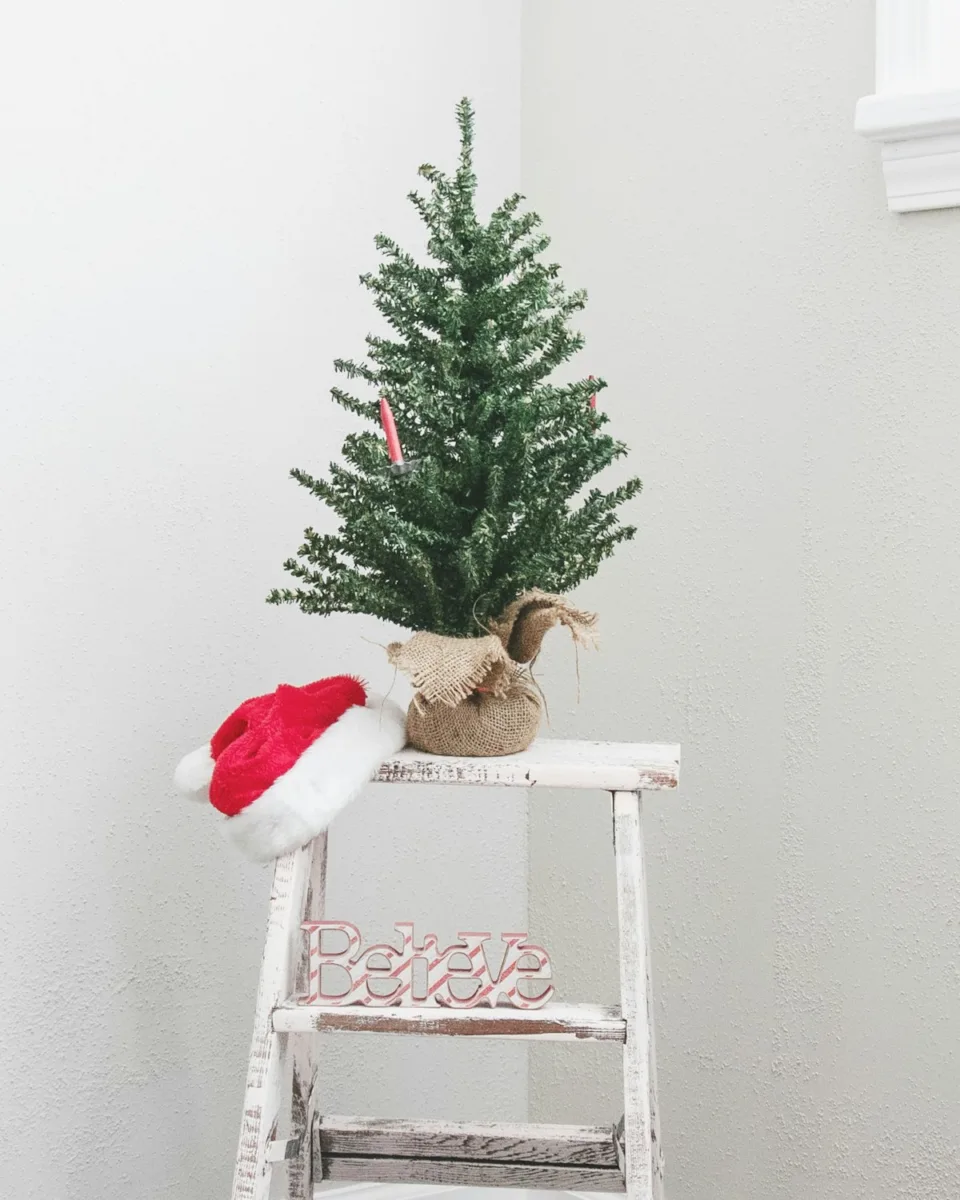
Tabletop trees are small trees, usually one to three feet tall, for apartments, offices, and side tables. Living potted trees can be kept outdoors after Christmas and planted in the garden.
How to Tell Fir, Spruce, and Pine Apart
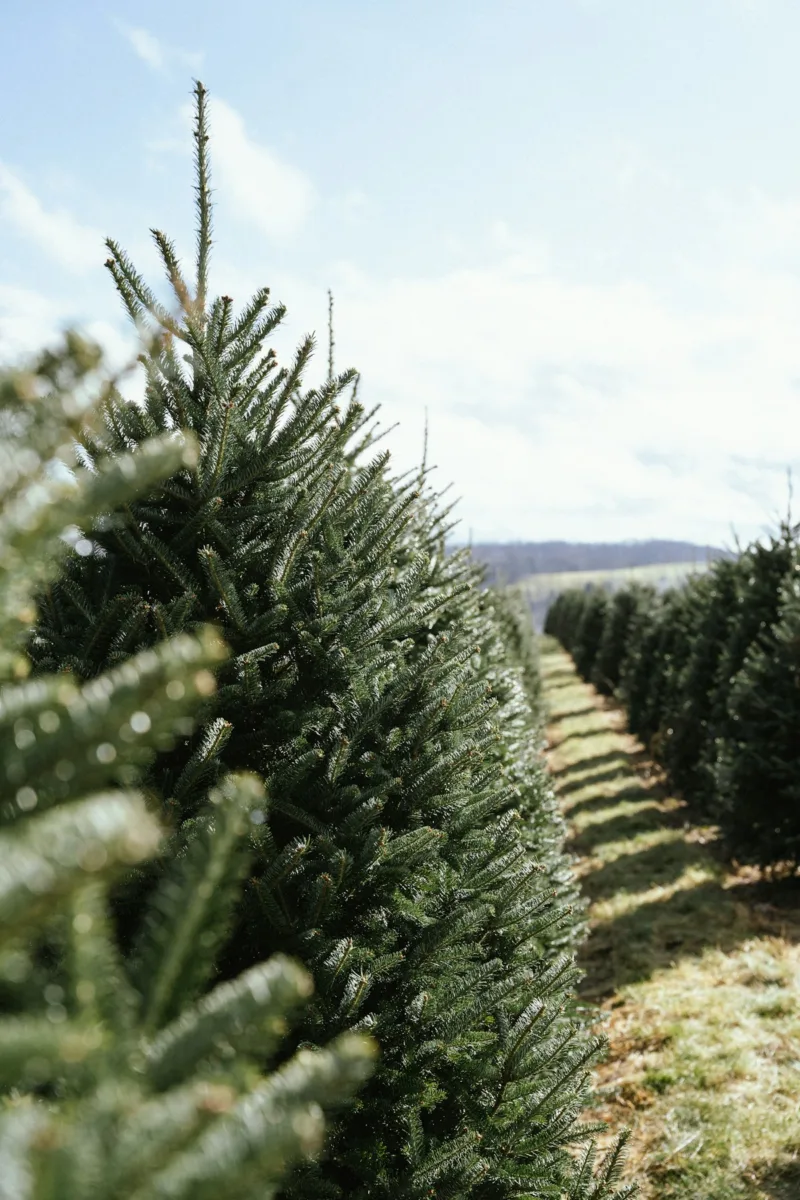
Look at the needles. Fir needles are flat and soft and will not roll between your fingers. Spruce needles are four-sided and sharp and roll easily. Pine needles are long and grow in small bundles.
How to Keep a Real Christmas Tree Fresh
Cut about half an inch off the bottom of the trunk before you put the tree in its stand, and fill the stand with water straight away. Check the water every day, because a fresh tree can drink a lot in the first week. Keep the tree away from radiators, fireplaces, and heating vents. With good care, most real trees last four to five weeks. For holiday baking ideas, see our guide to types of Christmas cookies.
Frequently Asked Questions
Which type of Christmas tree lasts the longest?
Fraser fir, Noble fir, Nordmann fir, and Scotch pine keep their needles the longest. With daily watering they stay fresh for four to five weeks.
Which Christmas tree smells the best?
The Balsam fir has the strongest classic Christmas tree fragrance. The Concolor fir is a good choice if you like a citrus scent.
What is the most popular type of Christmas tree?
In the United States, the Fraser fir is one of the best-selling real Christmas trees. In the United Kingdom and Europe, the Nordmann fir is the most popular.
Which Christmas tree is best for heavy ornaments?
Noble fir, Fraser fir, and Colorado blue spruce have the strongest branches and hold heavy ornaments well.
Is a real or an artificial Christmas tree better?
A real tree gives a natural scent and can be recycled or composted. An artificial tree costs more at first but can be reused for many years and needs no care. The best choice depends on your space, budget, and how much upkeep you want.