The most common types of nuts are almonds, walnuts, cashews, pistachios, pecans, hazelnuts, peanuts, macadamia nuts, pine nuts, and chestnuts. Not all of them are true nuts in the botanical sense: peanuts are legumes, and almonds, cashews, and pistachios are seeds. Each one below has a picture and explains how it tastes, where it comes from, and how it is used.
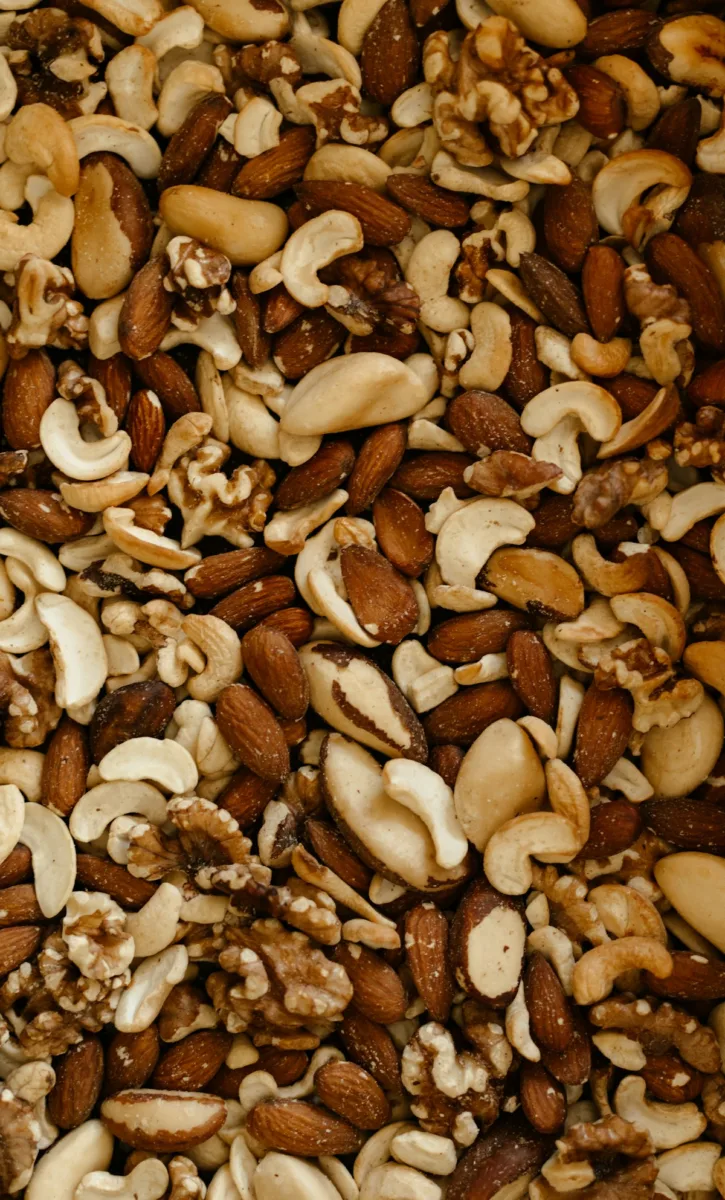
Types of Nuts at a Glance
| Nut | Taste | True nut? | Common uses |
|---|---|---|---|
| Almonds | Mild, slightly sweet | No, a seed | Snacking, almond milk, baking |
| Walnuts | Earthy, slightly bitter | No, a seed | Baking, salads |
| Cashews | Creamy, sweet | No, a seed | Snacking, stir-fries, vegan sauces |
| Pistachios | Sweet, rich | No, a seed | Snacking, ice cream, baklava |
| Pecans | Buttery, sweet | No, a seed | Pecan pie, pralines |
| Hazelnuts | Sweet, toasty | Yes | Chocolate spreads, pralines |
| Peanuts | Savory, earthy | No, a legume | Peanut butter, snacking |
| Macadamia nuts | Very rich, buttery | No, a seed | Cookies, snacking |
| Pine nuts | Soft, buttery | No, a seed | Pesto, salads |
| Chestnuts | Sweet, starchy | Yes | Roasting, stuffing |
Different Types of Nuts with Pictures
1. Almonds
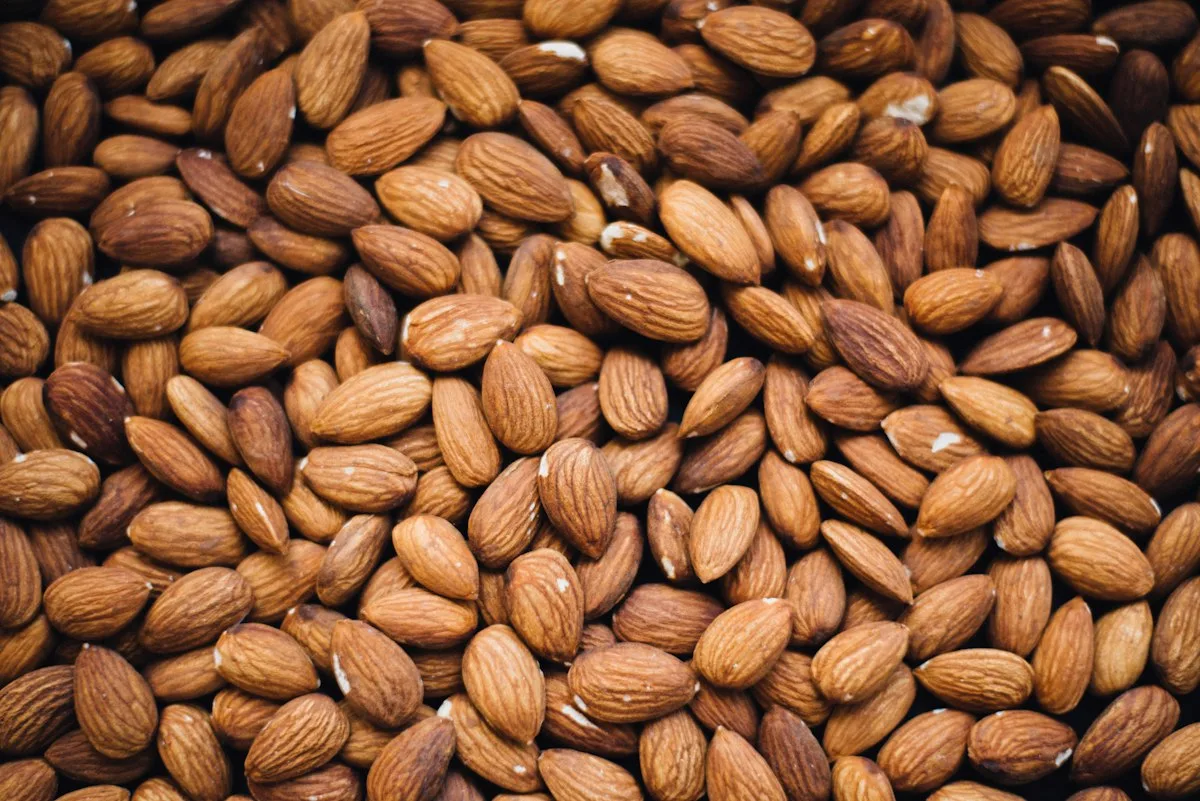
Almonds are the seeds of a fruit related to peaches and plums. The almond tree produces a leathery green fruit with a hard shell inside, and the almond is the seed within that shell. Botanically this makes it a drupe, not a true nut. California grows about 80 percent of the world’s supply. Almonds are among the nuts richest in vitamin E and fiber.
Taste and texture: Mild, slightly sweet, and crunchy.
Best used for: Snacking, baking, almond flour, almond milk, almond butter, and marzipan.
2. Walnuts
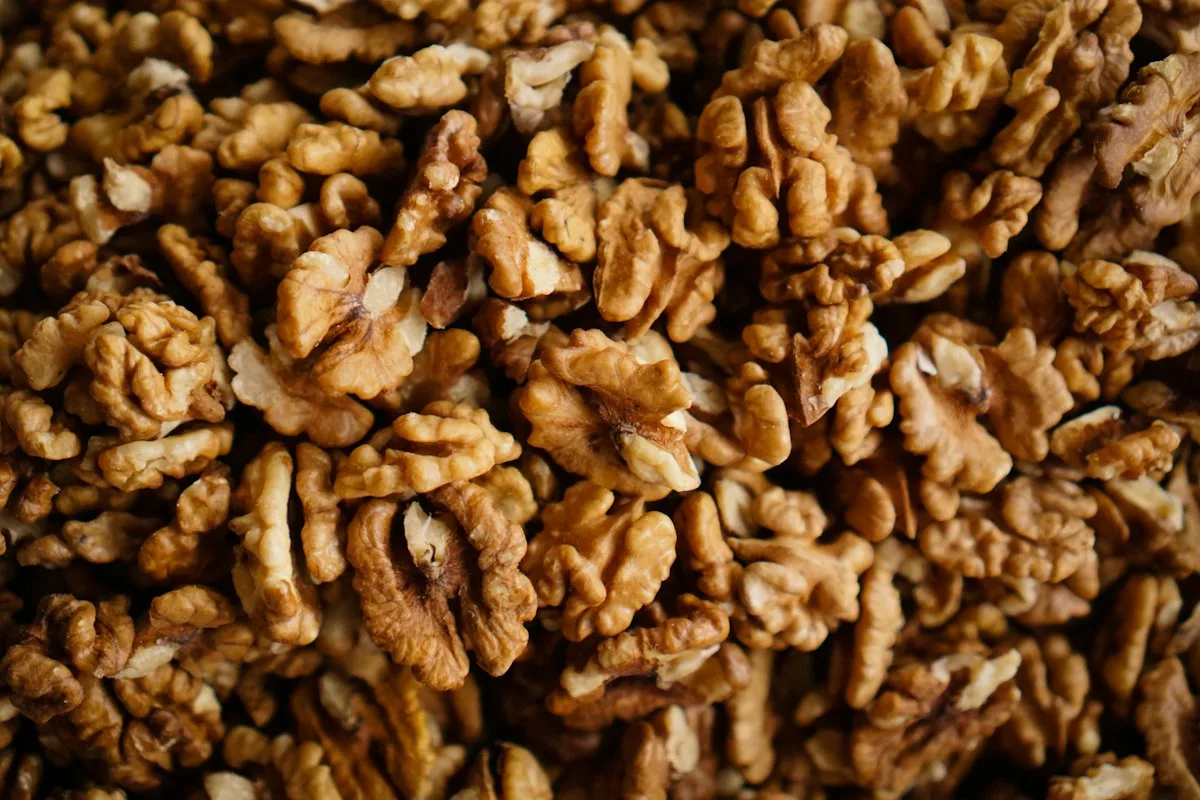
Walnuts have a wrinkled, two-lobed kernel that looks a little like a brain, enclosed in a hard, round shell. The English walnut, also called the Persian walnut, is the kind usually sold in stores, while the black walnut is native to North America and has a stronger taste. Walnuts are one of the few nuts with a meaningful amount of plant-based omega-3 fat.
Taste and texture: Rich and earthy with a slight bitterness from the thin skin. Softer than most nuts.
Best used for: Brownies, banana bread, salads, baklava, and pesto. Store them in the fridge or freezer, because their oils turn rancid quickly.
3. Cashews
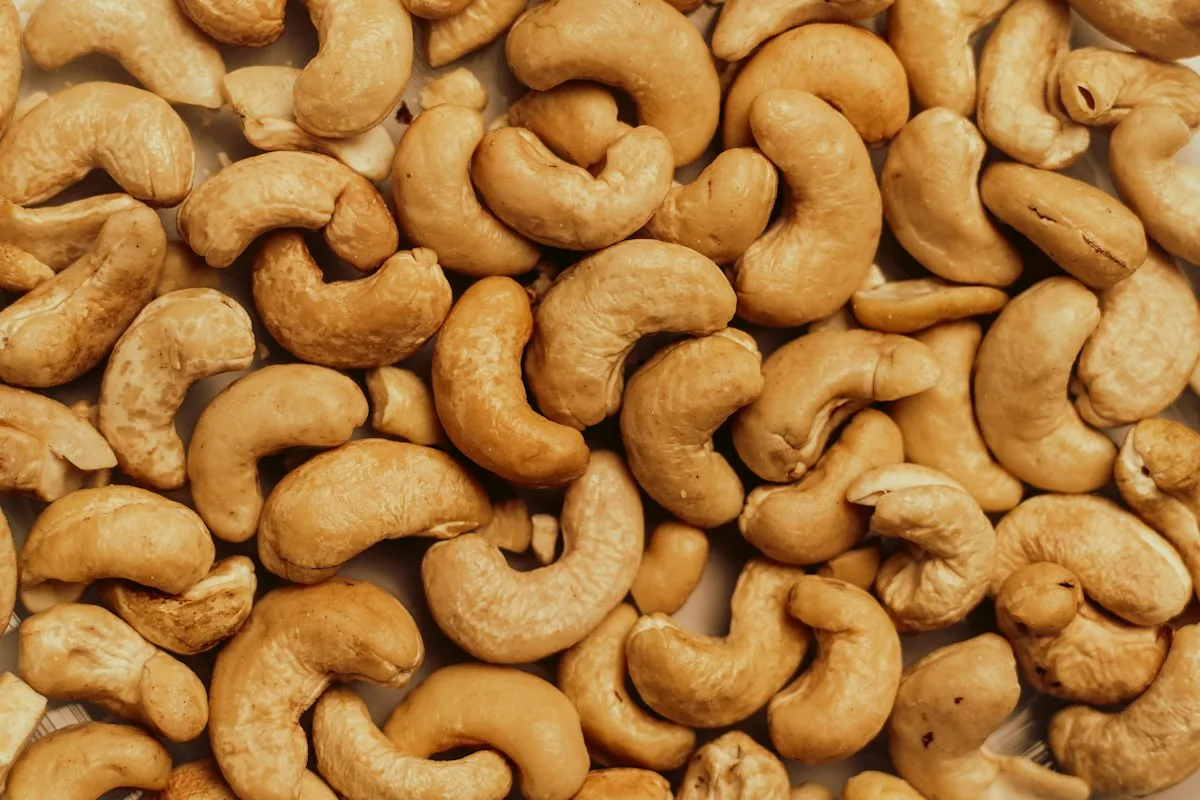
Cashews grow in an unusual way. Each kidney-shaped nut hangs from the bottom of a fleshy, pear-shaped fruit called a cashew apple. The tree is native to Brazil and is now grown widely in Vietnam, India, and West Africa. The shell contains a caustic oil related to the irritant in poison ivy, which is why cashews are always sold shelled and have been steamed or roasted to remove it.
Taste and texture: Buttery, mild, and slightly sweet, with a softer bite than most nuts.
Best used for: Snacking, stir-fries, curries, and vegan cooking, where soaked cashews are blended into cream, cheese, and sauces.
4. Pistachios
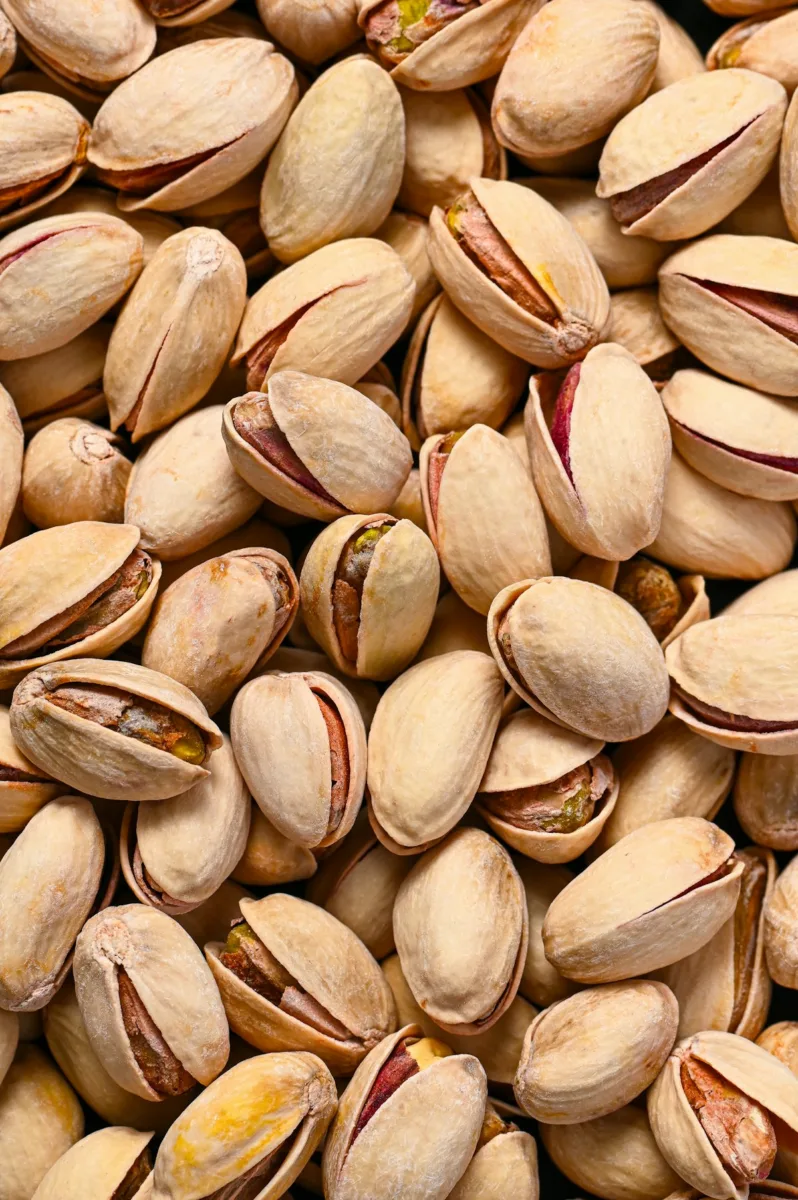
Pistachios are small green nuts that grow in clusters on trees suited to hot, dry climates. As the nut ripens, its beige shell splits open along one side, which makes it easy to open by hand. The kernel is green with a purple skin. The United States, Iran, and Turkey are the largest producers. Like almonds, pistachios are technically the seeds of a drupe.
Taste and texture: Slightly sweet, rich, and a little earthy, with a firm bite.
Best used for: Snacking, ice cream, baklava, and other pastries, and as a crust for fish and meat.
5. Pecans
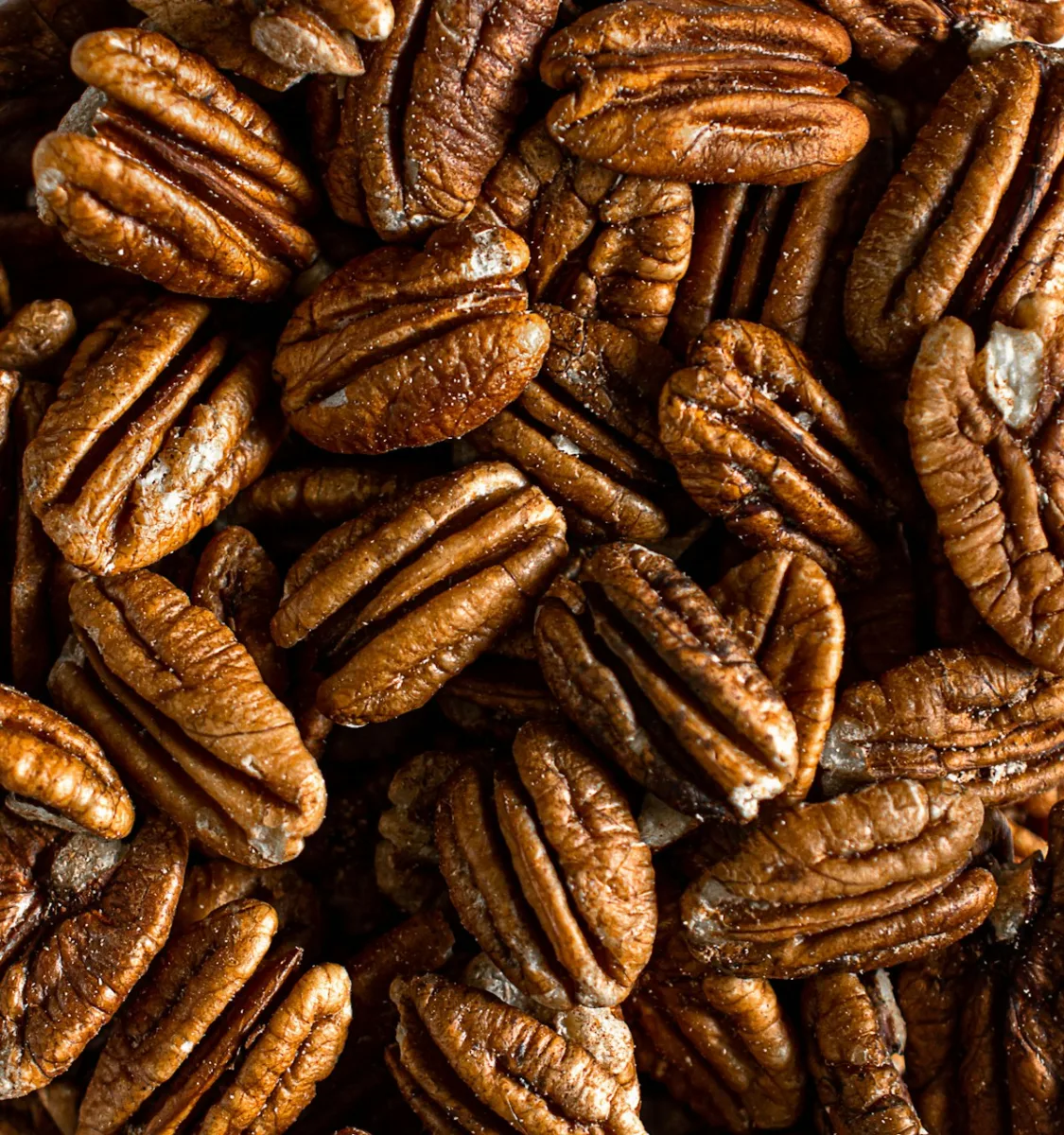
Pecans are the only major tree nut native to North America. They grow on a type of hickory tree in the southern United States and northern Mexico, and the United States produces most of the world’s crop. The kernel looks like a longer, smoother walnut. The word pecan comes from an Algonquian word for a nut that needs a stone to crack. Pecans have one of the highest fat contents of any nut.
Taste and texture: Sweet, buttery, and rich, with a tender crunch.
Best used for: Pecan pie, pralines, butter pecan ice cream, and holiday baking.
6. Hazelnuts
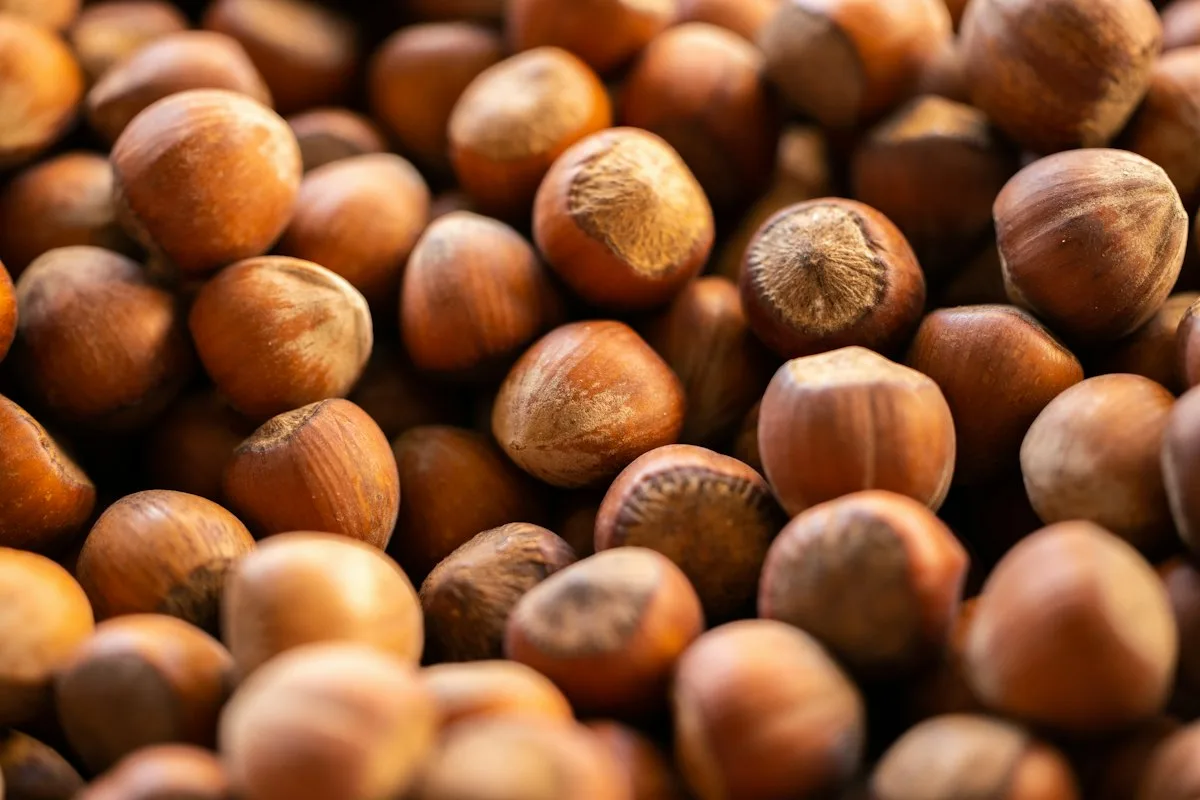
Hazelnuts are small, round nuts with a smooth, hard, brown shell and a slightly pointed tip. They are also called filberts. Turkey grows around 70 percent of the world’s supply, mostly along its Black Sea coast. Botanically, the hazelnut is a true nut. Roasting makes the papery skin easy to rub off and brings out the flavor.
Taste and texture: Sweet, toasty, and rich, with a crisp crunch.
Best used for: Chocolate hazelnut spread, pralines, chocolates, coffee flavoring, and baking.
7. Peanuts
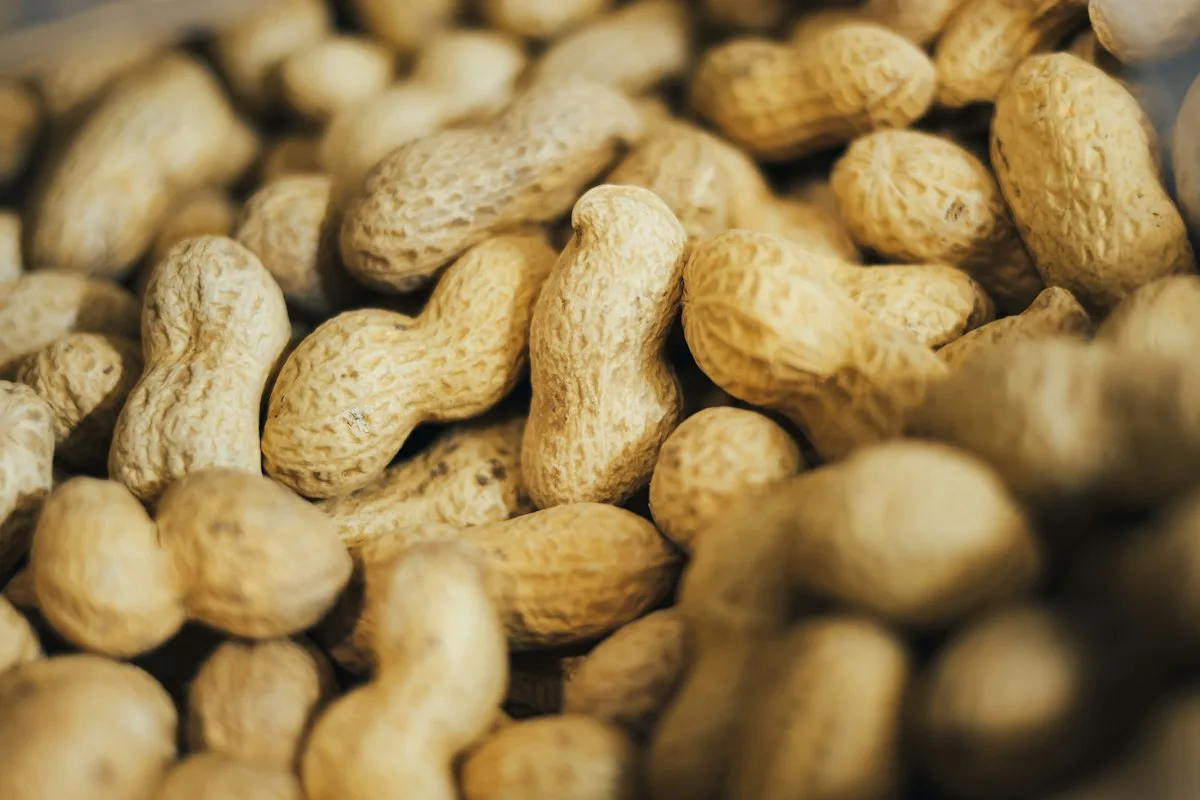
Peanuts are not nuts at all. They are legumes, in the same plant family as beans, peas, and lentils. The plant flowers above ground, and then the stalks bend down and push into the soil, where the pods develop. This is why they are also called groundnuts. Peanuts are native to South America. China and India grow the most today.
Taste and texture: Earthy and savory, and nutty and crunchy once roasted.
Best used for: Peanut butter, snacking, satay sauce, candy, and cooking oil. Peanuts are one of the most common food allergens.
8. Macadamia Nuts
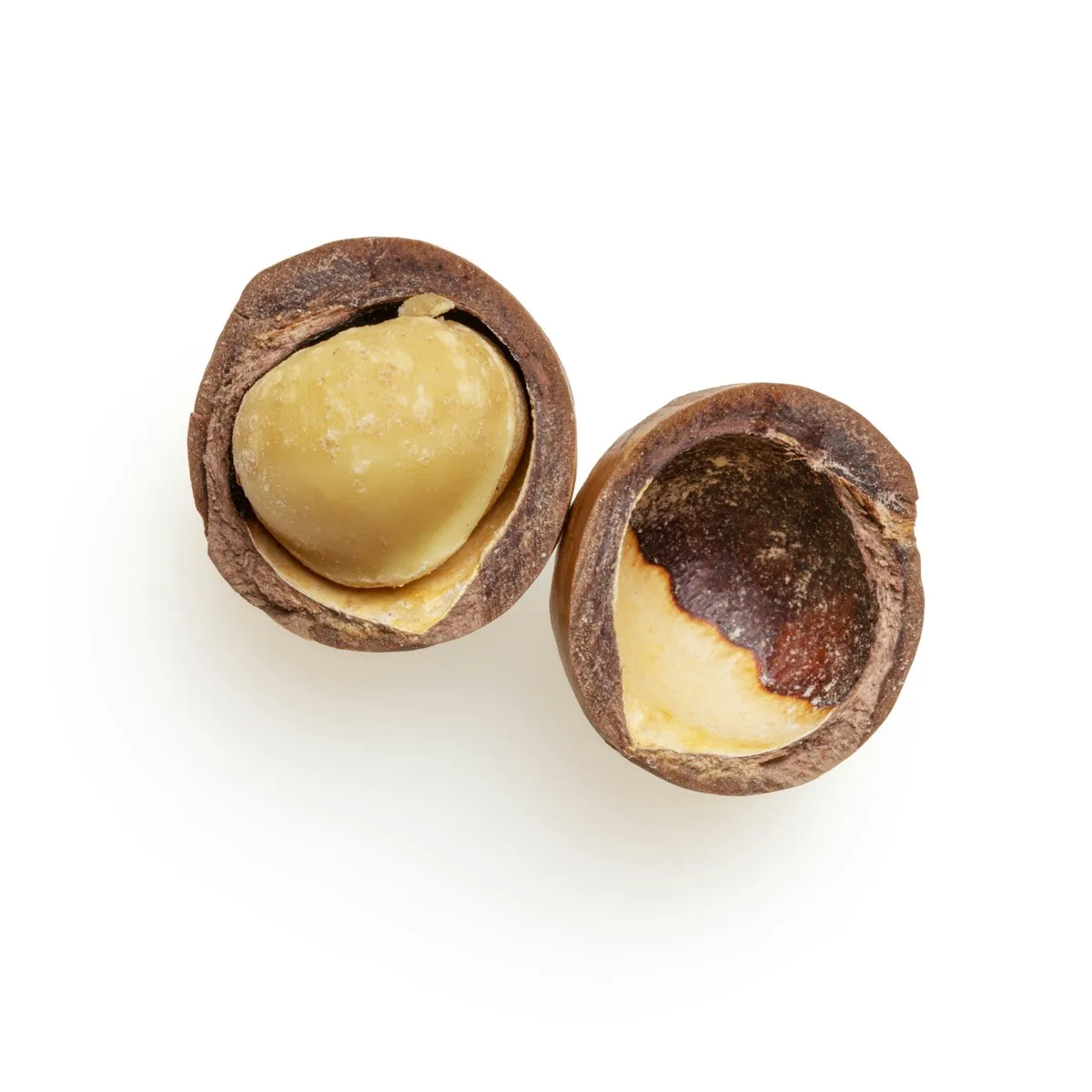
Macadamia nuts are native to the rainforests of eastern Australia and are also grown widely in Hawaii and South Africa. They have the hardest shell of any commercial nut, which is one reason for their high price. The trees also take seven years or more to produce a full crop. Macadamias have the highest fat content of all the common nuts.
Taste and texture: Rich, buttery, and slightly sweet, with a smooth, crisp bite.
Best used for: White chocolate macadamia cookies, chocolate-coated nuts, and snacking. They are toxic to dogs.
9. Pine Nuts
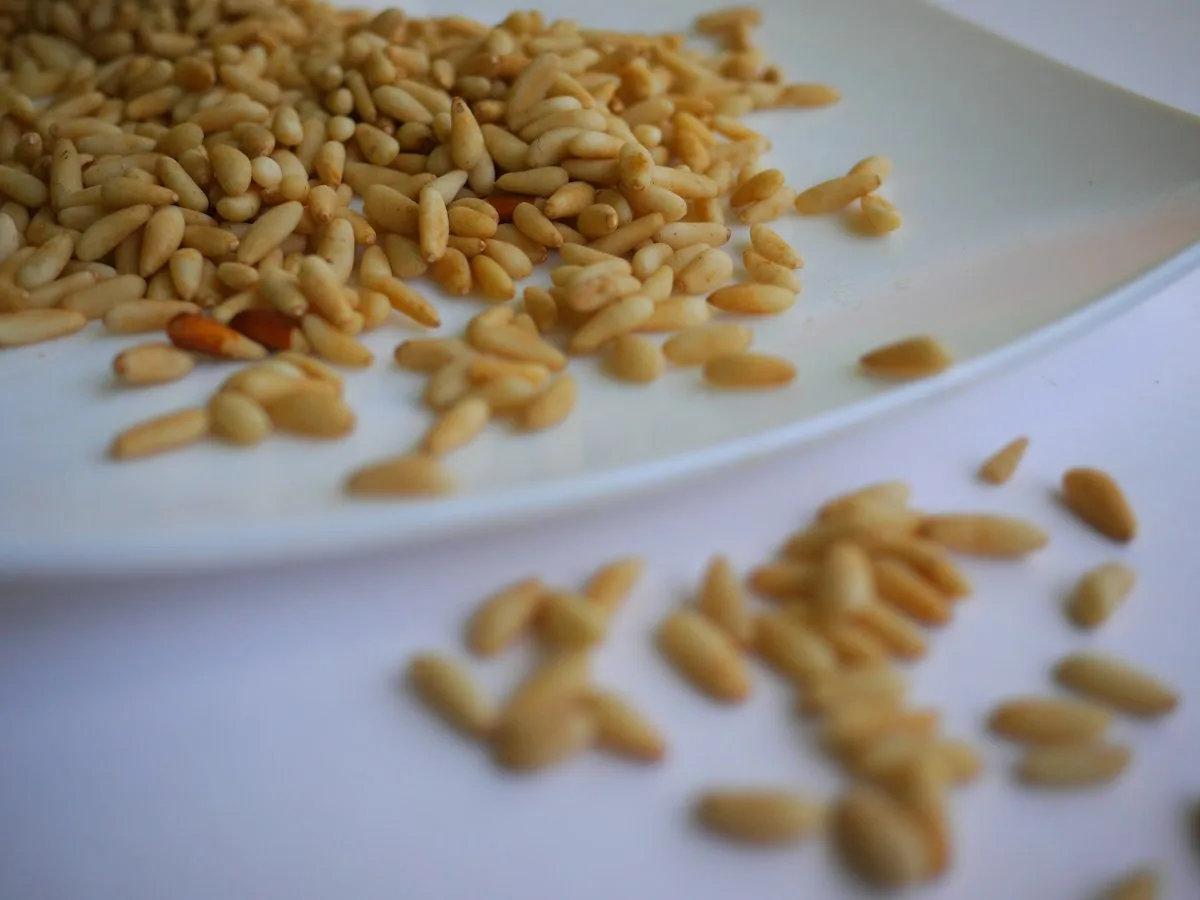
Pine nuts are the edible seeds of pine trees. They sit between the scales of pine cones and must be removed from both the cone and a thin, hard shell. Only about 20 species of pine produce seeds big enough to be worth harvesting, and the cones take two to three years to mature. Much of the work is done by hand, which makes pine nuts one of the most expensive nuts by weight.
Taste and texture: Soft, buttery, and mild, with a faint resinous note.
Best used for: Pesto, salads, pasta, and Middle Eastern rice and meat dishes. Toast them gently, as they burn in seconds.
10. Chestnuts
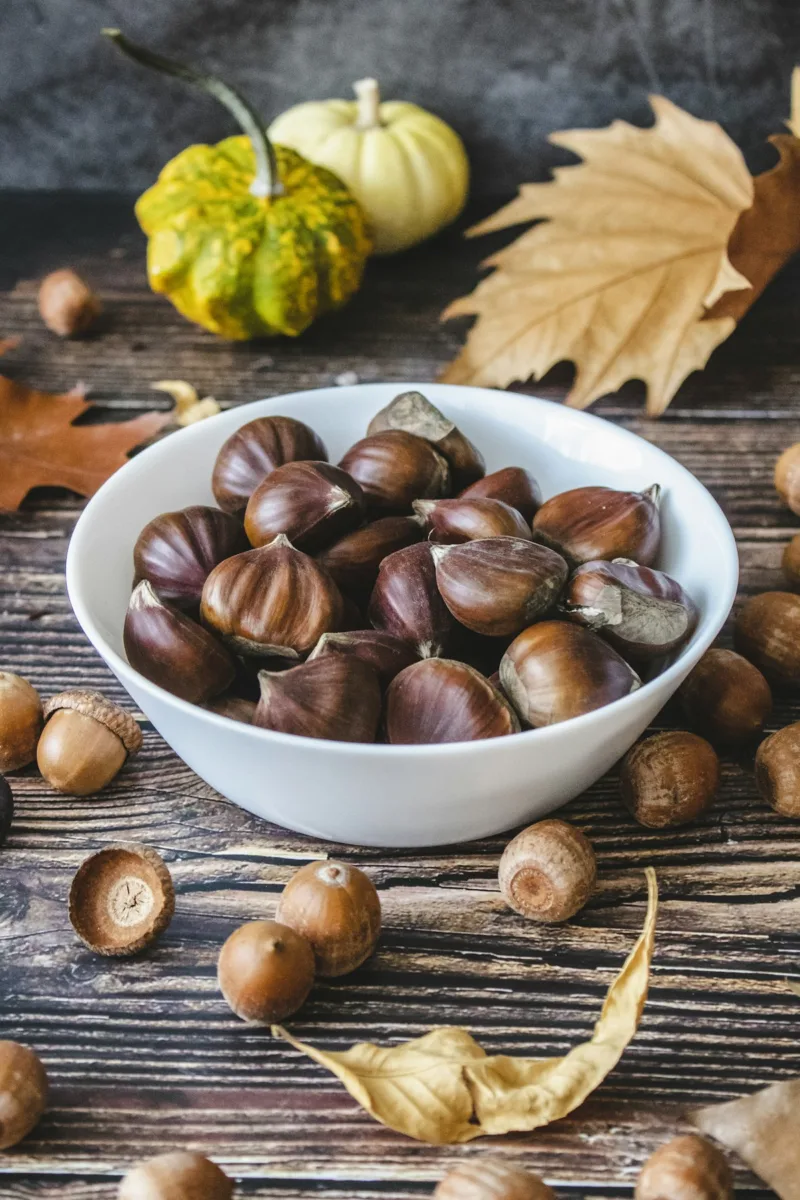
Chestnuts are different from every other nut on this list. They are low in fat and high in starch, so they are closer to a potato or a grain than to an almond. They grow inside a spiky green case called a burr and have a smooth, shiny, dark brown shell. They are not eaten raw. Once cooked, they turn soft and sweet. Roasted chestnuts are a traditional winter and Christmas street food.
Taste and texture: Sweet and mild, with a soft, floury texture after cooking.
Best used for: Roasting, stuffing, soups, and desserts such as marrons glaces. Cut a slit in the shell before roasting so they do not burst.
More Types of Nuts
- Brazil nuts: large, creamy nuts from trees in the Amazon rainforest.
- Hickory nuts: a relative of the pecan with a hard shell and a rich taste.
- Tiger nuts: small tubers, not nuts, used to make the Spanish drink horchata.
- Coconut: classed as a tree nut for food labeling, although it is the fruit of a palm.
What Is a True Nut?
In botany, a nut is a dry fruit with a hard shell that does not open by itself and usually holds one seed. Hazelnuts and chestnuts fit that definition. Almonds, walnuts, pecans, cashews, and pistachios are the seeds of fleshy fruits, and peanuts are legumes. In the kitchen, all of them are simply called nuts.
How to Store Nuts
Nuts contain a lot of oil, which turns rancid in warm air. Keep them in an airtight container in a cool, dark place for up to a few months, in the fridge for up to six months, or in the freezer for a year. For baking ideas, see our guides to types of cookies and types of cake, and for other snacks see types of berries.
Frequently Asked Questions
What are the most popular types of nuts?
Almonds, peanuts, walnuts, cashews, and pistachios are the most widely eaten nuts.
Are peanuts nuts?
No. Peanuts are legumes that grow underground. They are grouped with nuts because they taste and are used like them.
Which nuts are true nuts?
Hazelnuts and chestnuts are true botanical nuts. Most other nuts are seeds or, in the case of peanuts, legumes.
Why are cashews never sold in the shell?
The shell of a cashew contains an oil that irritates the skin, so cashews are always shelled and heat-treated before they are sold.
Which nut is the most expensive?
Macadamia nuts and pine nuts are usually the most expensive, because they are slow to grow and hard to harvest and shell.